How to care for common succulents? A full breakdown of care methods
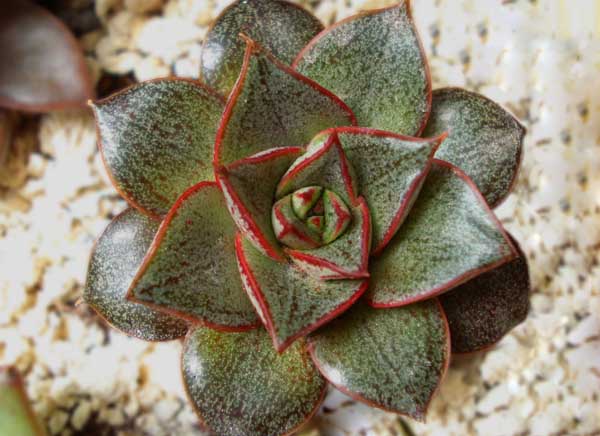
Succulent plants are plants in which a certain part of a vegetative organ, such as the stem, leaf or root (a few species have two such parts), has well-developed parenchyma tissue used to store water, making them appear thick and juicy in appearance. Most of them grow in arid regions, where for a long period each year the roots cannot absorb water, and they sustain life only on the water stored within their bodies. Sometimes people like to call these plants desert plants or psammophytes, which is not quite accurate either; many succulents do grow in desert regions, but some do not grow in deserts, and many plants that are not succulents also grow in deserts.
So how exactly should succulents be grown? Since there are many kinds of succulents, I will not introduce their cultivation methods one by one here. Instead, I will introduce the cultivation methods for several common succulents; most of the others are similar.
Cultivation methods for Crassulaceae succulents
Crassulaceae plants are perennial succulent herbs that bloom in summer and autumn, with small but abundant flowers in all kinds of colors. The epidermis has a waxy powder, and the stomata are sunken, which can reduce transpiration; they are typical xerophytes and have strong asexual reproduction, so a leaf picked off can be planted and will root. Crassulaceae plants are short in stature, and because they are succulent they use very little water and fertilizer, so they are extremely easy to grow for ornament. Because they are short and wind-resistant, do not need large amounts of water and fertilizer, and tolerate pollution, Crassulaceae plants have become the preferred plants for the currently popular rooftop greening.
1. Planting: plant in moist soil, not wet soil, mind you; mix a little water into the soil so it does not stick to the hand and cannot be squeezed into a ball, wait a while before watering, giving the plant time to adapt to the new soil and grow new roots. Do not expose it to strong sun in the early planting period; give bright indirect light.
2. Soil: water-retentive and breathable, find a balance point: no waterlogging, and it must be breathable. A commonly used formula: peat, perlite, vermiculite, pumice 1:1:1:1; the ratio is not strict. If these things cannot be found, you can use Cuiyun fine soil mixed with small particles of orchid stone or zhijinshi or other granular material. Fine soil is a compound medium, but for succulents it retains too much water, so mix in some granules to balance it out.
3. Light: most Crassulaceae plants like plenty of sunlight. In the early planting period they need bright indirect light and should not be exposed to strong sun; at midday in midsummer they need shading to prevent sunburn.
4. Temperature: Crassulaceae are relatively cold-tolerant; generally, varieties above zero degrees will not suffer major damage, and plants are most comfortable at 5-30 degrees; the greater the temperature difference, the better.
5. Water: do not water on a fixed schedule or in fixed amounts. If the soil layer is six or seven cm, then once the top two cm are completely dry you can water, meaning the lower soil still has four or five tenths moisture. Too dry harms the roots, too wet rots the roots. If you are not sure, stick a toothpick in normally to keep track of soil dryness and moisture at any time. In winter, water at noon on clear days; in spring and autumn, water in the evening or early morning, so that by the time the sun comes out the soil is already fairly dry, avoiding too much dampness and muggy steaming. In summer, control water; you can give water in the evening on cool, clear days. As for this, everyone is different. I personally saw Teacher Zu in Jinan at the end of June at high noon in a greenhouse pouring water on Huoxing Tuzi; even though this thing does not go very dormant in summer, it was still astonishing; perhaps a master is bold because of high skill.
6. Ventilation: pay attention to ventilation and avoid high temperature with high humidity and low temperature with high humidity occurring at the same time.
Cultivation methods for Cactaceae succulents
Cactaceae plants are easy to propagate, whether by sowing, cuttings or grafting. Most are cultivated for ornament, but in Mexico and Central and South America they are cultivated as an economic crop; the fruit is rich in nutrients and vitamins and can be eaten as fruit, and the young stems can be used as vegetables or made into candied fruit.
1. Watering: terrestrial cacti have obvious growth and dormancy periods; water during the growth period, and water little or not at all during dormancy. For epiphytic types, if the winter temperature is kept above 12°C, you can water and mist year-round; if the winter temperature is kept below 12°C, watering can be reduced as appropriate and misting stopped. When watering, follow this principle: "water thoroughly when dry, do not water when not dry"; the water temperature should be as close as possible to the soil temperature. In summer, water early (before sunrise) and late (after sunset); in winter, water from 10 to 11 a.m.; and pour the water directly onto the potting soil, otherwise it will affect the appearance of the spines. In addition, in summer, sprinkle water on the ground to increase air humidity.
2. Fertilizing: follow this principle: timely, appropriate amount, and according to the object. Fertilize in spring and autumn, once every 20 days, choosing early morning or evening on clear days. If the potting soil is rather dry, sprinkle a little water on the potting soil before fertilizing; a concentration of 0.05%-0.2% is suitable, and watering thoroughly once the next morning gives even better results. Terrestrial types require fertilizer rich in potassium and phosphorus and low in nitrogen, while epiphytic types require more nitrogen fertilizer.
3. Light: terrestrial types prefer plenty of sunlight, especially in winter when they need full sun exposure. Generally, tall columnar and flat-shaped cacti are more tolerant of strong light and can be placed outdoors in summer without shading; smaller globe-shaped types mostly prefer semi-shade in summer. In the high-temperature summer months of June to August, cover the top growth point and surrounding area of golden barrel cactus with a round piece of plastic film so that all parts of the globe grow evenly. Epiphytic cacti require semi-shade year-round.
4. Temperature: the suitable growth temperature for cacti is between 20-35°C. Terrestrial types do not require very high temperatures during winter dormancy; while keeping the potting soil dry, maintaining a temperature of 4-7°C is sufficient. Epiphytic types, however, require higher temperatures in winter, preferably maintaining 10-13°C or higher. When summer reaches 30-35°C, most cacti slow their growth rate, and sometimes the stems of certain species turn yellow or get sunburned; at this time you must shade them and sprinkle more water on the ground to lower the temperature.