A Detailed Guide to Hyacinth Cultivation Methods and Care Tips
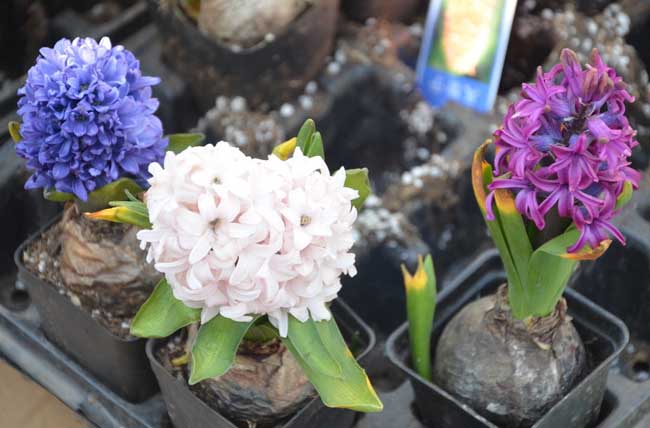
Hyacinth flowers come in rich colors. Through long-term hybridization and propagation, hyacinths have gradually produced some special double-flowered varieties. The hyacinth's flower language includes: sorrowful love, eternal remembrance, and so on. It is a common hydroponic flower variety. The cultivation methods for hyacinths are introduced below.
Hyacinth Cultivation Conditions
1. Bulbs. The nutrients needed for hyacinth blooming mainly come from the nutrients stored in the scale leaves of the bulb. Only by choosing bulbs with undamaged skins, fleshy scales that are not excessively shriveled, and that are relatively hard, heavy, and plump can you produce abundant and beautiful flowers.
2. Soil. The soil should be fertile, with high organic matter content, good aggregate structure, and a pH of 6 to 7. A culture soil can be prepared in the ratio of 5 parts leaf mold : 3 parts garden soil : 1.5 parts coarse sand : 0.5 part bone meal. Before planting, chemical agents such as formalin can be used. At a soil temperature of 10 to 15°C, apply the agent to the soil surface and immediately cover with plastic film. After 3 days of warm weather, remove the film, let it air for 1 day, then plant, keeping the soil moist.
3. Light. Hyacinths can maintain normal physiological activity with only above 5000Lx. If the light is too weak, it will lead to weak plants, overly long stems, small flower buds, early flower fading, and yellowing leaves. An incandescent lamp can be used at about 1 m away for supplemental light. However, too strong light can also cause scorching of leaves and petals or shorten the flowering period.
4. Temperature. If the temperature is too high, even above 35°C, flower bud differentiation will be inhibited, deformed growth will occur, and the rate of blind flowers will increase. If the temperature is too low, the flower buds will suffer cold damage.
5. Humidity. Soil humidity should be maintained between 60 and 70%. If too high, root respiration is inhibited and rot easily occurs. If too low, the aboveground parts wilt and may even die. Air humidity should be maintained at around 80%, and humidity can be increased by misting or sprinkling water on the ground, or reduced by measures such as ventilation.
Hyacinth Propagation Methods
Bulb division propagation is the main method. Seed propagation is used in breeding, and bulb propagation can also be used. The mother bulb produces 1 to 2 daughter bulbs after 1 year of planting, and some varieties can produce more than ten daughter bulbs. These can be used for division propagation. Daughter bulbs require 3 years to bloom. For seed propagation, sow in autumn; germination occurs only in February of the following year, and seedlings bloom after 4 to 5 years of cultivation.
1. Bulb Division Propagation
After digging up the bulbs in June, separate the large bulbs from the daughter bulbs. “The large bulbs can bloom in early spring of the following year after autumn planting, while the daughter bulbs need 3 years of cultivation before they can bloom. Because the natural bulb division rate of hyacinths is low, generally the mother plant can produce only 1 to 2 daughter bulbs after one year of planting. To increase the propagation coefficient, the large bulbs can be subjected to scoring surgery during the summer dormancy period to stimulate the growth of daughter bulbs.
In August, when the flower buds have already formed, first evenly remove a portion of the basal plate at the bottom of the bulb so that the wound at the basal plate becomes concave. Then cut once vertically and once horizontally from bottom to top, forming a cross-shaped cut, reaching as deep as the bud center inside the bulb. At this time, mucus will flow out, and 0.1% mercuric chloride solution should be applied for disinfection. Then expose it to the hot sun for 1 to 2 hours, and spread it flat indoors. First keep the room temperature at about 21°C to allow callus tissue to form. When the base of the scales swells, gradually raise the temperature to 30°C with a relative humidity of 85%. In about three months, many small bulbs will form. The small bulbs induced in this way bloom after 3 to 4 years of cultivation.
2. Seed Propagation
This is mostly used when breeding new varieties. Sow in autumn in culture soil in a cold frame, cover with 1 cm of soil, and germination occurs in late January to early February of the following year. The small bulbs cultivated from seedlings bloom after 4 to 5 years. Under ordinary storage conditions, seed germination capacity can be maintained for 3 years.
Hyacinth Cultivation Techniques
For hyacinths, it is best to choose well-drained, not-too-dry sandy loam, neutral to slightly alkaline. Apply sufficient base fertilizer before planting. For field cultivation, avoid continuous cropping. Cultivation methods include open-field cultivation, pot cultivation, forcing cultivation, and water culture.
1. Open-Field Cultivation
This is suitable from October to November, and choosing well-drained soil is the most important condition. Apply sufficient base fertilizer before planting, add a thin layer of sand on top, then arrange the bulbs with a plant spacing of 15 cm to 18 cm, and cover with 5 cm to 8 cm of soil. Also cover with grass to keep the soil loose and moist. Generally, no other management is done before flowering. After flowering, if seeds are not to be collected, the flower stems should be cut off to promote bulb development, and the cut should be made as high on the flower stem as possible. In early June, the bulbs can be dug out, spread out, graded, and stored in a cold storage room. The summer temperature should not exceed 28°C.
2. Pot Cultivation Techniques
Use a mixture of loam, leaf mold, fine sand, and so on as nutrient soil. Generally, a 10 cm diameter pot holds one bulb, and a 15 cm diameter pot holds 2 to 3 bulbs. Then bury the pot in the soil and cover it with 10 cm to 15 cm of soil. After 7 to 8 weeks, when the buds grow to more than 10 cm, remove the covering soil to let sunlight reach them. Generally, plant from October to November, and they bloom in March.
3. Water Culture Techniques
For hyacinth water culture, the water level must leave a space of 1 to 2 cm from the basal plate of the bulb, so that the roots can breathe. It is strictly forbidden to fill the water so high that it submerges the bottom of the bulb. In December, place the bulb in a wide-mouthed glass bottle with a grid, and add a little charcoal to help disinfect and prevent rot. The hyacinth bulb only needs to be soaked up to its base. Then place it in a dark place and cover the bottle with black cloth.
If using clean water, change the water once every 7 days. If using hydroponic nutrient solution, replace the nutrient solution once every 10 to 15 days depending on the degree of cloudiness. In any case, keep the water quality in the bottle clean. Hyacinths can be grown in a specially made gourd-shaped glass bottle, and the flower cluster can be viewed in the upper section.