Rubber plant yellow leaves and leaf drop: causes and solutions
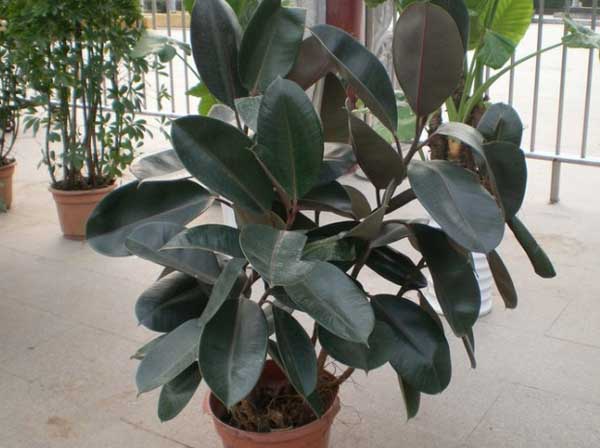
The rubber plant is an evergreen woody foliage plant with relatively large, thick leathery, glossy leaves that range from round to long oval, dark green on the upper surface and pale green on the underside. It is a very lively plant to place in the home, but sometimes small problems arise, such as the rubber plant's leaves turning yellow or even dropping. Today, the editor introduces the causes of yellowing and dropping leaves in rubber plants and the solutions:
Soil compaction caused by not repotting for a long time
[Cause] In the early growth stage, the rubber plant needs repotting once a year, and the pot diameter should be larger each year. After 6 to 8 years of growth, it can be repotted once every three years. If it is not repotted for a long time, the potting soil becomes severely compacted, soil aeration is poor, and the fibrous roots of the rubber plant suffocate and die, unable to absorb water and nutrients, causing the plant's leaves to wither, yellow and drop.
[Solution] When the temperature reaches above 15°C, repot it, cut off the dead roots and shake off most of the old soil. Remove the yellowed leaves, shorten the stems appropriately, replace the original compacted potting soil with fresh fertile culture soil, and keep the soil moist regularly. This can prompt it to grow new roots, restore a healthy state, and develop into a well-branched plant. In future care, keep the potting soil well aerated; while keeping the potting soil moderately moist, loosen the potting soil once every 15 to 20 days to avoid repeated watering causing the potting soil to compact, which can lead to root rot or root shrinkage.
No fertilization for a long time
[Cause] The rubber plant likes heavy fertilization and abundant water. Not fertilizing for a long time causes malnutrition, leading to yellowing leaves.
[Solution] Add an appropriate amount of base fertilizer when repotting, remove the yellow leaves, and thereafter apply liquid fertilizer once every half month, mainly phosphorus and potassium fertilizer.
Overwintering temperature too low
[Cause] The minimum suitable temperature for the rubber plant is above 6 to 8°C. If the indoor temperature in winter is below 5°C, leaves will wither, yellow and drop.
[Solution] Raise the indoor temperature for overwintering and be sure to keep it above 6 to 8°C.
Too much watering or fertilizing
[Cause] Although the rubber plant likes water and fertilizer, if watered or fertilized too much, especially from August to September when the weather is still rather muggy, excessive watering causes water to accumulate in the pot; or if watered too much during overwintering, when the plant is in dormancy and transpiration is reduced, the water in the pot cannot drain in time; or if raw fertilizer, heavy fertilizer or concentrated fertilizer is applied by mistake, root rot will occur due to water damage or fertilizer damage, causing leaves to wither and yellow. If root rot is caused by fertilizer damage, the roots will be accompanied by an unpleasant smell.
[Solution] First cut off the rotted roots until the cut surface is fresh and white milky sap exudes. Let them air briefly until the sap at the cuts dries, or apply sulfur powder to the cuts for disinfection, or smear clean plant ash or charcoal crumbs on the cuts. At the same time, cut off part of the branches to reduce transpiration water loss, then repot. When replanting, it is best to use clean, slightly damp fine sand to first surround the root cuts, and plant the outer part in fresh, loose sandy loam. Strengthen shading and misting management, and do not water again until the potting soil is dry. As long as the root damage is not too severe, new fine fibrous roots will grow from the root cuts after one month. In future care, just keep the potting soil slightly moist regularly; do not water excessively, and mist the leaves more in the morning and evening.
Lack of water
[Cause] Because the indoor air is too dry, the water in the potting soil is insufficient to supply transpiration for all the leaves, causing some leaves, especially the lower old leaves, to yellow and even drop.
[Solution] Check the moisture level of the potting soil from time to time and replenish water in time. Mist the leaves every morning and evening, and if that is still not enough, mist the leaves again around noon. Note: the water temperature for watering and misting should be basically the same as the soil and room temperature. If the water temperature for watering and misting differs greatly from the soil temperature and air temperature, it can easily cause adverse physiological reactions.
Poor indoor ventilation
[Cause] If the room is not ventilated for a long time, some harmful gases accumulate, such as an excessively high concentration of carbon dioxide, and yellowing leaves can also occur.
[Solution] Open windows in time for ventilation, and keep the room ventilated and the air fresh to improve it. In winter, open doors and windows at noon when the temperature is relatively high to replace the indoor air.