How do you grow Aloe arborescens? These cultivation methods are essential to master
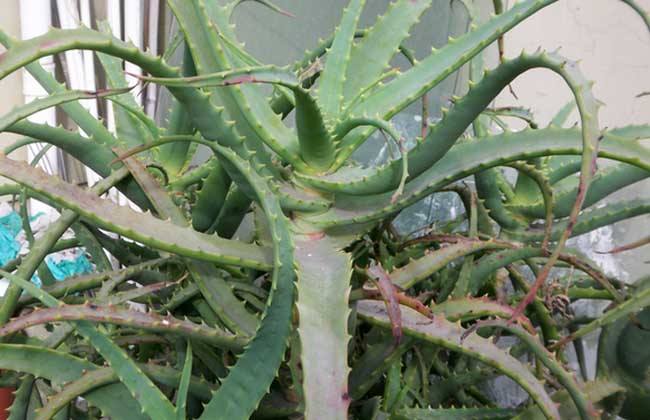
Aloe arborescens is also known as wood sword aloe, thick algae flower, dragon claw chrysanthemum, etc. It is a perennial plant of the genus Aloe in the Liliaceae family. In medicine, it has been tested to contain many active ingredients. Besides being eaten raw or juiced, the leaves can also be processed into health foods or cosmetics, etc. Moreover, because it is easy to handle, it is also suitable for use as a home-grown edible vegetable. Let us take a look below at the cultivation methods for Aloe arborescens!
Growth habits of Aloe arborescens
Aloe arborescens is native to South Africa and is mainly distributed in Africa, especially in the arid regions of southern Africa, and is also found in southern Asia. It has strong drought tolerance and cold tolerance, and is not tolerant of waterlogging; overly wet soil easily causes root rot. Its growth rate is average. It likes warmth and fears cold. When the temperature drops to 15°C, it stops growing, and when it drops below 0°C, it begins to die. Therefore, in northern regions it must be grown in greenhouses or as indoor potted plants. It likes light, and its growth requires sufficient sunlight and air. It is suitable for growing in sandy soil with strong air permeability and good water permeability. Its fertilizer requirement is not large, mainly organic fertilizer, supplemented by trace element fertilizers.
Propagation methods for Aloe arborescens
1. Division: The best time for dividing Aloe arborescens is spring and autumn. When the temperature is 20-25°C and the aloe has sprouted new plants, pull the plant out of the soil, clear the soil from the roots, use a sterilized blade to cut the young plant away from the mother plant and plant it in soil, then water thoroughly. It will take root and survive in about 1 month.
2. Cuttings: For cuttings of Aloe arborescens, choose clear weather to cut the aloe from the middle of the stem or cut an 8-10 cm small shoot, peel off the leaves from the lower 5 cm, place it in a cool and ventilated place, and once it is slightly dry, insert it into soil. Place it in a wind-sheltered and relatively warm place, water thoroughly to make it take root, and in about 1 month the roots will sprout and it will survive.
Cultivation methods for Aloe arborescens
1. Potting soil: The potting soil for growing Aloe arborescens must have water retention, fertilizer retention and air permeability, with a pH value between 6.8 and 7.0. Generally, use humus soil plus garden soil and river sand (ratio 2:2:1), then disinfect it with 40% formalin, seal it tightly with plastic film for two days, and then air-dry it before use.
2. Potting: It is better to pot Aloe arborescens in spring and summer, with an indoor temperature of 15 to 28°C being best. Place some broken tiles at the bottom of the pot to facilitate drainage and air permeability, then fill in the prepared potting soil. Select strong seedlings, put the aloe into the pot, spread the root system, fill with soil, then lift the aloe seedling upward a little, press it firm, straighten it, and water thoroughly.
3. Reviving: When growing Aloe arborescens, special attention must be paid to reviving. Before it turns green again, do not water it much, and do not fertilize it, otherwise the roots will rot. Newly potted Aloe arborescens must also not be exposed to direct sunlight. During this period, frequently spray water on the leaves, which can speed up greening and rooting.
4. Fertilizing: The normal growth of Aloe arborescens requires nitrogen, phosphorus, potassium, boron, copper, zinc and organic fertilizer. Generally, liquid fertilizer is applied by watering or foliar spraying. Fertilize when growth is relatively fast in spring and autumn, once every half month to one month, but fertilization should be stopped during the dormant period from November to March of the following year.
5. Watering: Although Aloe arborescens has strong drought tolerance, it still needs timely and appropriate watering. Early morning and evening are both fine. Generally, water once every 15 to 20 days. The principle is “see dry, see wet; when dry, water thoroughly”. In summer, water can be sprayed on the leaves of the aloe to keep the plant's leaves emerald green, and it is also necessary to prevent exposure to scorching sun.
6. Repotting: Generally, Aloe arborescens needs to be repotted after about two years of cultivation. Repotting is best done in spring. Put the Aloe arborescens together with the soil ball into a larger new pot, then add new soil, press it firm and water thoroughly, place it in a semi-shaded place, and after reviving, move it to a sunny place for normal care.
7. Pests and diseases: Aloe arborescens is not prone to insect pests, and diseases also rarely occur. However, in a poor environment, diseases such as black spot disease may occur on the leaves. During the seedling stage, spray 77% copper hydroxide wettable powder, or 75% chlorothalonil wettable powder 1000 times solution, once every 15-20 days, 3-4 times within 1 year.