What to Do About Black Spots on Aloe Vera? Causes and Control Methods
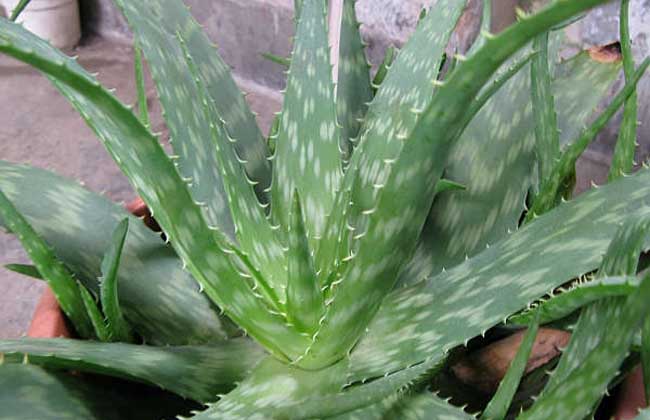
Aloe vera is a perennial evergreen herbaceous plant of the genus Aloe in the family Liliaceae (Asphodelaceae), native to the tropical arid regions of Africa and now distributed almost throughout the world. It combines food, medicinal, cosmetic and ornamental uses, and its exudates have been widely applied in medicine and daily chemicals. In Chinese folk tradition it has been used as a natural remedy for beauty care, hair care and treating skin diseases. Let's take a look below at what to do about black spots on aloe vera!
Symptoms of Black Spots on Aloe Vera
Aloe black spot disease is a bacterial disease that seriously affects the growth and quality of aloe and can lead to total crop failure in aloe cultivation. In the early stage of the disease, water-soaked thread-like lesions appear on the leaves, which later develop into nearly round blackish-brown lesions; some lesions have radially arranged edges surrounded by yellow or yellow-black halos. In the late stage, many dark brown granules appear on the lesions, the leaf surface sinks, and the usable portion of the leaf mesophyll is completely lost.
Patterns of Black Spots on Aloe Vera
The severity of aloe black spot disease varies with the resistance of the aloe variety. When the temperature stays below 20°C for 2 hours, the metabolism of most aloe varieties is hindered, resistance begins to decline, and lesions appear locally on infected leaves; when the temperature stays below 15°C for more than two consecutive days, the incidence of lesions accounts for about half of the leaves; when the temperature is below 12°C, the leaf incidence rate reaches 2/3; when the temperature drops to 8 to 10°C, the leaves are basically covered with lesions within a week. The incidence rate is even higher especially in open-field cultivation areas where frost damage occurs. In addition, typhoons, foggy weather, hail, concentrated rainfall, and weather with a day-night temperature difference above 10°C can also trigger this disease and lead to widespread outbreaks.
What to Do About Black Spots on Aloe Vera?
1. Choose disease-resistant varieties. The variety most susceptible to lesions is Aloe vera 'Hua', followed in order by Yuanjiang aloe, Aloe arborescens, Aloe vera (Curaçao aloe), and soap aloe. Therefore, planting the disease-resistant and highly usable Curaçao aloe and Yuanjiang aloe is the best choice.
2. Newly introduced seedlings must be disinfected, generally by soaking them in a 1000-fold dilution of 50% carbendazim wettable powder for 5 to 10 minutes, then drying them before planting. For severely diseased plants, the whole plant should be buried deep, and the soil in the affected area should be disinfected with a 1000-fold dilution of 50% carbendazim wettable powder + an 800-fold dilution of 70% thiophanate-methyl wettable powder.
3. During the growing period, ensure that the minimum temperature for aloe growth stays above 8°C, while reducing and controlling sources of the disease. Adopt single-ridge planting to improve ventilation and light conditions. On the premise of applying sufficient base fertilizer, additionally apply 0.1% potassium dihydrogen phosphate, 0.1% zineb, etc., to enhance the plant's disease resistance. At the same time, do a good job of field drainage to prevent waterlogging in the plots. During frost periods, take measures such as the smoke method to raise the temperature for comprehensive control.
4. In the early stage of aloe black spot disease, control can be carried out with an 800-fold dilution of 75% thiophanate-methyl wettable powder, or a 1000-fold dilution of 50% carbendazim wettable powder, or an 800-fold dilution of 70% thiophanate-methyl wettable powder.