A Detailed Guide to Growing Aloe 'Nightingale'
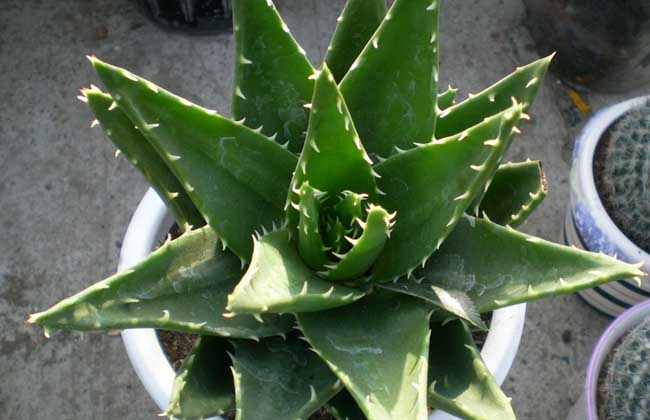
Aloe 'Nightingale', also known as Nightingale, Da Cuipan, and Noble Aloe, is a perennial succulent herbaceous plant in the Liliaceae family, genus Aloe. It blooms from late winter to early spring. With a graceful, compact form and pleasant green leaves, it ranks among the finest ornamental aloes. It is suitable for small to medium potted cultivation, adorning windowsills, shelves, desks and other spots, fresh and elegant with a distinctive charm. Let's take a look at how to grow Aloe 'Nightingale'!
Growth Habits of Aloe 'Nightingale'
Aloe 'Nightingale' is native to the Greater Kaal Plateau and Lesser Kaal Plateau of South Africa, and can now be cultivated in many parts of the world. It prefers warm, dry, ample yet soft sunlight, and tolerates partial shade and drought. It dislikes waterlogged potting soil and excessive shade. The suitable growing temperature is around 20°C; it will freeze below zero, and growth nearly stops at around 10°C. The soil is best if sandy; if it is sticky yellow clay, add half sand to promote looseness and air permeability and aid drainage. Aloe 'Nightingale' has a variegated cultivar called "Nightingale Variegata", whose leaf surfaces and undersides both bear yellow or yellowish-white longitudinal stripes, sometimes with entire leaves turning yellow, while its other characteristics are the same as Aloe 'Nightingale'.
Propagation Methods of Aloe 'Nightingale'
1. Cuttings: Propagation of Aloe 'Nightingale' by cuttings is usually carried out from March to April in spring. Cut the robust top of an old plant as the cutting, 10 cm to 15 cm long, remove the leaves on both sides of the base, place in a cool shaded spot for 2 to 3 days, and once the cut has dried slightly, insert into potting soil and keep the soil moist; roots form in 20 to 30 days.
2. Division: Propagation of Aloe 'Nightingale' by division is done each spring when repotting. Detach the young plants from the old plant and pot them separately. Newly potted young plants should have watering controlled; in summer place them outdoors in a ventilated, partially shaded spot and water every afternoon; in winter keep the temperature above 5°C and place them indoors in a dry, sunny spot for good growth.
How to Grow Aloe 'Nightingale'
1. Soil: The basic requirements of Aloe 'Nightingale' for soil are looseness, fertility, water retention and air permeability. A loose, fertile, well-draining, well-aerated sandy soil is best. You can use 2 parts leaf mold or peat soil, 2 parts sandy soil or vermiculite, and 1 part garden soil, plus a small amount of decomposed bone meal or plant ash as base fertilizer. Alternatively, use half leaf mold and half coarse sand, mixed with a little decomposed horse manure or dried manure; chicken or duck manure is even better.
2. Light: Aloe 'Nightingale' likes light and is best placed outdoors in a spot with good ventilation and light. Insufficient light causes the plant to grow leggy, with a loose, non-compact form and thin leaves, while excessively strong light turns the leaves brownish-green, affecting its ornamental value. In high-temperature summer weather, however, shade appropriately; prolonged exposure to full sun makes the leaves thin rather than plump, and dulls their color.
3. Temperature: Aloe 'Nightingale' likes warmth, with a suitable temperature of around 20°C; it will freeze below zero, and growth nearly stops at around 10°C. In winter, move it indoors to a sunny spot. If the temperature does not drop below 10°C, water normally and apply a light fertilizer as appropriate so the plant continues to grow. If the temperature cannot be kept at 10°C, reduce watering and stop fertilizing to let the plant go dormant.
4. Watering: Aloe 'Nightingale' is drought-tolerant and dislikes waterlogged potting soil. Follow the principle of "do not water until dry, and water thoroughly when you do" to avoid root rot from waterlogged soil, but it does require a certain air humidity. In midsummer, with high temperatures and high evaporation, water fully and mist the leaves frequently. After autumn begins, gradually reduce watering, and in winter keep the potting soil slightly dry.
5. Fertilizing: Apply a decomposed dilute liquid fertilizer or compound fertilizer once every 15 to 20 days to Aloe 'Nightingale', mainly organic matter such as horseshoe pieces and sesame paste residue as well as fermented liquid fertilizer, combined with quick-acting inorganic fertilizers such as monopotassium phosphate and diammonium phosphate. When applying the fertilizer solution, water the potting soil thoroughly first. In addition, avoid dripping the fertilizer solution onto the leaves, otherwise it will burn the leaves or cause black spot disease.