How to Grow Oxalis? A Detailed Guide to Cultivation Methods
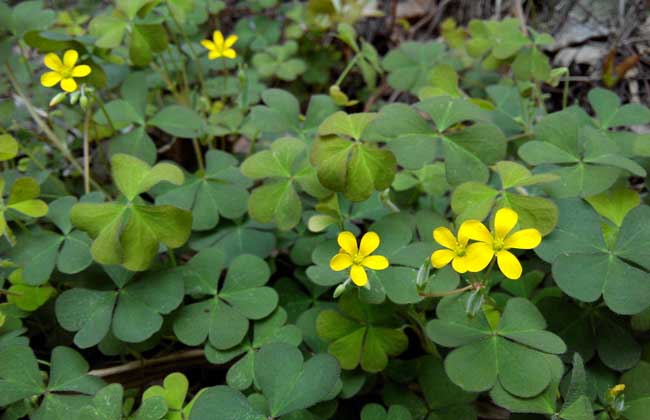
Oxalis is also known as sour grass, spotted dove sorrel, three-leaf sorrel, and so on. It is a perennial herbaceous plant of the genus Oxalis in the family Oxalidaceae. It blooms continuously through spring, summer, and autumn, with the most abundant flowering during the cool periods of spring and autumn. Because of its low stature, fast growth, and long flowering period, it is quite spectacular when in bloom and is widely used in landscaping. Now let us take a look at the cultivation methods for oxalis!
Growth Habits of Oxalis
Oxalis grows on hillside grasslands, along river valleys, roadsides, field edges, wasteland, or in shaded and damp places under forests. It prefers sunny, warm, and humid environments. In hot summer regions, it should be given partial shade. It has strong drought resistance but is not cold-tolerant. In North China, it needs to be cultivated in a greenhouse in winter. South of the Yangtze River, it can overwinter outdoors. It likes shaded and humid environments and has strong adaptability to soil. It can generally grow in ordinary garden soil, but grows most vigorously in sandy loam rich in humus. It has a short dormant period in summer. It opens its flowers when sunlight is extremely bright.
Propagation Methods for Oxalis
1. Division: First select a plant with good growth, that is, one whose rhizome has many small branches, and take it out of the pot without removing the soil from the roots. Use your hands to split the plant into several clumps. The size of each clump is determined by the bud eyes on the rhizome, and usually each clump retains more than 3 bud eyes. If there are many leaves, they can be removed directly. After drying the wounds in a cool place, place the divided plants into sandy soil and keep the temperature at 13-18°C. They will soon take root and grow leaves.
2. Sowing: Oxalis seeds are relatively small, so they should be sown indoors in pots. First prepare a flower pot with a larger diameter (a foam box can also be used instead), evenly scatter the seeds on the soil surface, and cover with 1-2 cm of soil. After sowing, cover with a layer of plastic film to maintain humidity inside the pot. They will germinate 10-12 days after sowing. After seedlings grow, they can be transplanted into flower pots, and 3-5 plants can be planted in one pot.
Cultivation Methods for Oxalis
1. Soil: Oxalis has strong adaptability to soil and can generally grow in ordinary garden soil, but grows most vigorously in sandy loam rich in humus. Because oxalis grows very quickly, the pot should be repotted once every spring. When repotting, it is best to change the soil once, with loose, fertile, and well-drained slightly acidic soil as the first choice.
2. Temperature: Oxalis likes a warm environment, and the most suitable growth temperature is 16-22°C. It is not cold-tolerant. Below 10°C, the plant stops growing, and at 0°C the leaves wither. However, as long as the underground rhizome is not frozen, it can still sprout new leaves in April of the following year and grow normally. To keep the leaves in normal condition in winter, the temperature should be maintained above 5°C. It is not heat-tolerant. When the temperature exceeds 35°C, the leaves curl, growth slows, and it enters a dormant period.
3. Light: Oxalis needs sufficient light for growth and should be grown in full sun or partial sun. In spring and autumn, it should receive sufficient sunlight. Too much shade will cause the leaves to become dull and lusterless, while the petioles become weak and the plant shape becomes messy. However, strong direct light should also be avoided. From May to September, it should be properly shaded to prevent sunscald. It has strong phototropism. When maintaining it on a balcony or windowsill, the position of the plant should be changed frequently so that it receives light evenly on all sides.
4. Watering: Oxalis is drought-tolerant but likes humid environments. During the growing period, keep the potting soil moist and adhere to the principle of "do not water until dry, and water thoroughly when watering." In the hot summer season, the plant enters a dormant period. At this time, water should be sprayed to keep the potting soil slightly moist. When the temperature drops below 10°C in winter, watering should be done with the principle of preferring dry over wet to prevent the bulbs from rotting.
5. Fertilizing: When potting oxalis, apply sufficient base fertilizer. During the growing season, to make the plant grow robustly and ensure the leaves are thick and glossy, apply a nitrogen-phosphorus-potassium compound fertilizer once a month. Pay attention to the concentration when fertilizing. Too high a concentration will burn the bulbs and affect growth. Stop fertilizing from July to August. Be careful not to apply a single nutrient fertilizer, especially nitrogen fertilizer, as it will cause the leaves to turn from purple back to green and affect their ornamental value. When fertilizing, do not splash liquid fertilizer onto the leaf surface, as it can easily cause leaf diseases.
6. Pruning: When oxalis plants grow too vigorously, promptly remove the denser leaves to improve ventilation and light penetration and promote growth. In daily maintenance, promptly remove withered and yellow leaves to reduce the occurrence of pests and diseases. When the petioles are too long or the plant shape is unattractive, the leaves can be heavily pruned to allow new leaves to grow again.
7. Pests and Diseases: Oxalis grows densely, and the lower part has poor ventilation and light penetration. High temperature and humidity make it prone to powdery mildew, with leaves turning yellow and moldy and rotting. Triadimefon, thiophanate, and other fungicides can be sprayed. In addition, red spider mites begin to cause damage in early May. Because oxalis leaves are dense, control is difficult, so prevention must be the main approach. When the temperature rises in April, start spraying acaricides. Do not wait until red spider mites break out heavily before controlling them.