The Complete Guide to Hydroponic Plants: Recommended Varieties That Are Easiest to Keep Alive
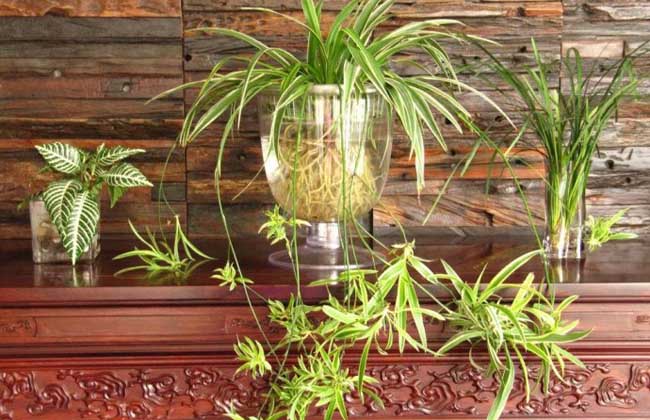
Hydroponics is a new type of indoor soilless cultivation method for plants. Its core is to fix the plant roots and stems in a planting basket and let the root system grow naturally into a plant nutrient solution. This nutrient solution can replace natural soil in providing the plant with water, nutrients, temperature and other growth factors, enabling the plant to grow normally and complete its entire life cycle. Let's take a look below at the complete guide to the easiest-to-grow hydroponic plants!
Lucky Bamboo
Lucky bamboo (Dracaena sanderiana) is a very easy-to-grow hydroponic plant. It prefers shady, humid and hot conditions, tolerates waterlogging, has strong fertilizer tolerance and strong cold resistance, and likes semi-shaded environments. It is suitable for growing in well-drained sandy soil, semi-muddy sand, or alluvial clay. It likes a warm environment, with a suitable temperature of 18-24°C, and can grow all year round. Below 13°C the plant goes dormant and stops growing. When the temperature is too low, due to insufficient water absorption by the root system, yellow-brown patches will appear on the leaf tips and leaf margins. The minimum wintering temperature must be above 10°C. It is not strict about light and is suitable for growing under bright scattered light. Too strong light or exposure to the sun will cause the leaves to turn yellow, fade in color, and grow slowly.
Spider Plant
The spider plant (Chlorophytum comosum) likes warm, humid and semi-shaded environments. It is highly adaptable, relatively drought-tolerant, and not very cold-tolerant. It is not choosy about soil, and grows best in well-drained, loose and fertile sandy soil. It is not strict about light, generally suitable for growing under medium light conditions, and also tolerates weak light. The optimum growth temperature is 15-25°C, and the wintering temperature is 5°C. It grows fastest at 20-24°C and readily produces stolons. Above 30°C it stops growing, and the leaves often turn yellow and dry at the tips. If the indoor temperature is kept above 12°C in winter, the plant can grow normally, produce leaves and bloom. If the temperature is too low, growth slows or it goes dormant, and below 5°C it is prone to cold damage.
Pothos
Pothos (Epipremnum aureum) is a beautiful flowering plant very suitable for indoor growing. It is a shade-loving plant that likes scattered light and is fairly shade-tolerant. It comes to life upon contact with water, and because of its tenacious vitality it is called the “flower of life.” Its trailing green branches and leaves are very easy to please. When grown indoors, whether in a pot or with a few stems cut for hydroponics, it can grow well. It can be allowed to climb onto a column wrapped with palm fiber, or be trained into a hanging form and placed in a study or on a windowsill, or simply grown directly in a pot.
Ivy
Ivy (Hedera helix) is very suitable for growing indoors and outdoors. It is highly adaptable to the environment, prefers a relatively cool climate, and has fairly strong cold resistance. It dislikes hot and stuffy environments; above 30°C growth stalls. It is not strict about light and can grow and develop both in direct sunlight and in indoor environments with insufficient light. A classic shade-loving plant, it can grow normally even in very weak light, and can also grow in environments with ample light. It is suitable for growing in warm and humid environments, and is afraid of cold. It is easy to grow in water and has strong vitality.
Hyacinth
The hyacinth (Hyacinthus orientalis) by nature likes sunlight and tolerates cold. It is suitable for growing in cool and humid environments and in loose, fertile sandy soil, and it dislikes waterlogging. It likes warm and humid winters, cool and slightly dry summers, and environments with ample sunlight or semi-shade. It likes fertilizer and is suited to fertile, well-drained sandy loam. It can be grown in the ground, in pots, or in water. During growth, the bulbs' root system grows best at a low temperature of 2-6°C. The suitable temperature for bud break is 5-10°C, the suitable temperature for leaf growth is 5-12°C, and 15-18°C is most favorable during the bud and flowering stage. The storage temperature for bulbs is 20-28°C, and 25°C is most ideal for flower bud differentiation. It can tolerate brief frost.
Dumb Cane
Dumb cane, also known as giant taro or elephant ear (Alocasia macrorrhizos), is a perennial evergreen herbaceous plant. A soil-grown plant can be converted into a hydroponic plant using the root-washing method. When washing the roots, clean them carefully, try not to damage the tuber and root system, and at the same time cut off rotten roots and roots that have already aged. If the tuber has no roots, first place it in a shaded spot to dry for 2-3 days, and after the wound has dried, immerse it in water. After 2-3 days, new roots can be seen emerging. In the early stage of hydroponics, change the water once every 2-3 days, with the water depth preferably covering 2/3 of the root system. After a week, new roots can grow. After 3 weeks, once the hydroponic plant has adapted to the hydroponic environment, switch to nutrient solution culture.
Water Hyacinth
Water hyacinth, also known as water hyacinth or water floating lotus (Eichhornia crassipes), likes warm, humid and sunny environments and is highly adaptable. The suitable water temperature is 18-23°C, and it can also grow above 35°C. It stops growing when the temperature is below 10°C. It has a certain degree of cold tolerance. It likes to grow in shallow water and can also grow in water bodies with little flow, drifting with the water. It reproduces rapidly. After flowering, the flower stalk bends into the water to grow, and the ovary develops and swells in the water.