How to Grow and Care for the Moonflower
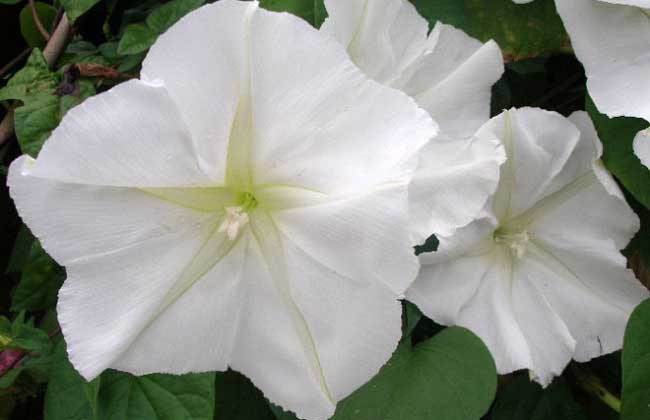
The moonflower, also known as Tianqie'er, Xiyan, Chang'e Flying to the Moon, and Tianqie'er, among other names, is an annual twining herbaceous plant in the genus Ipomoea of the family Convolvulaceae. It is named for its large, beautiful white flowers that resemble a full moon and open at night. It has high ornamental value and is often used as an eye-catching hedge or fence display. Let's take a look at how to grow moonflowers!
Moonflower Growing Habits
The moonflower is native to the tropical and temperate regions of the New World, including the entirety of South America, Central America, Mexico, and the U.S. state of Florida. It has been introduced and cultivated in various parts of China and is relatively common. It prefers full sunlight and warmth, is not cold-tolerant, and freezes to death when exposed to frost. It is not demanding about soil and grows well in sunny, moist conditions. Large seedlings do not transplant well.
Moonflower Propagation Methods
Moonflowers can be propagated from seed. Collect seeds in late autumn, dry and store them, and sow in March to April of the following year. When direct-sowing in the open ground, seedlings should be transplanted and set out after true leaves have grown. Sow in a seedbed in early spring, and once the seedlings have produced 3 to 5 true leaves, they can be planted out in front of a flower trellis or fence to climb and grow as they please. In addition, moonflower vines readily produce adventitious roots at the nodes, so they can also be propagated by cuttings and layering.
How to Grow Moonflowers
1. Soil: Moonflowers prefer a slightly moist, slightly dry soil environment. The high-temperature period in summer is their vigorous growth stage, and at this time the water supply should be ensured.
2. Fertilizing: Moonflowers have a relatively high demand for fertilizer. In addition to applying base fertilizer at planting time, during the vigorous growth stage a dilute liquid fertilizer can be applied every 2 to 3 weeks.
3. Light: Moonflowers prefer an environment with ample sunlight, and should receive no less than 4 hours of sunlight per day.
4. Temperature: Moonflowers prefer warmth and are not cold-tolerant. They grow well within a temperature range of 18 to 28°C.
5. Trellising: Supports should be set up for moonflowers in a timely manner to ensure that the seedlings have something to cling to as they grow and can climb the trellis smoothly.
6. Diseases and Pests: Moonflowers are often harmed by powdery mildew, aphids, and the like. If these occur, measures should be taken promptly to deal with them.