How to grow hostas? Detailed guide to cultivation methods and precautions
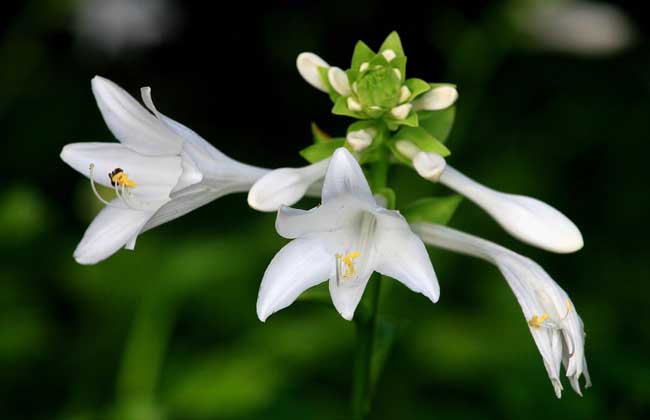
Hosta is also known as Yu Chun Bang, White Crane Flower, Yu Pao Hua, etc. It is a perennial herbaceous plant of the genus Hosta in the Liliaceae family, with clustered leaves that are ovate or heart-shaped. The flower stems emerge from the leaf clusters, bearing racemes that bloom from summer to autumn. The flowers are white as jade (there are also light purple flowers), and before opening they resemble a hairpin head, with a fragrant scent. They are often cultivated for ornamental purposes. Let's take a look at the cultivation methods for hostas!
Growth habits of hostas
Hostas are native to China and Japan, and are cultivated throughout China. They are typical shade plants that prefer shady and humid environments. When exposed to strong light, the leaves turn yellow and growth suffers. They prefer fertile, moist sandy loam soil and are extremely cold-hardy. In most areas of China, they can overwinter in the open ground. The aboveground parts wither after frost, and new buds sprout from the dormant roots the following spring. They should be protected from intense direct sunlight.
Propagation methods for hostas
1. Division: Division can be done in both spring and autumn, in April to May in spring and October to November in autumn. Since the stem buds of hostas are plump and obvious in spring and easy to divide, each clump can be split into sections with 3 to 4 buds each. The cut surfaces should be coated with plant ash or sulfur powder before planting. Generally, division can be done once every 3 to 5 years.
2. Sowing: Hosta seeds are very small. At room temperature, it is best to sow them as soon as they are collected. When sowing, to distribute the seeds evenly, mix them thoroughly with 2/3 fine sand or fine dry soil, then sow on the seedbed and cover with 1 to 1.5 cm of fine soil. After the seeds mature in September, they can be sown in pots indoors. At 20°C, they will germinate and sprout in about 30 days.
Cultivation methods for hostas
1. Soil: Hostas are not picky about soil, but they grow better in moist, fertile, well-drained sandy loam. You can use peat, perlite, furnace slag, garden soil, sawdust, or paddy soil, pond mud, leaf mold, etc.
2. Watering: During the growing period, it is best to keep the soil consistently moist. If watered too much, it can easily cause root rot and yellowing leaves. In summer, water supply should be sufficient. When the air is dry, spray water on the leaves every day to prevent the leaves from drying out.
3. Sunlight: Hostas should be protected from intense sunlight. It is best to plant them on the shady side of buildings or under large trees where sunlight cannot directly reach. After summer begins, they need to be moved to a shaded area or a north-facing balcony to prevent direct sunlight.
4. Temperature: Hostas are robust and cold-tolerant. After the first frost, move them indoors. Maintaining room temperature at 2 to 3°C is enough for them to overwinter safely, and they can be moved back outside in April of the following year.
5. Fertilizing: Start fertilizing hostas from early May, applying diluted liquid fertilizer about once a month. In July and August, it can be slightly more concentrated. Stop fertilizing after late September. After each fertilizing, water and loosen the soil promptly to keep the soil loose and aerated.