A Detailed Guide to the Cultivation Methods and Care Essentials of the Jelly Bean Plant
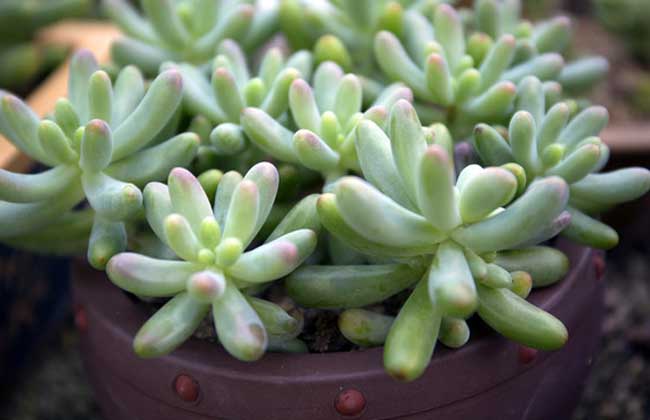
The Jelly Bean Plant, also known as white-flowered stonecrop, is a perennial succulent herbaceous plant of the genus Sedum in the Crassulaceae family. Its leaves are swollen into oval or cylindrical shapes, the plant cluster is small and elegant, and the leaves are crystal clear like jade pearls. Potted as a decoration on a desk or tea table, it is extremely refined and highly ornamental. Let us take a look below at the cultivation methods of the Jelly Bean Plant!
Growth Habits of the Jelly Bean Plant
The Jelly Bean Plant is native to Europe. It likes full sunlight and also tolerates partial shade. It requires well-drained sandy loam soil. It does not need much fertilizer, and attention should be paid to the balance of phosphorus and potassium fertilizers; do not apply nitrogen fertilizer alone. It does not tolerate waterlogging, so the potting soil must be prevented from becoming too wet, and in winter even more attention should be paid to controlling watering.
Propagation Methods of the Jelly Bean Plant
The Jelly Bean Plant is propagated by division and cuttings. For cuttings, small branches or leaves can be used as cuttings, and they root very easily. It is extremely drought-tolerant and hates waterlogging. The overwintering temperature should be above -15°C.
Cultivation Methods of the Jelly Bean Plant
1. Soil: For potted Jelly Bean Plant, the growing medium can be made by mixing 2 parts sandy loam with 1 part each of leaf mold, river sand, and crushed brick and gravel. Apply fertilizer once a month from April to September. In autumn, increase the application of phosphorus and potassium fertilizers, and stop fertilizing in winter.
2. Watering: The Jelly Bean Plant is a xerophytic flower, so watering should be strictly controlled. From spring to early autumn, water thoroughly only after the soil has dried out; in winter, water sparingly or not at all. Too much watering makes the plant shape loose and messy, and the leaves easily fall off.
3. Light: Apart from needing shade in the height of summer, the Jelly Bean Plant should receive plenty of light at other times. When placed under light conditions for a long time, the leaf color turns purplish-red; under more shady conditions, the leaf color turns emerald green.
4. Temperature: The Jelly Bean Plant likes full sunlight and also tolerates partial shade. For overwintering, it should be placed indoors in a spot with ample light, keeping the temperature above 10°C; at low temperatures the leaf color also easily turns purplish-red.
5. Repotting: Repot the Jelly Bean Plant once every 1 to 2 years in spring. Its stems and leaves break and fall off easily, so care should be taken when repotting. Appropriate pruning should also be carried out when repotting to make the plant fuller.
6. Fertilizing: The Jelly Bean Plant does not need much fertilizer. Attention should be paid to the balance of phosphorus and potassium fertilizers; do not apply nitrogen fertilizer alone.
7. Pests and Diseases: Excess moisture and poor soil aeration make it prone to stem rot and root rot. Attention should be paid to controlling the amount of watering, strengthening ventilation, and choosing well-drained soil.