Cypripedium cultivation methods and precautions
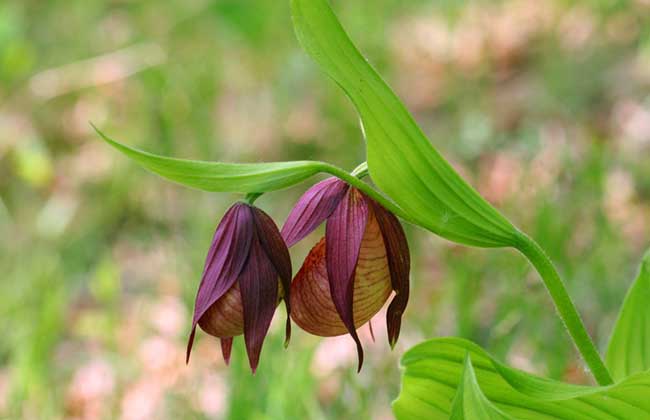
Cypripedium, also known as the flower of the goddess, is a perennial herbaceous plant of the genus Cypripedium in the orchid family (Orchidaceae), with extremely high ornamental value. It not only has gorgeous flowers with a peculiar sense of beauty, but the posture of its leaves is also quite elegant, and its cold tolerance is very good, making it suitable for garden cultivation in cool regions. Let's take a look together at the cultivation methods of Cypripedium!
Cypripedium growing habits
Cypripedium prefers cool summers, humid and semi-shaded environments, and is suitable for growing in fertile, loose sandy loam soil. It likes moisture; during the growing period, watering should be done 1 to 2 times a day, so that the potting soil and the sphagnum moss on the pot surface are fully moistened, which serves to retain moisture and lower the temperature. Shading of about 50 to 60% is needed, otherwise too much shade will make the plant grow spindly and weak. Fertilization during the growing period should be about once a month, and it must be diluted more than 1000 times before application, otherwise concentrated fertilizer will harm the plant, causing the rhizome to rot and the plant to die.
Cypripedium propagation methods
Cypripedium is often propagated by division, which can be done in both spring and autumn, generally once every three years. Any plant that grows robustly with densely clustered pseudobulbs can be divided, and after division each clump must retain at least 5 pseudobulbs connected together. Before division, watering should be reduced to make the potting soil drier. When repotting after division, first cover the drainage hole at the bottom of the pot with broken tile pieces, then spread coarse gravel to occupy 1/5 to 1/4 of the pot depth, then place coarse-grained soil and a small amount of fine soil, and then plant with sandy loam rich in humus. The planting depth should be such that the pseudobulbs are just barely buried in the soil, leaving a 2 cm rim at the edge of the pot, topped with Selaginella uncinata or fine gravel, and finally water thoroughly, place in a shaded spot for 10 to 15 days, keep the soil moist, then gradually reduce watering and carry out normal care.
Cypripedium cultivation methods
1. Potting soil: Cypripedium is generally potted in spring from March to April or in autumn from October to November. For ventilation and air permeability, unglazed clay pots are better to use; plastic pots and glazed colored pots are not suitable as containers for cultivating Cypripedium due to poor air permeability. As for the soil, it is best to use soil collected from its native habitat, or a growing medium made of 0.5 part coarse sand, 1 part humus soil, 0.5 part perlite and 1 part peat soil.
2. Potting: Before potting Cypripedium, first cut off the old withered leaves beside the new shoots, and remove the blackened and rotted roots, then place the orchid plant with all its roots flat on the surface covered with about 1/4 of the base soil, evenly fill the soil into the pot until all the roots are buried, with only the new shoots protruding. Finally, cover the pot surface with water-saturated white moss, water thoroughly, and it is done.
3. Watering: Once Cypripedium lacks water during its peak growing period, it will grow poorly; it needs to be 80% dry and 20% moist. Watering should follow the principle of "water when dry, stop when moist, and keep appropriately on the dry side." Watering must be thorough, and half-watering is not acceptable. The frequency of watering can depend on the potting medium of the orchid. For hard, drainage-friendly media such as volcanic rock, red brick granules and pumice, water can be supplied once a day. For media with strong water absorption such as pond mud and humus soil, water can be supplied once every two or three days.
4. Temperature: In daily management of Cypripedium, the main thing to pay attention to is temperature, usually 10 to 20°C. Once the temperature exceeds 25°C, measures must be taken to bring it down, otherwise the plant can easily be killed by the heat. Therefore, if it is to be cultivated in most areas of southern or northern China, it is impossible to cultivate it successfully unless there is a cooled greenhouse in summer, let alone get it to bloom.
5. Light: Cypripedium prefers shade and fears direct strong light, so shading is needed in spring, summer and autumn. For home cultivation, it is best to place it on a balcony windowsill or under the eaves with a bamboo curtain for shade, generally shading from 9 a.m. to before 6 p.m., and pulling the curtain open in the morning and after 6 p.m. so it receives scattered sunlight. In winter, it should be moved indoors to a spot with visible scattered light, but direct sunlight should still be avoided.
6. Fertilization: During the growing season, Cypripedium can be top-dressed with fully rotted, thin cake fertilizer water at about 15%, or 0.1% urea fertilizer water plus 0.2% potassium dihydrogen phosphate fertilizer water, applied once every 15 to 20 days. From before flowering to the flowering period, 0.2% potassium dihydrogen phosphate or plant ash water can be sprayed on the leaves 2 to 3 times to promote the development of roots, stems and flowers. Do not apply unrotted fertilizer, to avoid root rot.
Cypripedium pest and disease control
1. Coleosporium rust: Usually on the upper and lower surfaces of leaves, less often on stems, raised small pustules appear, containing powdery spores that are yellow, orange, rust-colored or even purplish-black. Rust disease is not fatal, and the leaves will not die either, but it weakens plant growth. The control method, besides cutting off diseased leaves, is to spray with 65% zineb powder at 500 to 600 times dilution or a copper-containing fungicide.
2. Southern blight: Coleosporium rust mostly occurs in the moldy rainy season. At the initial stage of the disease, the leaf base is covered with white mycelium, causing the rhizome to rot. The control method is to remove the infected potting soil and sprinkle on pentachloronitrobenzene powder or lime. The fundamental cure is to ensure ventilation and light transmission and good drainage of the potting soil. Severely diseased plants should be burned.
3. Anthracnose: It occurs year-round, and is more rampant in hot, rainy seasons. The lesions first extend from the leaf tip toward the rhizome, initially brown, then gradually expand and increase, with many dry black spots appearing, and in severe cases causing the death of the whole plant. For control, besides actively improving environmental conditions, during the disease period you can first spray with 50% thiophanate-methyl wettable powder at 800 to 1500 times dilution, once every 7 to 10 days, and then supplement with 1% Bordeaux mixture of equal proportions, once every half month, spraying 3 to 5 times consecutively.