How to grow potted tulips? Growing methods and precautions
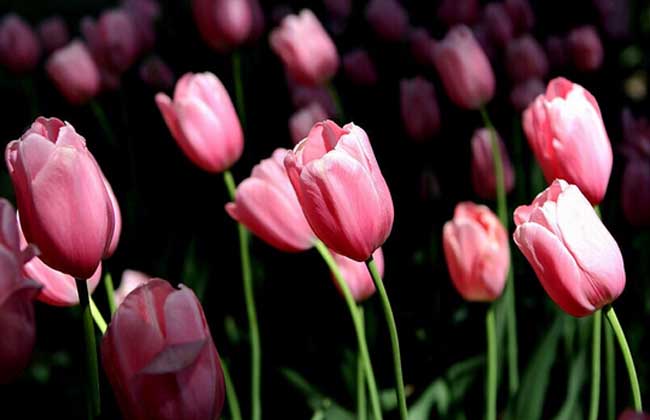
Tulip is also known as foreign lotus, grass musk, Dutch flower, etc. It is a herbaceous plant of the genus Tulipa in the Liliaceae family. It is grown all over the world. The flowers are sturdy and upright, the leaves are elegant and beautiful, and the lotus-like flowers are dignified and moving, making them lovable. They are called the queen of flowers and have become a symbol of fashion and internationalization. Now let us take a look at how to grow potted tulips!
Tulip growth habits
Tulips originated in the high mountain areas of **Tibet, China, Iran and Turkey. They are long-day flowers and like sunny, wind-sheltered conditions, a warm and humid winter, and a cool and dry summer climate. They can grow normally above 8°C and generally can tolerate a low temperature of -14°C. They are very cold-hardy. In severe cold areas, if covered with thick snow, the bulbs can overwinter in the open field, but they are afraid of intense summer heat. If summer comes early and midsummer is very hot, it is difficult for the bulbs to survive the summer after dormancy. They require slightly acidic sandy loam rich in humus, loose and fertile, and well-drained, and avoid alkaline soil and continuous cropping.
Tulip propagation methods
1. Bulb division: After a season of growth, the mother bulb planted that year in tulips can simultaneously produce 1-2 large bulbs and 3-5 small bulbs around it. Large bulbs can bloom in the same year after planting, and small daughter bulbs can also bloom after 1-2 years of cultivation.
2. Sowing: Tulip propagation by sowing is mostly used for breeding new varieties. The seeds are collected before the capsule matures and splits, stored in sand until October, then sown indoors in pots, kept moist, and only germinate the following spring, blooming in about 3-4 years.
How to grow potted tulips?
1. Soil: Tulips require planting soil that both retains water and is breathable, with salinity that is not too high and not too acidic. The pH value should be no less than 6. Using peat, decomposed soil and sand mixed at 1:1:1 as the cultivation substrate works better. Loose soil is conducive to the emergence of young shoots, and the root system and seedlings grow well. Compacted and heavy soil makes it difficult for young shoots to emerge, consumes too many nutrients, results in a low germination rate of bulbs, and produces small and irregular flowers.
2. Sunlight: Tulips are intermediate-day plants and like a sunny, well-lit environment. Light is an important limiting factor for tulip flowering. During cultivation, tulips must receive no less than 8 hours of light every day. This helps tulips accumulate more photosynthetic products, ensures good plant growth, and ensures normal flowering.
3. Temperature: Tulips like cool conditions and fear high temperatures throughout their growth process, with a growth temperature range of 8-16°C. Under natural conditions, in mid to late September, when the temperature is 15-25°C, tulip bulbs begin to take root. At this time, stored bulbs must be kept at 9°C to prevent continued rooting under the basal plate of the bulb. They are generally planted from late October to late November.
4. Watering: After planting, tulips should be watered thoroughly so that the soil and bulbs can fully and closely combine, which is conducive to rooting. After budding, water should be properly controlled. When the leaves gradually extend, water can be sprayed on the leaf surface to increase air humidity. During the flower stalk stage and bud stage, a sufficient water supply must be ensured to promote full flower development. After flowering, water should be properly controlled.
5. Fertilizing: Tulips are very sensitive to fertilizer. If nitrogen fertilizer is insufficient, daughter bulbs decrease, leaves are small and poor in quality, flower stems shorten, flowers are small, the flowering period is delayed, and most small bulbs grow only 1 small leaf. Conversely, if nitrogen fertilizer is sufficient, the propagation coefficient increases markedly. Applying phosphate fertilizer alone has no obvious effect, but if it is mixed with potassium fertilizer, it will greatly promote the development of flower stems. When nitrogen fertilizer and potassium fertilizer are mixed and used, the number of medium-sized bulbs increases.
6. Diseases: Tulip pests and diseases mostly occur in high-temperature and high-humidity environments. Diseases include stem rot, soft rot, color breaking, damping-off, blind buds, etc., and pests are mostly aphids. Carry out thorough soil disinfection before planting, choose virus-free bulbs for cultivation as much as possible, promptly dig out and destroy diseased plants, and apply fungicide 1-2 times during greenhouse growth for better results. Good ventilation should be maintained to prevent high temperature and high humidity. When aphids occur, 3% natural pyrethrin can be sprayed at 800 times dilution.