A Detailed Guide to Growing and Caring for Lisianthus
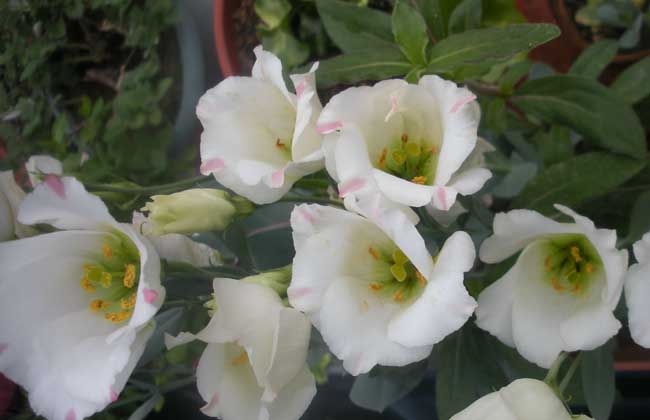
Lisianthus, also known as prairie gentian, Turkish gentian, and Eustoma, is a perennial plant of the genus Eustoma in the Gentianaceae family. With its elegant form and fresh, delicate colors, it brings a fresh and refined feel when grown in pots to accent a room, balcony, or windowsill. A few cut stems paired with white lilies also make a very tasteful floral arrangement. Let us take a look at how to grow lisianthus!
Growth Habits of Lisianthus
Lisianthus is native to the areas of Colorado, Nebraska, Texas, and New Mexico in the United States, and beginning in the 1970s it became popular as a cut flower in places such as Japan and Korea. It prefers a warm, humid environment with plenty of sunlight, is relatively drought-tolerant, and does not tolerate waterlogging. It has strict requirements for water: it likes moisture, but too much water is also harmful to root growth. It is fairly sensitive to light and requires loose, fertile, well-drained soil, with a pH of 6.5 to 7.0 being ideal.
Propagation Methods for Lisianthus
Lisianthus is commonly propagated by sowing. Its seeds are very small, usually around 10,000 seeds per gram, so lisianthus seeds are mostly given a coating treatment. Coated seeds have a higher germination rate. It is best to sow in pots indoors in September to October or January to February. The seeds are light-loving, so there is no need to cover them with soil. The optimum germination temperature is 22 to 25°C, and they germinate 12 to 15 days after sowing. About half a month after germination, thin or transplant the seedlings; the seedlings grow very slowly. From sowing to flowering takes 120 to 140 days, and cut flower varieties take 150 to 180 days. In the seedling market, a small number of tissue-cultured and cuttings-grown lisianthus plants are also available.
How to Grow Lisianthus
1. Soil: Lisianthus requires fertile, loose, and well-drained soil. Never grow it in continuous cropping. The soil used for potting must be sterilized; the soil can be treated with high-temperature steam or methyl bromide, and the soil pH should ideally be 6.5 to 7.0.
2. Light: Lisianthus is fairly sensitive to light. Long-day conditions are very favorable for the growth and development of lisianthus, helping stem and leaf growth and flower bud formation, and generally 16 hours of light per day gives the best results.
3. Temperature: Lisianthus likes warmth, with an optimum growing temperature of 15 to 28°C, and the nighttime temperature during the growing period should not be lower than 12°C. When the winter temperature is below 5°C, the leaf rosette forms a rosette shape and cannot flower. It can also tolerate short periods of 0°C low temperatures. When the growing period temperature exceeds 30°C, the flowering period is noticeably shortened.
4. Watering: Lisianthus likes a humid environment, but excessive water is harmful to its root growth and makes it susceptible to disease invasion. After the flower buds form, avoid high-temperature and high-humidity conditions, otherwise fungal diseases are easily caused. At the same time, insufficient water supply during the growing period makes the stems and leaves grow thin and weak and causes early flowering.
Pest and Disease Control for Lisianthus
1. Stem blight: In the early stage of the disease, spray with 1% Bordeaux mixture. In severe cases, alternate 50% thiophanate-methyl wettable powder at 500 times dilution and 50% baicaoqing wettable powder at 500 to 800 times dilution, spraying once every 3 to 5 days. Also pay attention to improving ventilation and light penetration, reducing planting density, applying nitrogen fertilizer reasonably, and appropriately increasing phosphorus and potassium fertilizer to improve the plant's disease resistance.
2. Root rot: Root rot mainly infects the roots and the root crown. When the disease occurs, black necrotic spots form on the root crown, and in severe cases the plant dies. This fungus spreads mainly through soil, fertilizer, and watering. Apply thoroughly decomposed fertilizer, water appropriately, and avoid water accumulation. In the early stage of the disease, use 50% carbendazim wettable powder at 600 times dilution, spraying once about every 10 days for 2 to 3 consecutive applications.
3. Insect pests: The main insect pests of lisianthus are leaf miners and aphids, which can be killed with BT biological agents. For aphid control, you can also spray 50% phoxim at 1000 times dilution or 40% omethoate emulsifiable concentrate at 1000 to 1500 times dilution.