How to grow the succulent Debbie? Let me teach you the correct cultivation method
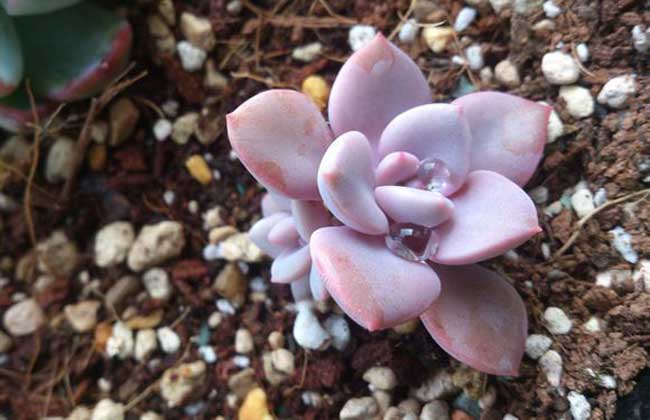
Debbie is a hybrid descendant of Graptopetalum and Echeveria. Just hearing that gives it a somewhat noble and coolly elegant feel, and that is indeed the case - it is one of the few succulents that can display pink-purple color all year round. Although its appearance is noble and coolly elegant, it is not difficult to care for. Let us take a look below at the cultivation methods for Debbie!
Morphological characteristics of Debbie
Debbie is a medium-sized succulent, reaching up to 10 cm in size, and growing even larger when clustered. Debbie's fleshy leaves are alternate, arranged in a rosette shape, with thick leaves and a long spoon shape; the leaf tips are obliquely pointed and triangular. The leaf color ranges from pink-purple to purplish-red, maintaining a charming purple look for a long time. It blooms in late spring, with spike-like peduncles; the flower leaves and calyx are both purple, and the flowers are bell-shaped with five petals, ranging from orange to purple.
Propagation methods for Debbie
Debbie's leaves are relatively thick, so leaf cuttings sprout relatively easily. You can also consider cutting off side shoots for stem cuttings. For both leaf cuttings and stem cuttings, you can first place the leaves in a ventilated, shady spot for two to three days, then place them on slightly moist soil surface. The suitable seasons for propagating Debbie are spring and autumn.
Cultivation methods for Debbie
1. Potting soil: For growing Debbie, choose a loose, breathable medium, such as peat soil, coconut coir, perlite, volcanic rock, etc., usually mixed at a ratio of 2:1 or 1:1.
2. Watering: The watering frequency for Debbie depends on how dry the medium is. Water thoroughly when it is dry or nearly dry. When watering, avoid water accumulating in the center of the leaves. During the rainy season, never leave it in the rain for long periods; long-term damp soil can easily cause Debbie to drop leaves and rot.
3. Light: In summer, Debbie's leaf purple color will become lighter. If the leaves become pale and elongated and the leaf shape becomes loose, consider increasing the light slightly. Debbie's summer dormancy is not obvious, and it will still grow. In summer, the watering frequency should be appropriately extended, and watering in the evening is best.