Can the jade plant purify air? Truth analysis
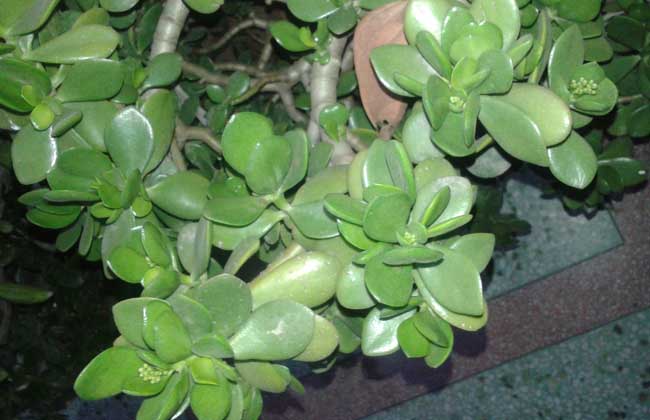
The jade plant, also known as the silver jade plant, fleshy evergreen, and jade plant, among other names, is an evergreen small shrub of the genus Crassula in the family Crassulaceae. Its branches and leaves are thick and fleshy, green in all four seasons, with unusual leaf shapes, a dignified plant form, easy cultivation, and simple management. Potted plants can be placed on a balcony or used as a decoration on an indoor side table, appearing very elegant and refined. Now let us take a look together at whether the jade plant can purify air!
Can the jade plant purify air?
The jade plant can purify air. The jade plant is a very good landscaping plant. It has a fairly good purifying function against indoor benzene pollution and also has a certain anti-radiation effect. It has special photosynthesis, and even at night it can absorb carbon dioxide, playing a very good role in purifying air. At the same time, the jade plant has thick leaves, remains evergreen in all four seasons, and has an unusual shape, making it suitable for keeping at home for ornament and viewing.
What effects does the jade plant have?
1. Ornamental effect: The jade plant has thick branches and leaves, green and glossy stems and leaves, unusual leaf shapes, and remains evergreen in all four seasons. It is also easy to cultivate and manage. It can be potted alone and used to decorate a desk, windowsill, tea table, or tabletop, embellishing the indoor environment in a very elegant and refined way. With proper cultivation, it will also produce beautiful white clustered small flowers.
2. Ecological effect: Experiments have shown that the jade plant has a significant purifying effect on indoor benzene pollution. It can absorb harmful substances in the air and purify the air. At the same time, the jade plant also has a certain anti-radiation effect.
3. Medicinal effect: Research has found that natural jade plant has a significant blood sugar-lowering effect. In some tribes in Africa, people even use the jade plant as a food ingredient, making it into a paste-like food to drink. In addition, taking a small amount of the stems and leaves of the jade plant and boiling them together with milk to drink has a certain therapeutic effect on diarrhea.
How to cultivate the jade plant
1. Soil: For potted jade plant, it is advisable to choose 2/3 leaf mold soil and 1/3 garden soil mixed together and add a small amount of river sand as the growing medium. A small amount of long-acting fertilizer such as hoof pieces can be placed at the bottom of the pot as base fertilizer. To help with drainage, some crushed stone or tiles should also be placed at the bottom of the pot. Every spring, the jade plant needs to be repotted and replenished with fertilized soil.
2. Temperature: The most suitable growth temperature for the jade plant is 15-32°C. It fears high temperatures and stuffiness, and enters a dormant state in summer when the severe heat reaches above 33°C. It avoids cold and frost, and the overwintering temperature needs to be kept above 10°C. In winter, when the temperature drops below 7°C, it also enters a dormant state. If the ambient temperature approaches 4°C, it will die from freezing injury.
3. Sunlight: The jade plant likes sunlight, but in summer it avoids direct sunlight and should be kept in a ventilated, shady place for care. In other seasons, light can be appropriately increased, and the leaf color will become more emerald green and full. In winter, when the temperature is low, increasing light and reducing watering helps improve cold resistance. If placed in a dark place for a long time, the plant will become leggy, and the leaves will become thinner and yellow, reducing ornamental value.
4. Watering: From spring to autumn, the jade plant can be watered once every 1-2 days, but water accumulation in the pot should be avoided. In summer, when the heat is severe and the temperature reaches above 30°C, the plant is in a dormant or semi-dormant state, so watering should be controlled. At the same time, shade and cooling work should also be done well. The ground around the pot can be sprayed with water 2-3 times daily, and attention should be paid to ventilation. Entering winter, the frequency of watering should be appropriately reduced, keeping the pot soil slightly dry.
5. Fertilizing: The jade plant does not have high requirements for fertilizer and water. In spring and autumn, apply a liquid fertilizer for cacti once a month. Generally, no fertilizer is applied in summer. In winter, when the indoor temperature is too low, fertilizer is generally not needed either. Potted jade plants are generally repotted once every 3-4 years. When repotting in spring, compound fertilizer or decomposed organic fertilizer can be added as base fertilizer.
6. Pruning: The jade plant grows relatively quickly. If it is not pruned in time, the plant's shape will be destroyed, and its ornamental value will also be greatly reduced. It is best to prune the jade plant in spring and autumn. These two periods are its peak growth periods. After pruning, its "body" recovers quickly, and it is also easy for it to grow new branches again.
7. Pests and diseases: The jade plant has relatively few pests and diseases. Under conditions of high temperature and high humidity, it may suffer from anthracnose and leaf spot disease. It can be sprayed with a 600-800 times dilution of 70% thiophanate-methyl wettable powder, or a 1000 times dilution of 60% propineb · tebuconazole wettable powder. If indoor ventilation is poor, the stems and leaves are prone to damage by scale insects. Once pests are found, they should be manually scrubbed immediately. When the damage is severe, a 300-500 times dilution of 0.5% veratrine soluble concentrate can be sprayed for control.