How to grow Podocarpus nagi? Detailed growing methods and precautions
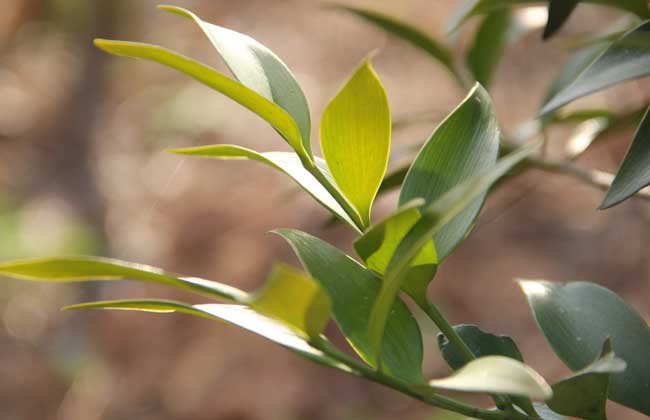
Podocarpus nagi is a national second-class protected plant in China, also known as coconut tree, Luohan chai, etc. It is a tree of the genus Podocarpus in the family Podocarpaceae. Its branches and leaves are green and glossy, the crown is dense, and the tree shape is beautiful. It has been widely used in recent years as an excellent landscape tree for greening gardens, residential communities, streets and other areas. Let us take a look at the growing methods and precautions for Podocarpus nagi!
The growing value of Podocarpus nagi
1. Ornamental value: The branches and leaves of Podocarpus nagi are green and glossy, the crown is dense, and the tree shape is beautiful. It is a good shade tree in the south and a street tree in gardens. It is also an excellent tree species for greening the four sides of urban and rural areas. It can be planted in patches in parks, gardens, residential communities, streets and other areas, and can also be mixed with other evergreen and deciduous tree species.
2. Home decoration: Podocarpus nagi can be mixed with other coniferous and broad-leaved tree species in warm places in parks and green spaces. It can also be planted oppositely or in rows in sheltered and slightly bright places near tall buildings, and is also suitable for potted viewing. The branches and leaves of Podocarpus nagi are green and glossy, the crown is dense, the tree shape is beautiful, the leaves are lush and the shade is dense, and it is easy to grow. It is very suitable for growing indoors to decorate the home.
3. Economic value: The sapwood of Podocarpus nagi is light yellow-white, the heartwood is dark in color, the texture is straight, the structure is fine, the hardness is moderate, the specific gravity is 0.47-0.53, it is easy to process, and it is durable. It is an excellent material for construction, shipbuilding, furniture, utensils and crafts. The leaves of Podocarpus nagi are shaped like bamboo, and the crown is beautiful and dense. It is a beautiful ornamental tree species and woody oil tree species. The seeds contain oil and can be eaten.
4. Medicinal value: Podocarpus nagi not only has unique ornamental value, but also has certain medicinal value. Podocarpus nagi has the effects of stopping bleeding and setting bones. Podocarpus nagi uses leaves as medicine, can be collected throughout the year, washed, used fresh or dried in the sun, and has the effects of stopping bleeding and setting bones. For external use, an appropriate amount is used. Fresh products are pounded and applied, or dried products are ground into powder and mixed for application, which can treat bleeding, fractures, etc.
Propagation methods of Podocarpus nagi
1. Sowing: Podocarpus nagi seeds can be sown in a greenhouse as they are collected, or sown in the open field in spring. After sowing, cover with soil 2 to 3 cm thick, and cover with rice straw or weeds for shading. Seeds begin to germinate after 20 days. Afterwards, gradually remove the covering, and seedlings emerge completely in 30 to 50 days. Because the root system of seedlings is not fully developed, water accumulation, heavy rain, high temperature, and exposure to the sun can all cause their death, so special care must be taken in routine management.
2. Cuttings: Generally carried out in March, and also possible in mid-September. Cut current-year or one-year-old young branches as cuttings, and cut off part of the leaves to reduce water evaporation and ensure survival. Rooting powder and other drugs can also be used for treatment to promote rooting. Insert into coarse sand, vermiculite or other media with good drainage and air permeability. After insertion, water frequently and spray frequently to keep the medium and air moist, and avoid exposure to strong sunlight. The survival rate is quite high.
3. Layering: Podocarpus nagi mostly uses the air layering method. In the growing season, select robust and full one-year-old branches, make a girdle at a suitable position, then wrap soil around the wound, and then wrap the soil tightly with a plastic bag to keep it moist. After rooting, cut it off and plant it in a pot.
Growing methods for Podocarpus nagi
1. Soil: Podocarpus nagi has strict soil requirements. It is more suitable in deep, loose, moist, humus-rich, acidic sandy loam to light clay developed from parent rocks such as sandstone, granite, and metamorphic rock.
2. Water: Podocarpus nagi grows well in areas with an average rainfall of 1200-1800 mm. When rainfall is less than 800 mm, growth is poor. It likes moist areas but not water accumulation.
3. Light: Podocarpus nagi is a shade-tolerant tree species. Its growth rate on shady slopes is 5-6 times faster than on sunny slopes. On sunny slopes with strong sunlight, the root crown may suffer sunscald or die.
4. Temperature: The most suitable annual average temperature for Podocarpus nagi is 18-26°C. Its cold resistance is weak. The extreme minimum temperature is -7°C, otherwise it is prone to low-temperature damage.
5. Fertilization: Podocarpus nagi is tolerant of poor soil. When fertilizing, it is best to apply acidic fertilizers, and it is best to apply fertilizer solution. Apply less but frequently.
6. Pruning: In winter, when the plant enters dormancy or semi-dormancy, cut off weak, diseased and insect-infested, dead, and excessively dense branches.
Precautions for Podocarpus nagi
1. Within 1 to 2 months after the seedlings of Podocarpus nagi emerge, the aboveground part grows slowly and has poor resistance to adverse external factors. In addition, Podocarpus nagi seedlings are shade-tolerant and avoid water accumulation, so heavy rain, high temperature, and exposure to the sun can cause a large number of seedling deaths. Therefore, after the seedlings emerge, a shade shed should be built. The shading material should be strong and firm and should not damage the seedlings. Reed curtains are generally used, and shade nets are best.
2. The main pests and diseases of Podocarpus nagi are red spiders, scale insects, anthracnose, and leaf spot. To control red spiders, spray dicofol, hexythiazox, etc. To kill scale insects, spray chlorpyrifos, methidathion, etc. To treat anthracnose and leaf spot, spray carbendazim, thiophanate-methyl, difenoconazole, etc.
When Podocarpus nagi first emerges, it is curved, first growing stems and then leaves. The emerged roots and stems are easily infected by fungi, so thiophanate-methyl and carbendazim should be sprayed alternately. During the bud and seedling stage, weeding should be done frequently. The buds and seedlings of Podocarpus nagi are tender, so water and fertilizer management should be strengthened, and watering should be done once at regular intervals.