How to grow a potted Radermachera sinica? Care methods and precautions
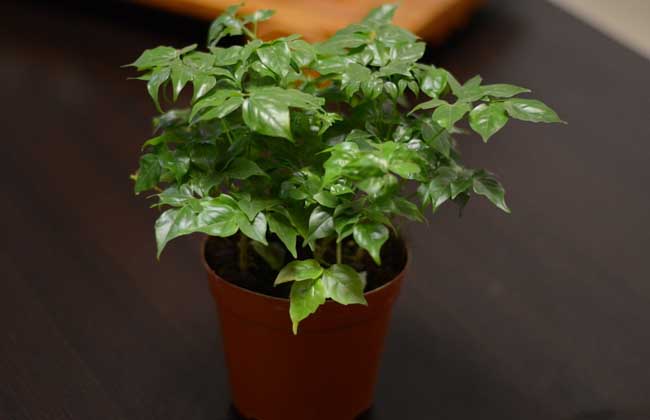
Radermachera sinica is also known as the pepper tree, mountain bean tree, bean tree, etc. It is a small tree of the genus Radermachera in the family Bignoniaceae, often made into small to medium-sized potted plants, and can be placed on balconies, in bedrooms, entrance halls, and other places. Its leaves are dense and green, full of vitality, and it can serve as an ornamental plant for boosting prosperity, bringing people an auspicious meaning of happiness. Now let us take a look at how to grow a potted Radermachera sinica!
The growth habits of Radermachera sinica
Radermachera sinica is native to Taiwan, China, Guangdong, Hainan, Guangxi, Guizhou, Yunnan, and other places, and is also distributed in India, the Philippines, Bhutan, and other countries. It likes a high-temperature, humid, and sunny environment, tolerates high temperatures, fears cold, prefers moisture, and avoids dryness. It grows in valleys or sparse forests on flat land. For cultivation, loose, fertile, well-drained loam and sandy loam rich in organic matter should be used.
Propagation methods of Radermachera sinica
1. Sowing: For Radermachera sinica, at the end of December, when its capsules are close to splitting and the seeds are fully mature, collect the long strip-shaped capsules. After drying in the shade, shake out the winged seeds, rub them, and winnow away the membranous wing fragments, then store them dry until sowing the following spring. Usually from March to April, first soak them for 3 to 4 hours, remove them and spread them out briefly to dry, then mix them with sandy soil and broadcast sow them on a prepared seedbed, lightly cover with a thin layer of soil, cover with plastic film to retain moisture, and after the seeds sprout, remove the film and set up a sparse shade frame for shading.
2. Cuttings: For Radermachera sinica, from March to April, when the ambient temperature reaches about 15°C, cut 1- to 2-year-old woody branches, about 15 cm to 20 cm long, remove all leaves, with the lower cut preferably located 0.5 cm below a node, and insert them into a sandy loam seedbed. The cutting depth is about 1/3 to 1/2 of the cutting length. During the period when the lower cut heals and roots form, water should be sprayed to keep the seedbed moist. Only after well-developed roots have grown can they be transplanted into pots with a soil ball.
3. Layering: For Radermachera sinica, from March to April, perform ring barking below a node on a 2-year-old vigorous branch or stem. The width of the bark removal is generally 2 to 3 times the diameter of the layered stem. Below the ring-barked wound, tie a piece of 15×20 cm plastic film and tie it against the thick main trunk to prevent it from drooping and being broken by wind. By late autumn, after relatively well-developed roots have grown from the ring-barked wound, cut it away from the mother plant and plant it separately in a pot.
How to grow a potted Radermachera sinica?
1. Soil: When Radermachera sinica is growing, soil is equally important. Choose a soil type that is loose, breathable, well-drained, and nutritious. Usually prepare it with garden soil: leaf mold: decomposed organic fertilizer: river sand = 5:3:1:1. Persist in loosening the soil once a month during the growing season to ensure the roots remain in a well-aerated state at all times. If water accumulation is found in the pot, drain it as soon as possible, and after the potting soil dries, repot and replace the soil.
2. Temperature: Radermachera sinica likes a warm and humid environment, and temperature is most important. The daytime temperature should be controlled between 19-21°C, and the nighttime temperature should be controlled between 18-20°C. In the hot midsummer, try to keep the temperature below 27°C. When the ambient temperature is very high, shade it appropriately with a shed. In winter, the temperature must not be lower than 8°C, and the humidity must not be less than 5°C, otherwise it will be frostbitten below this temperature.
3. Humidity: Radermachera sinica prefers moisture in both its soil environment and indoor environment. Indoor humidity should be controlled between 70-80%. In large banquet halls where humidity cannot be controlled, spray the leaf surfaces once in the morning and once in the evening. If the humidity is too low or it is in a dry environment for a long time, the leaves will curl and turn yellow, affecting their ornamental value.
4. Light: Light is very important for Radermachera sinica. It likes to grow in a semi-shady environment. In the north, it is generally kept indoors, so there is no problem of direct sunlight. What it fears is being placed in a dark place for a long time, where it cannot receive direct light or scattered light. After a long time, it will definitely drop leaves. Therefore, in winter it should be placed on a balcony or in front of a sunny window to get sufficient light.
5. Watering: Potted Radermachera sinica should be watered once every 3 to 4 days in summer, but this also depends on the individual situation. In winter, indoors in the north, Radermachera sinica almost stops growing, and watering should be controlled so that the potting soil is merely not dry. If you water, water it thoroughly; if you do not water, do not pour a single drop into the pot. This is the principle, please remember it.
6. Pruning: The purpose of growing Radermachera sinica is for ornament and to complement the indoor environment. If the tree shape grows poorly, it will not be attractive, so it should be pruned carefully. Generally, it can be pruned according to the natural growth direction of Radermachera sinica, or pruned into a mushroom shape or a rounded mound shape, while also cutting off some old leaves and yellow leaves.
7. Fertilizing: Potted Radermachera sinica requires not only an appropriate amount of decomposed cake fertilizer and 3% compound fertilizer added to the culture soil, but also continuous topdressing. During the growing season, apply a quick-acting liquid fertilizer once a month, usually decomposed cake fertilizer water. For a small number of household potted plants or large potted specimens displayed in public places for a long time, a small amount of multi-element slow-release compound fertilizer granules can be buried periodically, or a mixed solution of 0.2% urea plus 0.1% potassium dihydrogen phosphate can be applied.
8. Pests and diseases: Pests on Radermachera sinica generally include scale insects, mites, and aphids. Use jiebidisi, methidathion, manjing, tetradifon, phorate, omethoate, and deltamethrin to control the pests. As long as ventilation and air exchange are frequent, pests generally will not occur. Radermachera sinica also has strong disease resistance, and diseases usually rarely occur.