How to grow Heliotropium arborescens? Detailed growing methods and precautions
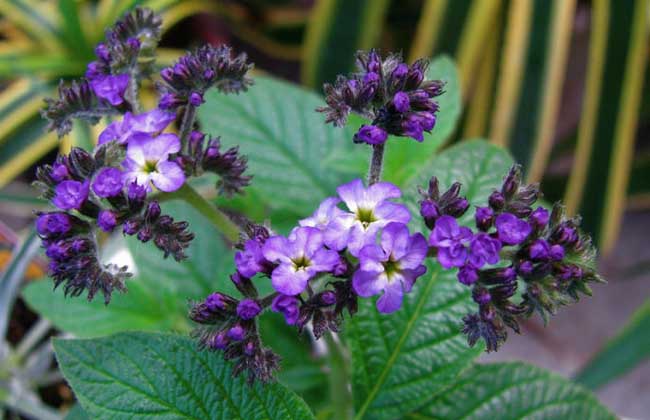
Heliotropium arborescens, also known as heliotrope and cherry pie plant, is a subshrub in the Boraginaceae family, genus Heliotropium. Its flowers are an elegant blue-purple tone, extremely suitable for indoor flower arrangements in summer, but its fragrance is so strong it can be somewhat overpowering. Nevertheless, Europeans and Americans love this fragrance very much; in Germany it is called the "herb of the gods" and in France it is known as the "tree of love". Let's take a look at the growing methods for Heliotropium arborescens!
Growth habits of Heliotropium arborescens
Heliotropium arborescens originates from Peru and thrives in relatively moist and fertile soil; it is a common weed in farmland and orchards. Its physiological cycle is stable; other plants generally need sunlight to bloom, but heliotrope will bloom even in darkness when the time comes. It loves fertilizer, so apply a top dressing about once every 10 days. Its root system is well developed, with strong absorption and fast growth; pinching should be started from the seedling stage to make the plant full and bushy.
Propagation methods for Heliotropium arborescens
1. Cuttings: Heliotropium arborescens can be propagated by cuttings in all four seasons, but spring and autumn are better. Indoor cuttings are mostly done from February to March, while softwood cuttings are generally taken during the plum rain season. It generally takes about 60 days from cutting to flowering.
2. Sowing: The suitable period for sowing Heliotropium arborescens is autumn. Its seeds have a very short lifespan, lasting only 1 year, so harvested seeds should be sown early to obtain a higher germination rate. At a temperature of 22°C, germination takes about 20 to 30 days.
Growing methods for Heliotropium arborescens
1. Soil: For potted Heliotropium arborescens, use a well-drained, fertile, loose loam soil, generally made by mixing 4 parts garden soil, 3 parts compost soil, 2 parts sandy soil and 1 part plant ash. From seedling to flowering generally takes 2-3 months. The plant has a well-developed root system and its fibrous roots grow very vigorously, so during this period it should be repotted 1 to 2 times to favor root development.
2. Pinching: After Heliotropium arborescens is transplanted into pots, pinching should be done promptly starting from the seedling stage to promote branching and more flowers. Plants that need repotting should also be pinched to form a dense and full plant shape. If a larger plant shape is desired, use stakes for support and tying, and remove all its side buds so the branches grow upward in height. After the stem grows taller, pinch repeatedly to make it grow into an umbrella-shaped plant.
3. Watering: Heliotropium arborescens likes a moist environment. In the vigorous growth season of spring, the pot soil should be kept moist; both overly dry and overly wet conditions can cause the leaves to turn yellow. Generally, water once a day in spring and autumn. Growth is slow in summer, so it is best to water once in the morning and once in the evening. In winter, control moisture appropriately and do not let it become too wet; watering once every 3 to 4 days is sufficient.
4. Fertilizing: Heliotropium arborescens is a flowering plant that loves fertilizer. Top dressing can begin one week after potting. During the growth period, apply a dilute, well-rotted cake fertilizer solution or fermented chicken manure liquid once a week, and add a compound chemical fertilizer once every 2 to 3 weeks. In winter when room temperature is low and in summer when it is hot, the interval between top dressings can be extended or fertilizing can be stopped.
5. Light: Heliotropium arborescens is a light-loving plant and requires sufficient sunlight. In an environment with insufficient sunlight, it tends to grow weak and spindly, with thin branches and small flowers, or it may fail to bloom. In winter, move it to a place with plenty of sunlight; in summer, place Heliotropium arborescens under a shade shed or in a shaded spot to block strong sunlight, otherwise the leaves are easily scorched and turn yellow. In spring and autumn, Heliotropium arborescens can be given sufficient sunlight.
6. Temperature: When the summer temperature exceeds 30°C, the growth of Heliotropium arborescens slows and it enters a semi-dormant state. If exposed to scorching sun, the leaves easily wither and turn yellow. Therefore, in summer, move the flower pot to a cool and ventilated place. The suitable growth temperature is 15 to 25°C. In winter, keeping the room temperature above 13°C allows it to continue flowering; in a greenhouse it can bloom in all four seasons. The overwintering temperature is 5 to 7°C; when the temperature drops to around 0°C, it suffers cold damage.
7. Replanting: Although Heliotropium arborescens is a subshrub, its branches are soft and old plants sprawl, making the posture unattractive, so it is often grown as an annual or biennial. After several years of cultivation, the plant tends to age, the flowering parts keep moving upward, and the basal leaves gradually fall off as the stem becomes woody, often leaving the lower part of the plant bare. Therefore, after generally 2 to 3 years of cultivation, new plants are propagated separately by cuttings. During growth, it is susceptible to scale insect damage, so attention should be paid to control.