What are the flower language and legends of the bonfire flower?
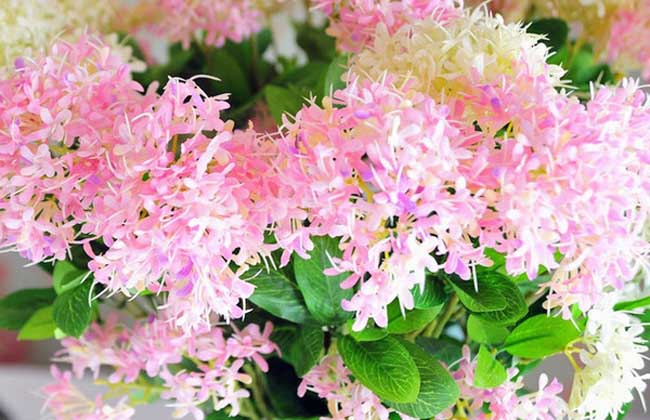
The bonfire flower, also known as throat-healing grass, throat-pipe flower, etc., is a perennial herbaceous plant of the genus Trachelium in the Campanulaceae family. Because its style protrudes from densely clustered small flowers, giving the overall flower shape a hazy outline as if in mist, it got this name. It is native to the Mediterranean region, including Algeria, Morocco, Portugal, Spain and Sicily. Now let us take a look at the flower language and legends of the bonfire flower!
The flower language of the bonfire flower
Passionate missing, deep devotion. If you want to tell the other person that you miss him or her very much, if you want to express your deep devotion to the other person, then you can give a bonfire flower to express the feelings in your heart, let the other person know his or her place in your heart, and tell the other person how much you miss him or her.
The value of the bonfire flower
1. Ornamental: The bonfire flower has a delicate fragrance and gives a pure and beautiful feeling. It is now made into small and medium-sized flowers that can be grown in pots, and can also be used as a decorative plant in gardens to arrange flower beds, etc.
2. Cultural: The flower language of the bonfire flower is very beautiful, representing passionate missing and deep devotion. Tied into a beautiful bouquet and sent into the hands of a sweetheart, through this bonfire flower one entrusts longing and conveys affection.
3. Literary: The overall flower shape and outline of the bonfire flower present a hazy feeling, as if in mist, and it is increasingly used by young boys and girls as a symbol to describe youthful love.
The legend of the bonfire flower
Yugiri is one of the main characters in The Tale of Genji, the son of Genji and his legal wife Aoi, and rose to the office of Grand Minister. Shortly after Yugiri was born, his mother passed away. In his youth, his father was also persecuted by political enemies, convicted and exiled to Suma, so Yugiri lacked parental care in childhood. He and his cousin Kumoi no Kari were both raised by their grandmother.
The name Kumoi no Kari means a lone wild goose flying apart from the flock in the clouds. She is a very lovely little girl, the daughter of the Naidaijin (formerly the Head Chamberlain). Because her parents divorced due to incompatible feelings, and she was not accepted by her father's legal wife, she was handed over by her father to her grandmother to raise. She and Yugiri could be said to be childhood sweethearts, innocent and inseparable, with especially deep feelings.
Unfortunately, happy days never last long. The matter of the two children was discovered by the Naidaijin. He had originally wanted to wait until Kumoi no Kari grew up and send her into the palace to compete for the position of Empress, thereby increasing the power of his own family. Things having come to this, in his disappointment he was extremely angry, blamed his mother for not properly educating the two grandchildren, and thought that marriage between cousins was dull and embarrassing, so he broke up this young couple, took Kumoi no Kari back home, and gradually became estranged from Yugiri.
In his sorrow, Yugiri made a vow with Kumoi no Kari that when they grew up he must certainly make a name for himself, would no longer let his uncle look down on him, and would then openly and honorably marry Kumoi no Kari. Genji felt pain for his son, and also blamed the Naidaijin for being unreasonable, so he began to train Yugiri. He believed that under his grandmother's doting, Yugiri could not become accomplished, so he took Yugiri back to the Rokujo estate and had Hanachirusato recognize him as an adopted son (throughout his life Genji never allowed Yugiri to approach Murasaki, to prevent Yugiri from repeating the mistake he himself had made with Fujitsubo).
Hanachirusato was very wise and broad-minded, cared greatly for this adopted son and often guided him. Genji hired tutors to properly teach Yugiri history, culture, and the various abilities needed for holding office and governing the world, and Yugiri also displayed his genius in these areas. Genji deliberately did not let Yugiri's official rank rise too early. When the children in his uncle's household were all wearing red robes, he was still wearing the green robe of the sixth rank, and with Kumoi no Kari he could only exchange letters secretly.
Six years passed, and Yugiri grew into adulthood. Whether in learning and etiquette or in appearance, he was far superior to people of the same age. He refused many marriage proposals, but at a festival he took a great liking to Koremitsu's daughter, the beautiful dancer Fuji no Naishi, and they corresponded with each other. On the day of the north wind, he happened by chance to witness Murasaki's peerless beauty and praised it endlessly, but even so he still could not forget his feelings for Kumoi no Kari.
After enduring all kinds of hardships, when he was nearly in despair, Yugiri finally gained his uncle's recognition. At the wisteria flower banquet, amid everyone's blessings, he married Kumoi no Kari as his wife. Afterwards, Yugiri and Kumoi no Kari sorted out and repaired the house of his late grandmother, settled there, and began a calm and happy life.
Kumoi no Kari was lovely in appearance and very straightforward and sincere in character. After marriage, she and Yugiri had eight children, and every day she was busy raising the children. Fuji no Naishi, who became Yugiri's concubine, was always busy with work in the imperial palace, but she also had six children with Yugiri. Genji often laughed and sighed that he himself had very few children, yet his grandchildren were so numerous.
Afterwards, Yugiri's good friend Kashiwagi died of illness, and Yugiri was entrusted by Kashiwagi on his deathbed to care for his wife, the Second Princess. However, Yugiri suddenly fell in love with this ill-fated and pitiful princess, which made the straightforward Kumoi no Kari very surprised and pained. After Yugiri insisted on taking Kashiwagi's widow, the Fallen Princess, as his second wife, Kumoi no Kari took the children back to her natal home to show her displeasure. Facing the complaints of Yugiri, who had come to bring her back, she loudly said, “I can no longer change my temperament to please you.”
The two, who had become husband and wife after a pure first love, although they encountered this kind of disagreement, in fact still could not do without each other. Yugiri described Kumoi no Kari as frightening as a demon when angry. Her shrewishness and wilfulness often left Yugiri helpless, but her cheerfulness and sincerity also made Yugiri truly fond of her. Yugiri said, “I will not leave her.”
Yugiri's appearance closely resembled that of his father Hikaru Genji, handsome and refined, and his talents were also outstanding. The difference was that his character was rather serious, and he was also very serious about love, by no means as philandering and lustful as Genji. The love between Yugiri and Kumoi no Kari had a fairy-tale beginning, and after being tempered by worldly affairs, it became ordinary. But Yugiri and Kumoi no Kari were still the happiest couple in The Tale of Genji.