How to grow Ixora? A detailed guide to cultivation methods
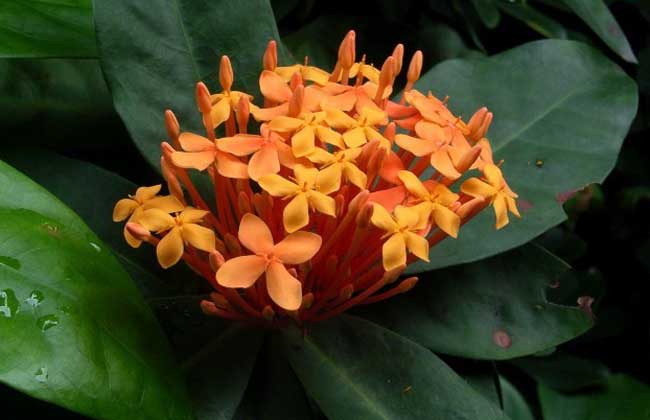
Ixora, also known as Shandan flower, Longchuan flower, and dwarf Ixora, is an evergreen shrub of the genus Ixora in the family Rubiaceae. It can bloom all year round, but blooms most profusely in summer and autumn. The flowers are terminal, with 4 petals gathered into clusters, and the blooms are delicate and gorgeous. It is drought-tolerant and heat-tolerant, with strong vitality, and is suitable for garden landscaping and potted cultivation. Let us take a look at the cultivation methods for Ixora!
Growth habits of Ixora
Ixora is better suited to environments with high temperatures and ample sunlight. It prefers a humid and hot climate and is not tolerant of low temperatures. The optimal growth temperature is 23-32°C. When the temperature drops below 20°C, its growth weakens and flowering decreases noticeably, but if sunlight is sufficient, it will still produce a certain number of flower buds. When the temperature falls below 10°C, its physiological activity decreases and growth slows. When the temperature falls below 0°C, frost damage occurs. It prefers acidic soil, with the most suitable soil pH being 5-5.5. It grows well in soil that drains well and retains fertilizer well.
Propagation methods for Ixora
1. Cuttings: For Ixora cutting propagation, it is best to do it in June-July. Select semi-mature branches 10-15 cm long and insert them into a sand bed. The optimal temperature is 24-30°C, and roots form 40-50 days after insertion.
2. Sowing: Collect Ixora seeds in winter and sow in spring. The optimal germination temperature is 22-24°C. Germination occurs 20-25 days after sowing, and when 3-4 pairs of true leaves have grown, the seedlings can be transplanted into 8 cm pots.
3. Layering: For Ixora plants with many dense branches, perform ring-barking 20 cm from the tip, wrap with peat and plastic film, and roots will heal and form in just over 2 months.
Cultivation methods for Ixora
1. Soil: For growing Ixora, fertile, loose, and well-drained acidic sandy loam is best. For potted plants, use a mixed soil of culture soil, peat soil, and coarse sand, with a pH of 5-5.5 being suitable.
2. Watering: Ixora likes moisture and fears dryness. Keeping the potting soil moist is beneficial for shoot sprouting and leaf growth. However, if it remains too wet for a long time, part of the root system is prone to rot, affecting growth and flowering.
3. Sunlight: Ixora needs sufficient sunlight. Under ample sunlight, the leaves are emerald green and glossy, which is beneficial for inflorescence formation, and the flowers bloom neatly and brightly. Proper shading during strong summer light can extend the viewing period of the flowers.
4. Temperature: The optimal growth temperature for Ixora is 15-25°C, 24-30°C from March to September, and 13-18°C from September to March of the following year. In winter, the temperature should not be lower than 0°C, as too low a temperature makes it susceptible to frost damage.
5. Fertilizing: During the growing period of Ixora, apply once every half month a liquid fertilizer made by mixing nitrogen, phosphorus, potassium, ferrous sulfate, and horseshoe slices in a 1:1:1:2:3 ratio, adding water, and fermenting until decomposed.
6. Pruning: Ixora pruning is mostly carried out in spring after the plants are moved outdoors, mainly to properly thin out the branches to facilitate ventilation and light penetration. In addition, proper pinching during the flowering period can help it produce more buds and flowers.
7. Pests and diseases: Ixora is often affected by leaf spot and anthracnose, which can be sprayed with a 1000-fold dilution of 10% antibacterial agent 401 acetic acid solution. For pest damage, there is damage from scale insects, which can be killed by spraying with a 1500-fold dilution of 40% omethoate emulsifiable concentrate.