A Detailed Guide to Oncidium Cultivation Methods and Care Techniques
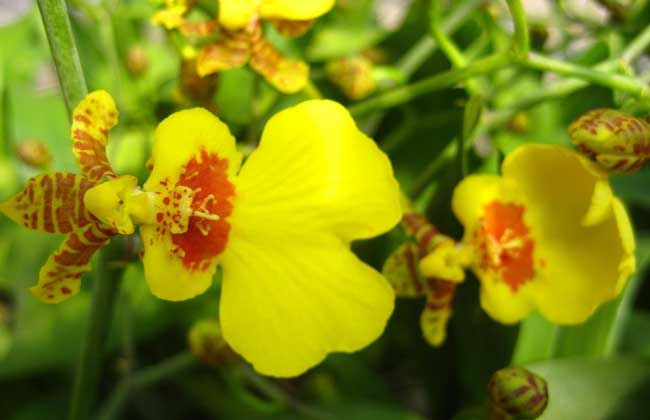
Oncidium is an extremely beautiful orchid with great ornamental value, also known as the "lucky orchid", "dancing lady orchid", "golden butterfly orchid", etc. It is the general name for plants in the genus Oncidium of the orchid family. There are more than 750 native species worldwide, and the diverse commercial varieties are mostly hybrids. It is suitable for vase arrangements in homes and offices, and is also a premium material for making bouquets and small flower baskets. Let's take a look at the cultivation methods for Oncidium!
Oncidium Growth Habits
Oncidium is native to the United States, Mexico, Guyana and Peru. The thick-leaf type prefers warm environments, with an optimal growth temperature of 18-25°C and a winter temperature no lower than 12°C. The thin-leaf type and sword-leaf type Oncidium prefer cool climates, with an optimal growth temperature of 10-22°C and a winter temperature no lower than 8°C. They prefer humid and semi-shaded environments. In addition to watering to increase substrate moisture, spraying water on the leaves and ground is even more important, as increasing air humidity is more beneficial for the growth of leaves and flower stems.
Oncidium Propagation Methods
Oncidium is a sympodial type of orchid. After the plant matures, it will produce daughter plants. Once the daughter plants have pseudobulbs, they can be cut away from the mother plant. Cut off pseudobulbs with 2 buds and plant them directly in a pot with sphagnum moss, maintaining high air humidity, and they will quickly recover and sprout new shoots and grow new roots. Division propagation is generally carried out after flowering or in spring and autumn. It is best done in spring before new shoots sprout, combined with repotting.
Oncidium Cultivation Methods
1. Soil: Oncidium prefers a relatively dry environment. A layer of broken tiles and broken bricks can be placed at the bottom of the pot. The growing medium should be one with good drainage and aeration. A mix of 4 parts broken fern roots, 1 part peat soil, 2 parts broken charcoal, 2 parts vermiculite, and 1 part sphagnum moss can be used.
2. Light: Oncidium prefers a semi-shaded environment. Generally, it should receive sufficient direct sunlight in winter, which is beneficial for flowering. In other seasons, shading measures should be taken to avoid scorching the leaves. A shading rate of 40-50% is more suitable.
3. Temperature: Oncidium should not be grown in environments with lower temperatures. The thick-leaf type Oncidium should be grown at a temperature no lower than 12°C, with an optimal growth temperature of 18-25°C. The thin-leaf type Oncidium should be grown at a temperature no lower than 8°C, with an optimal growth temperature of 10-22°C.
4. Water: Oncidium prefers dry conditions. When the soil surface is relatively dry, it should be watered thoroughly. During its growing season, the amount of watering should be increased, and it can be watered once in the morning and once in the evening. In winter, the amount and frequency should be reduced to promote flowering. When the temperature is below 10°C, watering should be stopped.
5. Fertilization: From spring to autumn, apply a low-concentration compound fertilizer with a nitrogen:phosphorus:potassium ratio of 1:1:1 once every 20 days or so, or spray the leaves with a 0.05-0.1% concentration. Do not fertilize when the temperature is low in winter.
Precautions for Oncidium
1. When growing Oncidium, water only when the substrate is about half dry. It likes high air humidity. During dry periods, spray water on the leaves frequently. It is best to place the pot on a shallow saucer filled with pebbles and water.
2. Repotting Oncidium is usually carried out after flowering. For plants that have not flowered, it can be done before the growing period, such as in early spring or after the weather turns cool in autumn. The growing materials should be replaced at the same time. Repotting can be combined with division.
3. When growing Oncidium in summer, attention should be paid to shading, and if the temperature is too high, it should be cooled down promptly. In midsummer and autumn, water thoroughly once a day, that is, water until water comes out of the drainage hole at the bottom of the pot.