How to grow Graptosedum 'Bronze'? A detailed guide to cultivation methods
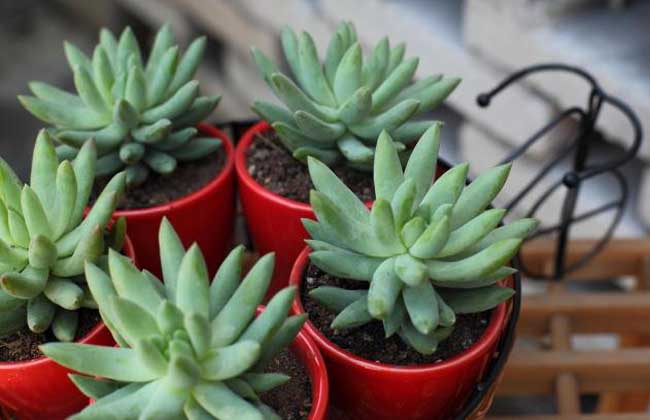
Graptosedum 'Bronze', also known as Qianfoshou, Jiuwan, etc., is a succulent plant of the genus Sedum in the family Crassulaceae, with no obvious dormant period. It was first bred in California, USA, and was created by crossing Sedum morganianum and Sedum 'Derlu' (jingye). Its blooming appearance is very unique, with very high ornamental value, and it is often grown as a potted plant. Let's take a look at the cultivation methods for Graptosedum 'Bronze' below!
Growth habits of Graptosedum 'Bronze'
Graptosedum 'Bronze' was created by crossing Sedum morganianum and Sedum 'Derlu' (jingye). The suitable growth temperature is generally 18-25°C, and not lower than 5°C in winter. It is very drought-tolerant, so water as little as possible. It likes light and can tolerate full sun, usually with some shade in summer. It likes fertilizer; fertilizing is generally once a month during the growing season, with light fertilizer applied frequently, and it can be applied along with watering. For soil, special succulent soil is most convenient, such as peat (grass peat) + gravel + perlite.
Propagation methods for Graptosedum 'Bronze'
1. Leaf cuttings: For leaf cutting propagation of Graptosedum 'Bronze', generally during the growing season, gently twist off mature leaves from the lower part of the plant and lay them flat on moist soil. Roots generally form in about 2 weeks, and after rooting, just keep the soil moist.
2. Sowing: Graptosedum 'Bronze' can be sown during the growing season, with the sowing temperature generally kept at 18-23°C. Sow the seeds flat on the soil surface; they generally sprout in about a week. After the sprouts are uniform, remove the film and increase light exposure.
3. Division: For division propagation of Graptosedum 'Bronze', during the growing season, cut off the small plants around the plant (or the upper branches of leggy plants) with a sharp knife, let them dry for a week, then plant them in moist soil. Normal watering can only be done after one week.
Cultivation methods for Graptosedum 'Bronze'
1. Soil selection: Graptosedum 'Bronze' likes loose, fertile, well-drained acidic soil conditions. The potting soil should be made by mixing loose sandy soil with red-yellow soil and adding an appropriate amount of decomposed organic fertilizer. Heavy, sticky alkaline soil is bad for its growth and development. The potting soil can be prepared with 60% coarse sand, 20% decomposed organic fertilizer, and 20% field soil.
2. Planting: Graptosedum 'Bronze' is usually planted in pots with a diameter of 12-15 cm. Before planting, select good seedlings, requiring a well-developed root system, thick and strong, with balanced branching. The planting period is autumn planting from September to October, and spring planting from late February to early April. Before potting, first prune the branches and roots, keeping the fibrous roots intact.
3. Watering: After potting Graptosedum 'Bronze', immediately water thoroughly to settle the roots. Afterward, water when the soil looks dry, keeping the soil moist, but prevent waterlogging in the pot, which affects root growth. During the growing season, keep the potting soil slightly moist. In summer, it is in a semi-dormant state, so keep the potting soil slightly dry. Watering in winter depends on the room temperature.
4. Fertilizing: Graptosedum 'Bronze' is generally fertilized once a month during the growing season, with light fertilizer applied frequently, and it can be applied along with watering. Fertilize 2-3 times throughout the year, using diluted cake fertilizer water or "Huiyou" 15-15-30 special fertilizer for pot flowers. Excessive fertilizing will cause the leaves of Graptosedum 'Bronze' to become spread out and soft, with a poor shape.
5. Pinching: After potting Graptosedum 'Bronze', pay attention to pinching the main shoot to promote branching and dwarf the crown. Thin out dense and weak branches, and combine with propping, pulling, and hanging methods to adjust the tree posture and beautify the tree form. After fruiting, according to the growth and fruiting potential, carry out bud removal in spring and summer, pinch the top shoots of fruiting branches, and thin flowers and fruits, to promote balance between shoots and fruits in each period and prevent alternate bearing.