How to grow potted marigolds? Detailed guide to cultivation methods and precautions
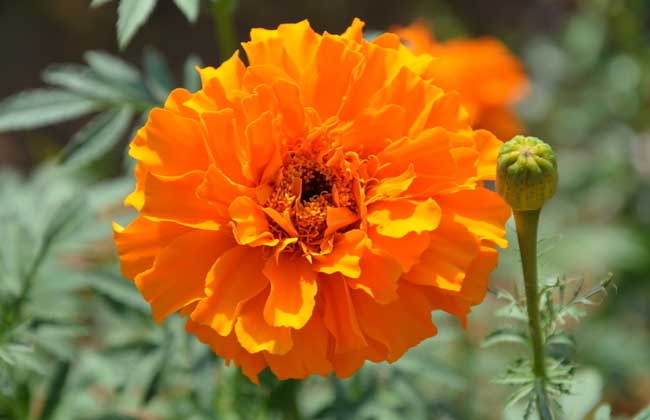
Marigold is also known as stinking beauty, marigold lantern, honeycomb chrysanthemum, etc. It is an annual herbaceous plant of the genus Tagetes in the Asteraceae family. Its flowers are large and its flowering period is long, giving it extremely high ornamental value. Medium and dwarf varieties are suitable as materials for flower beds, flower borders, and flower clusters, and can also be grown in pots. Taller varieties can be used as background material or cut flowers. Now let us take a look at how to grow potted marigolds!
Growth habits of marigolds
The suitable growth temperature for marigolds is 15-25°C, and the suitable temperature during the flowering period is 18-20°C. The relative air humidity of the growing environment is required to be 60-70%, and the winter temperature should not be lower than 5°C. In summer, when the high temperature is above 30°C, the plants grow excessively, the stems and leaves become loose, and there are few flowers. Below 10°C, growth slows down. Marigold is a light-loving plant. Sufficient sunlight is very beneficial to the growth of marigolds, making the plants short and sturdy with brightly colored flowers. With insufficient sunlight, the stems and leaves are soft and slender, and the flowers are few and small. It has low requirements for soil, and fertile, well-drained sandy loam is best.
Propagation methods for marigolds
1. Sowing: For spring sowing of marigolds, sow in an open-field seedbed from late March to early April. Because the seeds are light-sensitive, cover with soil and water after sowing. The suitable temperature for seed germination is 20-25°C. Seedlings emerge about 1 week after sowing, with a germination rate of about 50%. When cultivating marigolds, in order to control plant height, they can also be sown in summer. After emergence from summer sowing, they can bloom 60 days later.
2. Cuttings: Marigolds can be propagated by cuttings in summer, which root easily and become seedlings quickly. Cut 8-12 cm young shoots from the mother plant as cuttings, remove the lower leaves, insert them into potting soil, with 3 plants per pot. After inserting, water thoroughly and provide slight shade. They can take root after 2 weeks. Then gradually move them to a sunny place for routine management, and they can bloom after about 1 month.
How to grow potted marigolds?
1. Soil: Marigolds have low requirements for soil and broad adaptability to soil acidity and alkalinity. They can grow in soil from slightly acidic to slightly alkaline, with a suitable pH value between 5.5 and 7.0. When potting, choose suitable potting soil. Fertile, well-drained sandy loam is best for potting soil.
2. Temperature: The suitable growth temperature for marigolds is 15-25°C, and the suitable temperature during the flowering period is 18-20°C. When potted, the suitable growth temperature is around 21°C. They can also tolerate cold and can overwinter safely at around 5°C. However, they are not tolerant of heat, and growth slows when the temperature is above 32°C.
3. Light: Marigold is a typical short-day flower. Only when the daily sunshine is relatively short do they form flower buds and bloom. Under longer sunshine, they only grow stems and leaves and cannot form flower buds. Generally, during the vegetative growth period, 14.5 hours of sunshine per day are needed, and during the flower bud differentiation period, 12 hours of sunshine per day are needed.
4. Watering: Marigolds prefer a warm and moist soil environment, are drought-tolerant, and avoid excessive moisture and water accumulation. When the potting soil is too wet, root rot easily occurs. Watering should follow the principle of "alternating dry and wet." During the vegetative growth period, growth is fast and water demand is high, so it is easy for them to lack water. Water frequently, but be careful not to let water accumulate.
5. Fertilizing: Marigolds have a long flowering period and need topdressing to supply nutrients, but they cannot be given too much. Nitrogen fertilizer must be controlled, otherwise the branches and leaves will grow vigorously and not bloom. Generally, apply 1 time per month of fully decomposed dilute organic liquid fertilizer or nitrogen, phosphorus, and potassium compound liquid fertilizer. When fertilizing, be sure to first spread the fertilizer on top, then water thoroughly so that the fertilizer can fully seep into the chrysanthemum's root system with the water, so that it can be absorbed by the marigolds.
6. Pruning: During the maintenance and management of marigolds, after the seedlings planted in the field or potted have survived, promptly pinch off the growing tips to promote branching and more flowering. To make the flowers larger, promptly thin out or heavily pinch off excessive growth branches, dead branches, weak branches, and post-flowering branches. For overly dense branches, improve light by thinning, retain strong branches, but do not pinch them, so that the flower buds at the top develop fully. In windy seasons, plant height should also be controlled through pruning and pinching to avoid lodging. Otherwise, set up supports to prevent being blown over by the wind.