How to grow Haworthia fasciata? Growing methods and precautions
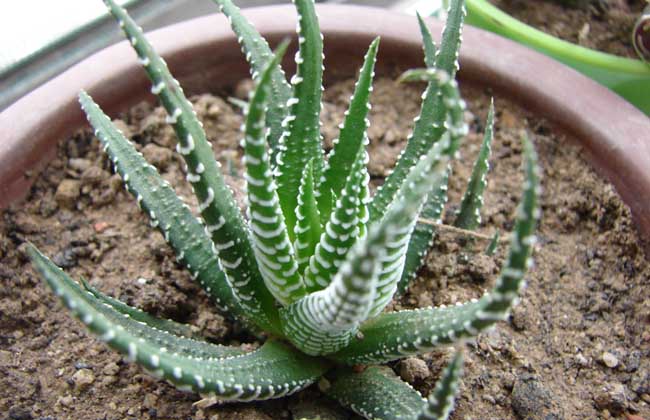
Haworthia fasciata, also known as striped snake-tail aloe and pheasant-tail, is a perennial succulent herbaceous plant of the genus Haworthia in the Liliaceae family. It has good ornamental value, with thick fleshy leaves inlaid with banded white star-like dots, fresh and elegant. It can be paired with beautifully shaped pots to decorate desks and stands. Let's take a look below at how to grow Haworthia fasciata!
Growth habits of Haworthia fasciata
Haworthia fasciata is native to the tropical arid regions of southern Africa and can now be cultivated in many places around the world. It likes warm, dry and sunny environments. It fears low temperatures and humidity. The suitable temperature during the growing period is 16-18°C from March to September and 10-13°C from September to March of the following year. The minimum winter temperature should not be lower than 5°C. It has low requirements for soil and prefers fertile, loose sandy loam.
Propagation methods of Haworthia fasciata
1. Division propagation: For Haworthia fasciata, the best time for division is early spring, in February to March. Take the mother plant out of the pot, separate the plant with a sharp knife, and each divided plant must have roots. Its leaves should also be properly pruned, which helps the divisions survive. Soak the cut small plants in a chlorothalonil solution for 5 minutes, then take them out to dry, and they can be potted. Alternatively, after potting, water with chlorothalonil and carry out normal care.
2. Leaf cutting propagation: When transplanting Haworthia fasciata, remove the soil from the bottom of the plant and choose a complete leaf, which is required to have a part of the stem tissue. Dip the leaf in rooting powder and let it dry in a cool place. Then place the leaf on warm, shaded, moist soil. If you are lucky, the leaf will take root and grow into a small plant.
3. Offset propagation: Under certain conditions, Haworthia fasciata will grow many offsets, which can be separated from the mother plant and then planted directly in soil. After the offset is removed, there will be a wound. Apply rooting powder, place it in a cool place for 1-2 days, and then plant it. Water carefully and keep the soil moist until the offset takes root.
Growing methods for Haworthia fasciata
1. Soil: Haworthia fasciata has low requirements for soil and prefers fertile, loose sandy loam. When potted, because the root system is shallow, shallow planting is better. Use fertile, well-drained leaf mold mixed with coarse sand for cultivation. During the growing period, keep the potting soil moist and fertilize once a month. During the semi-dormant periods in winter and midsummer, it should be dry, and watering should be strictly controlled.
2. Watering: Haworthia fasciata is relatively tolerant of drought and not tolerant of waterlogging, but it is definitely not fond of drought, so watering should follow alternating wet and dry conditions. Watering must be thorough. When watering, pay attention to whether there are gaps in the potting soil leaking water, and block them in time. Otherwise, even if you water frequently, the potting soil still cannot be watered thoroughly, and over time this will certainly be harmful. In winter, if the ambient temperature is below 15°C, it needs to be kept somewhat dry, which helps it overwinter.
3. Sunlight: Haworthia fasciata likes light and tolerates semi-shade. It cannot be placed in shade for a long time, otherwise not only will growth be inhibited, but the stripes will gradually become dull. In summer, it needs semi-shade care, avoiding strong light to prevent sunburn. In winter, it needs sufficient light. Insufficient light easily causes leaf degeneration and shrinking, seriously affecting normal growth.
4. Temperature: The most suitable growing temperature for Haworthia fasciata is 15°C-32°C. It fears high temperatures and stuffiness, and enters dormancy when the summer heat is above 33°C. It avoids cold and frost, and the overwintering temperature needs to be kept above 10°C. It also enters dormancy when the winter temperature drops below 7°C. If the ambient temperature approaches 4°C, it will die from frost injury.
5. Fertilization: Haworthia fasciata has little demand for fertilizer. Generally, applying dilute fertilizer water once a month is enough to meet its needs. Concentrated fertilizer and raw fertilizer must not be applied, otherwise fertilizer damage is very likely and may cause losses, with severe cases leading to the death of the whole plant. Because it grows relatively slowly, it generally only needs repotting once every 2 years. Each time it is repotted, add some decomposed organic fertilizer to ensure the plant's nutritional needs. For granular fertilizer, generally only slow-release fertilizer and controlled-release fertilizer are used.
6. Pests: Haworthia fasciata sometimes suffers from root rot and brown spot disease, which can be sprayed with 65% zineb wettable powder at 1500 times dilution. The main pests include whiteflies and scale insects. Use imidacloprid, pirimicarb and similar products to control whiteflies, and use jieke, methidathion and similar products to control scale insects. Scale insects can also be controlled by wiping or brushing them off.