How to grow potted geraniums? Master these care tips
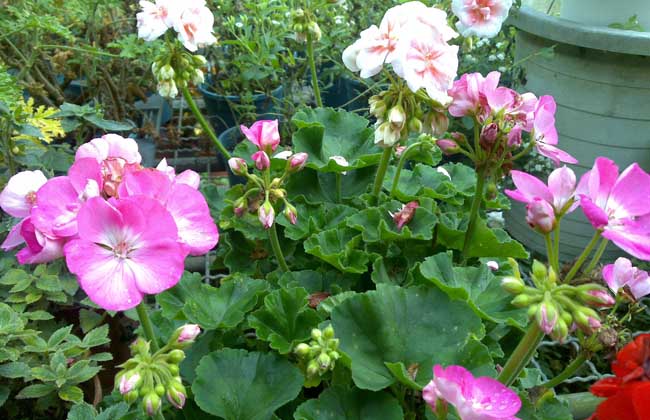
Geranium, also known as zonal geranium, fish geranium, mosquito-repellent grass, etc., is a shrubby flowering plant of the genus Pelargonium in the family Geraniaceae. Young plants are fleshy and herbaceous, while older plants become semi-woody. It has strong adaptability, bright flower colors, and a long flowering period. In the West it is a very good flower for decorating windowsills, and it is suitable for indoor display, flower bed arrangement, and more. Let's take a look below at how to grow potted geraniums!
The growth habits of geraniums
Geraniums like warm winters and cool summers. Indoors in winter, maintaining 10-15°C during the day and above 8°C at night allows them to flower normally. But the optimum temperature is 15-20°C. They like dryness and dislike dampness, so watering in winter should not be excessive; water only when the soil is dry. If the soil is wet, the stems become tender, which is unfavorable for the sprouting and opening of flower branches. Long-term excessive moisture causes the plant to grow leggy, the position where flower branches form moves upward, and the leaves gradually yellow and fall off. During the growing period they need sufficient sunlight, so in winter they must be placed in a sunny spot. With insufficient light, stems and leaves grow leggy, flower stalks become thin and soft, and the inflorescence develops poorly. Flower buds under weak light often fail to open well and wither prematurely. They do not like heavy fertilizer; too much fertilizer makes geraniums grow excessively and hinders flowering.
Cultivated varieties of geraniums
1. Ivy geranium: Ivy geranium is also known as shield geranium, vine geranium, etc. Its varieties include the purple-red 'Amethyst', the pink 'Rambada 98', the semi-double dark red 'Shannon', the semi-double pink 'Penve', the single white 'Tornado', and also tetraploids such as the pink 'Freckles' and the large-flowered bright red 'Tetra Red'.
2. Scented geranium: Scented geranium is also known as fragrant geranium, with the trade name mosquito-repellent grass. It is widely popular because the plant has a volatile fragrance and can be used to make essential oil. Its main components include geraniol, citronellol, linalool, etc. There are many types of fragrance, including lemon scent, rose scent, fruit scent, etc. Because it is easy to cultivate and manage and has high essential oil yield, it can serve as a substitute for other plants with low essential oil yields, such as rose essential oil or neroli essential oil.
3. Horseshoe geranium: Horseshoe geranium is a subshrub plant, with a plant height of 30-80 cm. The stems are upright, cylindrical and nearly fleshy. The leaves are ovate-shield-shaped or obovate, with dark brown horseshoe-shaped rings on the leaf surface, and the leaf margins have blunt serrations. The flowers range from deep red to white, there are relatively few flowers, and the flowering period lasts all year.
4. Regal pelargonium: Regal pelargonium is 30-40 cm tall, with upright, branching stems. The base is woody and covered with spreading long soft hairs. The leaves are alternate, the stipules are dry and membranous, triangular and broadly ovate, and the leaf blades are round-kidney-shaped, with a heart-shaped or truncate base. The umbel inflorescence is opposite the leaves or axillary, distinctly longer than the leaves, with several flowers, lanceolate sepals, and a corolla that is pink, pale red, deep red, or white.
Propagation methods of geraniums
1. Sowing: Geranium sowing propagation can be carried out in spring and autumn, with indoor pot sowing in spring being preferable. The suitable germination temperature is 20-25°C. Geranium seeds are not large, so after sowing the soil covering should not be deep, and they germinate in about 2-5 days. With autumn sowing, they can bloom in the summer of the following year. Seedlings grown from sowing can be selected to produce excellent intermediate-type varieties.
2. Cuttings: For geranium cuttings, spring and autumn are preferable. Choose cuttings 10 cm long, with the top part being best, as it has vigorous growth and roots quickly. After cutting the cuttings, let the cut ends dry for several days to form a thin film, then insert them into a sand bed or a mixed substrate of expanded perlite and peat. Be careful not to damage the stem bark of the cuttings, otherwise the wound is prone to rot. After inserting, place them in a semi-shaded spot and maintain a room temperature of 13-18°C. After 14-21 days they root.
3. Tissue culture: Geraniums can also be propagated by tissue culture. Using MS medium as the basic medium, add 0.001% indoleacetic acid and kinetin to promote the explant to produce callus and adventitious buds, and use 0.01% indoleacetic acid to promote rooting. The tissue culture method provides a new approach for the breeding of superior geranium varieties and the selection of new varieties.
How to grow potted geraniums?
1. Soil: Geraniums also have strong adaptability and can grow in various soil types, but they grow best in sandy loam rich in humus. Mixing some sandy soil into soil bought at the flower market will have a better effect. Geraniums grow relatively quickly and need repotting once a year, carried out in early spring. When repotting, remove old roots and old soil, and in late April move them outdoors to a sunny spot for care.
2. Temperature: Geraniums like a warm, moist, and sunny environment. The most suitable growing temperature is between 10 and 20°C, which is the temperature of spring and autumn. Therefore, protective measures must be taken for them in both winter and summer. If it is winter, place them in an environment not lower than 0°C to avoid frost damage, while in the hot summer, move them to a cool place to avoid exposure to the scorching sun.
3. Water: Geraniums are plants that do not like too much water, so during cultivation, never water geraniums too much. If watered too much, it will cause the roots of the geranium to rot. If they grow in such a water-rich environment for a long time, it will affect their growth and lead to death. Therefore, when cultivating geraniums, it is enough to water them once every two to three days, but each watering must be sufficient.
4. Fertilizing: Applying too much fertilizer to geraniums at one time can cause dehydration. If too much fertilizer is applied, watering more frequently afterward can alleviate the symptoms. But if they are not fertilized for a long time, it will also cause a lack of nutrients. The amount of fertilizer applied to geraniums is directly related to the quality of their soil, the size of the flowers, and the size of the flower pot.