What are the harms and uses of water hyacinth? This article explains in detail
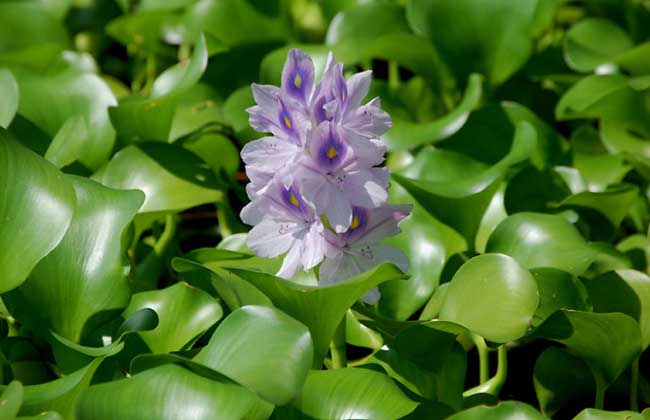
Water hyacinth, also known as water hyacinth, water hyacinth, and water hyacinth, is a floating herbaceous plant of the genus Eichhornia in the family Pontederiaceae, native to Brazil. It is now widely distributed in the Yangtze and Yellow River basins of China and the provinces of South China. It has strong adaptability and was once introduced by many countries. It is widely distributed around the world and has also been listed as one of the world's 100 worst invasive alien species. Let's take a look at the harms and uses of water hyacinth below!
The harms of water hyacinth
1. Water hyacinth blocks waterways, affecting shipping and drainage, and has become the number one enemy of agriculture, water conservancy, and environmental protection.
2. Water hyacinth restricts the flow of water bodies. Without sunlight, the water becomes foul-smelling, the dissolved oxygen content in the water body decreases, the growth of plankton is inhibited, and the ecological environment of rivers and streams is destroyed.
3. Water hyacinth provides breeding grounds for schistosomes and pathogens such as encephalitis and influenza, breeds mosquitoes and flies, and provides opportunities for mosquito larvae to breathe and reproduce.
4. Water hyacinth can damage drinking water resources. Because it causes blockage, water bodies cannot flow freely, and various pollution sources such as heavy metal elements and other trace elements harmful to human health cannot be effectively removed, so people directly or indirectly take in contaminated water sources.
5. The covering of the water surface by water hyacinth also increases water evaporation, 8 to 10 times higher than that of an open water surface, causing loss of water resources.
6. Water hyacinth affects the freshwater quality at water intake points. A large amount of water hyacinth covering the water surface will lower the pH value of the water, increase the CO2 concentration, increase the odor concentration and colority of the water, and also increase the acidity of the water, greatly reducing the usable value of the water resources, to the point that it is undrinkable.
7. The outbreak of water hyacinth and its decay stage will also consume a large amount of dissolved oxygen in the water body at the same time. The space for underwater animals such as fish to move and reproduce will be reduced, and even mass fish deaths may occur.
The uses of water hyacinth
1. Agricultural use: Water hyacinth has a strong enrichment effect on various inorganic elements such as nitrogen, phosphorus, potassium, and calcium, among which its enrichment effect on the macronutrient potassium is especially prominent. Among the existing ways of resource utilization of water hyacinth, the simpler and more common methods are composting it into organic fertilizer and producing biogas. Its dry powder or the ash after burning can also be used directly as fertilizer or a soil conditioner.
2. Edible use: The flowers and tender leaves of water hyacinth can be eaten directly. They taste fresh and refreshing and have the effect of moistening the intestines and promoting bowel movements. Indigenous residents in places such as Malaysia often use the tender leaves and flowers of water hyacinth as vegetables.
3. Feed use: Water hyacinth is soft and juicy, fresh and tender, and nutritious. Its dry matter is mainly crude protein, crude fat, crude fiber, and so on, and it can be used as an excellent feed for chickens, ducks, geese, fish, and pigs. Chopping, crushing, or pulping it and mixing it with bran to make mixed feed or silage can not only improve feed utilization but also kill parasites.
4. Medicinal use: The whole plant of water hyacinth tastes bland and is cool in nature. It has the effects of clearing heat and relieving summer heat, promoting diuresis and reducing swelling, and dispelling wind-dampness. It is used for heatstroke with thirst, edema, difficult urination, and external application for hot sores. The whole plant treats heatstroke with thirst, nephritic edema, difficult urination, and boils "Dian Sheng Zhi". The whole plant treats urinary tract stones "Gui Yao Bian". The whole plant treats cold and fever, painful reddish urination, rubella, and red swelling of sores and boils "Xiang Lan Kao".
5. Ornamental use: Water hyacinth is a floating herbaceous plant with well-developed fibrous roots and a very short stem. The flowers are light blue, shaped like a multi-angled trumpet, with the upper petals larger. There is an obvious bright yellow spot in the center of the petals, shaped like a phoenix eye, and also like the flower spot at the end of a peacock feather, very eye-catching and beautiful. It is often used as a landscaping material in garden waterscapes. Planted in a corner of a small pond and enclosed with bamboo, it has a quiet, wild charm.
6. Environmental protection: Water hyacinth is a good plant for monitoring environmental pollution. It can monitor whether arsenic is present in water and can also purify harmful substances in water such as mercury, cadmium, and lead. During growth, it can absorb large amounts of nutrients such as nitrogen and phosphorus as well as certain heavy metal elements from water bodies. Water hyacinth is even more ideal for purifying water bodies such as industrial wastewater or domestic sewage that contain more organic matter.
Control of water hyacinth
1. Prevention and control of water pollution: Water eutrophication is the foundation for the continuous reproduction and growth of water hyacinth, so the spread of water hyacinth must be prevented and controlled from the source. The substantial improvement in people's living standards and the continuous expansion of the population have greatly increased the discharge of domestic sewage and its organic matter content, providing an important nutrient source for the growth of water hyacinth. Therefore, the discharge of domestic sewage must be controlled, as well as the orderly discharge of industrial and agricultural wastewater. When discharge is truly necessary, it must be discharged only after harmless water treatment.
2. Mechanical stirring and destruction method: In waters where water hyacinth causes relatively great harm, relevant machinery can be used to stir and break it up, expand the light-exposed area of the water body, increase the flow of the water body, and ensure the smooth progress of aquaculture, fishing, and shipping.
3. Manual removal method: Use manpower and material resources to directly salvage water hyacinth and transport it to land for removal. This was also the most commonly used method at the beginning, and it has a relatively good effect on small water surfaces. If the water area is too large, the manpower and material cost is too great, so it is not recommended.
4. Chemical control method: If on rice field ridges or vacant vegetable plots, use 50 milliliters of 20% Starane emulsifiable concentrate per mu, which can be diluted with water and sprayed. If along rivers, ponds, or ditches, use 300 to 400 milliliters of 41% Roundup aqueous solution, 30 grams of imazapyr, 60 grams of paraquat, or 300 grams of 36% glyphosate · chlorsulfuron soluble powder per mu, dilute with 20 kilograms of water and spray as a fine mist so that the liquid adheres to the stems and leaves of water hyacinth.