How to Grow and Care for Potted Peace Lilies: Methods and Precautions
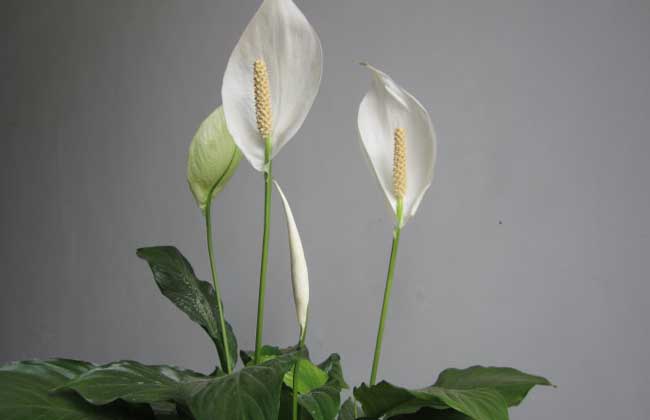
The peace lily, also known as Spathiphyllum or spathe leaf, is a perennial herbaceous plant of the genus Spathiphyllum in the Araceae family. Placed as potted Spathiphyllum in hotel lobbies, front-of-venue areas, station entrances and exits, and shopping mall display windows, it looks elegant and graceful; arranged in small courtyard gardens, by pond sides, and at wall corners in the south, it has a distinctive style. Its flowers are also excellent decorative material for flower baskets and flower arrangements. Let's take a look below at how to grow a potted peace lily!
Growth Habits of the Peace Lily
The peace lily prefers high temperatures, high humidity, and a semi-shaded environment. The optimum growth temperature is 22-28°C, from March to September it is 24-30°C, and from September to the following March it is 18-21°C. The winter temperature should not be lower than 14°C; when the temperature is below 10°C, plant growth is hindered and the leaves are prone to frost damage. Spathiphyllum is relatively sensitive to humidity. During high summer temperatures and dry autumn weather, mist more water to ensure air humidity above 50%, which is beneficial to leaf growth. Under high temperature and dryness, the leaves tend to curl, become smaller, wither and drop, and the flowering period is shortened. It fears strong direct sunlight, so 60-70% shading is needed in summer; however, long-term insufficient light makes it difficult to bloom, with 500 lux being suitable. Fertile loam rich in humus is the best soil.
Propagation Methods of the Peace Lily
1. Division: The peace lily will not sprout before it is fully mature, so the growing point is often artificially damaged, and each plant can yield 3-5 buds. When the new buds grow to about 15 cm, cut them apart and insert them into coarse sand, then wait for them to take root. Note that when cutting, a portion of the stem must be included, and then wood charcoal ash should be applied to the wound to prevent rot.
2. Sowing: Sowing is a method often used by cultivation bases for the peace lily, but it has one difficulty: it requires manual pollination, and many people run into problems here. Therefore, it needs special explanation: the white thin sheet-like part is not the flower; the protruding part in the middle is the flower. So the flower is relatively small. When the flower has pollen, use a clean brush to apply it over the flower to complete the pollination work.
3. Tissue culture: Although tissue culture of the peace lily has many advantages, to date the tissue culture method has not been widely used in the country and is only used in experiments. Generally, the tissue culture method involves first planting in plastic pots, then dividing and replanting after it grows 4-5 leaves, then going through 3-4 rounds of repotting and transplanting, and planting conventionally when the seedlings are 30 cm tall.
How do you grow a potted peace lily?
1. Soil: Potted peace lilies require loose soil with good drainage and aeration. Heavy clay soil must not be used; fertile loam rich in humus is best. Generally, leaf mold soil and peat soil mixed with a small amount of perlite can be used to prepare the substrate. When planting, add a small amount of organic fertilizer as a base fertilizer.
2. Light: The peace lily is relatively shade-tolerant, so it is suitable for growing in a semi-shaded environment. Direct sunlight must be avoided; about 60% scattered light can meet the growth needs of the peace lily. Therefore, it can be kept year-round indoors in a spot with bright scattered light. If it is placed under strong light, the leaf surface will turn yellow and may even be directly sunburned.
3. Temperature: The peace lily likes high temperatures and is especially afraid of cold. The most suitable growth temperature is 20-28°C. Once winter arrives, it must be brought indoors. The lowest temperature it can withstand is 10°C, so attention must be paid in winter. Relatively speaking, growing conditions in the north are too poor; being kept at low temperatures for a long time will cause root rot, leaf drop or scorching yellow, and in severe cases can even lead to death.
4. Watering: The peace lily has a relatively high demand for water, and the potting soil must be kept moist at all times, but overwatering must also be avoided. Once overwatered, a large amount of water accumulates in the pot, which easily causes root rot and yellowing and withering of the plant. In addition, note that in summer and during drought, water should be sprayed frequently on the leaf surface and the ground to increase air humidity, which is beneficial to its growth.
5. Fertilizing: When fertilizing the peace lily, do not apply concentrated fertilizer or raw fertilizer, and after applying solid fertilizer, water once with clean water. It is best to use dilute fertilizer water instead of clean water for irrigation; this generally will not cause fertilizer burn and the Spathiphyllum will grow very lushly.
6. Pests and diseases: During the growth period, the peace lily is most favored by insect pests, so acaricides specifically for mites should be sprayed regularly for prevention and control, such as dicofol, hexythiazox, and pyridaben. Common bacterial leaf spot, brown spot, and anthracnose damage the leaves; 50% carbendazim wettable powder at 500 times dilution can be sprayed.
7. Repotting: The peace lily has a relatively strong ability to produce tillers, so repot once every 1-2 years. When repotting, pay attention to trimming the roots and cutting off withered leaves. Divide overly dense plants and then pot them. Remove some old roots and overly long root systems, pick out the old soil, and replace it with new culture soil to promote flowering of the Spathiphyllum.