How to grow pickerelweed? A detailed guide to cultivation methods
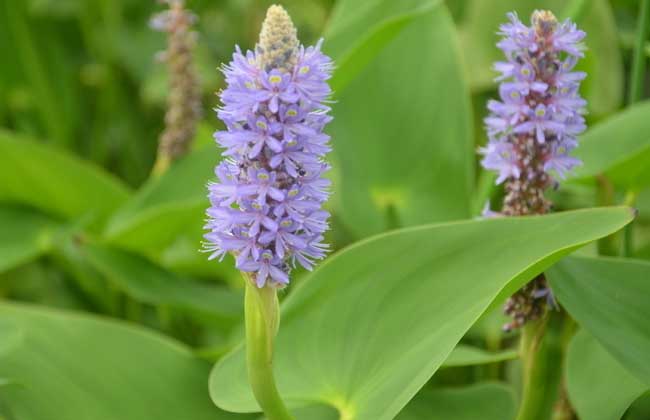
Pickerelweed is a rather promising aquatic ornamental plant. It is a perennial emergent or wetland herb in the genus Pontederia (pickerelweed) of the family Pontederiaceae, with emerald-green leaves, charming flowers and a long blooming period. It can be used for household pot cultivation and pond planting, and can also be widely used in landscape beautification, planted along both sides of rivers, around ponds or in constructed wetlands. Let us take a look together at the cultivation methods for pickerelweed!
The cultivation value of pickerelweed
Pickerelweed can be used for household pot cultivation and pond planting, and can also be widely used in landscape beautification, planted along both sides of rivers, around ponds and in constructed wetlands, interplanted with purple loosestrife (Lythrum salicaria), variegated giant reed (Arundo donax var. versicolor), giant burreed (Sparganium stoloniferum) and powdery alligator-flag (Thalia dealbata), giving it ornamental value. With emerald-green leaves, charming flowers and a long blooming period, strings of purple flowers set off against the emerald-green leaves create a particularly delightful scene. It can be used for landscaping wetlands, watersides and ponds, and can also be potted for ornamental viewing.
The growth habits of pickerelweed
The cultivars of pickerelweed used in cultivation include white-hearted pickerelweed and blue-flowered pickerelweed. It likes warmth, sunshine, fertilizer and moisture, fears wind and is not cold-tolerant. It can grow in still water and slow-flowing water, and is suitable for growing in shallow water below 20 cm, with an optimum temperature of 15°C to 30°C. The overwintering temperature should not be lower than 5°C. Pickerelweed grows rapidly and has strong reproductive capacity; under suitable conditions it can cover a large area of water in a short time.
Propagation methods for pickerelweed
1. Division: Pickerelweed can be propagated by division in spring and summer. The main method is to dig out the underground stems of pickerelweed, remove the old rhizomes, and cut them into small sections with 3 to 4 buds for separate planting.
2. Sowing: Pickerelweed seed propagation is generally carried out in spring, and the seed germination temperature needs to be maintained at around 25°C.
Cultivation methods for pickerelweed
1. Temperature: Pickerelweed likes light and needs sufficient sunlight. Keep the temperature between 18 and 35°C, within a warm range. If the temperature is below 18°C, growth will slow down, and below 10°C it will stop growing.
2. Water and fertilizer: Pickerelweed likes moisture and fertilizer. When cultivating it, water and fertilizer must meet its needs. It is suitable for growing in still water, and shallow water below 20 cm is generally quite suitable. When potted, fill the pot with water and maintain a certain water layer.
3. Pests and diseases: Pickerelweed is an aquatic plant and itself has relatively few pests and diseases. During cultivation, protective measures are needed to prevent the occurrence of pests and diseases.
4. Overwintering: Pickerelweed is not cold-tolerant. When winter temperatures are low, cold protection is needed. The potted pickerelweed can be filled with water and moved indoors to overwinter, keeping the temperature above 5°C so that pickerelweed can pass the winter safely.