Potted Guzmania (Guzmania lingulata) care methods and precautions
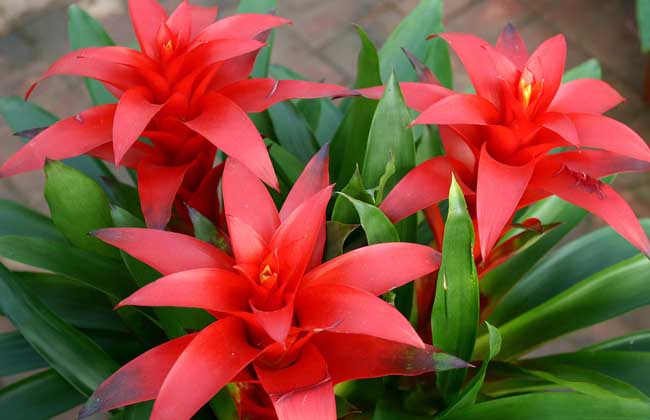
Guzmania is a perennial evergreen herbaceous plant in the Bromeliaceae family, also known as cone-headed guzmania and torch bromeliad, among other names. It is called "Hongyun Dangtou" (good fortune arrives) because its flower core is bright red. Common varieties include pink, bright red, rose red and golden yellow. As a seasonal plant of this kind, it is deeply favored by people in the bustling, crowded flower markets. Let us take a look below at how to care for a potted Guzmania!
Growth habits of Guzmania
Guzmania is native to the Andes Mountains, and in places such as Guangdong and Shanghai in China it is mostly grown and cultivated in greenhouses. It likes a warm, humid environment with plenty of sunshine, is not cold-tolerant, is relatively shade-tolerant, and fears direct strong light. The soil is best as fertile, loose, well-draining leaf mold, and the winter temperature should not be lower than 12°C. It likes warmth, humidity and bright light; the suitable growing temperature is 20-27°C, and it should be planted in a loose, breathable medium rich in humus.
Propagation methods for Guzmania
1. Division: After a Guzmania plant blooms, 1 to several suckers grow from the base of the mother plant. Do not divide immediately after the flowers fade; wait for the best timing. It is best done in April each year, and the suckers should have more than 6 leaves to be suitable for division. Temperatures above 30°C make rooting easy.
2. Sowing: Guzmania propagation by sowing is relatively simple, but the seeds are not easy to obtain, and the maintenance time is relatively long. When sowing, keep the temperature above 16°C, choose acidic potting soil, and sow after the temperature rises in the morning. After sowing, cover with chopped moss or plastic film to retain moisture. After sowing, keep the temperature at 25-30°C, and seedlings will emerge in about 25 days.
3. Tissue culture: Guzmania is also currently propagated by tissue culture, which uses culture dishes in a sterile environment. Although household techniques cannot meet the requirements at present, Guzmania propagated by this method is relatively better in quality, and the number propagated is relatively large.
How do you care for a potted Guzmania?
1. Light: Light plays an important role in Guzmania cultivation. In cold seasons it needs at least 4 to 5 hours of sunlight per day; on cloudy days, artificial light can replace sunlight. It should not be exposed to harsh sun, and in summer it should be placed in a shady spot.
2. Temperature: The suitable temperature for Guzmania is 15°C to 22°C, and the lowest winter temperature must not be below 10°C; otherwise the plant will suffer cold damage, the leaf color will turn yellow, and healthy growth will be affected.
3. Soil: Guzmania is suited to growing in loose, fertile, humus-rich soil. You can use 2 parts peat soil mixed with 1 part fine sand to make a growing medium.
4. Fertilizer: Guzmania must have sufficient fertilizer during the flowering period. Usually apply a dilute organic liquid fertilizer once every two weeks, such as a soaking solution of soybean cake or sesame paste residue; you can also use a soybean soaking solution or fermented rice-washing water.
5. Water: Guzmania likes a humid environment. Ordinarily, just keep the potting soil moist; generally do not water on rainy days. For home cultivation, it is best to use purified water that has been left to stand; do not water directly with tap water.
6. Pests and diseases: Guzmania is prone to pest and disease damage in environments with excessively high temperature and humidity and poor ventilation. If disease is found, spray carbendazim promptly; for insect pests, spray omethoate.
Precautions for Guzmania
1. Guzmania likes warmth and fears cold. It likes a humid, semi-shady environment and avoids direct strong light. If the light is too strong, the leaves will turn yellow, develop spots and fade, losing their ornamental value. Therefore, in spring, summer and autumn, 50-60% shade should be provided. Variegated-leaf Guzmania and red-backed Guzmania types like more light; under stronger sunlight their leaves are brightly colored, so they should be placed for care on sunny windowsills, balconies and similar spots. They are suitable for growing in loose, airy, well-draining soil.
2. The growing temperature for Guzmania is 18-30°C, the suitable temperature is 20-25°C, and the minimum temperature is above 12-15°C. In winter, it can overwinter safely only above 10-12°C; below 10°C it is prone to cold damage, and the suitable temperature is 16-20°C. If the summer temperature is too high, the leaf tips will dry out due to excessive water loss, so attention should be paid to frequently spraying the leaves to increase air humidity, and to providing appropriate shade and strengthening ventilation to lower the temperature.
3. Guzmania likes acidity and requires a water pH of 5.5-6.5. It does not like salts, especially calcium salts and sodium salts. If the pH is higher than 7, the plant absorbs nutrients poorly, the leaves lose their luster, photosynthesis is reduced, and it is easily affected by heart rot and root rot. Hard water contains too much calcium salt and magnesium salt and is not suitable for use. Tap water contains a large amount of chlorine and sodium and is also not suitable for use. Groundwater varies greatly in composition depending on the region, so it should be used only after water quality analysis. In addition, Guzmania fears waterlogging most; if the medium has too high a water content or poor drainage or permeability, it often causes root rot and heart rot.
4. The suitable relative humidity for Guzmania is 50-75%. Above 80%, ventilation should be strengthened; otherwise disease or leggy growth is likely to occur. Below 40%, leaf tips are prone to withering, so water should be sprayed regularly to retain moisture or humidification should be carried out through a high-pressure mist humidification system. During the high-temperature, high-humidity period in summer, try to strengthen ventilation; during the low-temperature period in winter, do not spray too much water; during the high-temperature, dry period in spring, spray more water.