How to grow Schefflera? Detailed guide to cultivation methods and precautions
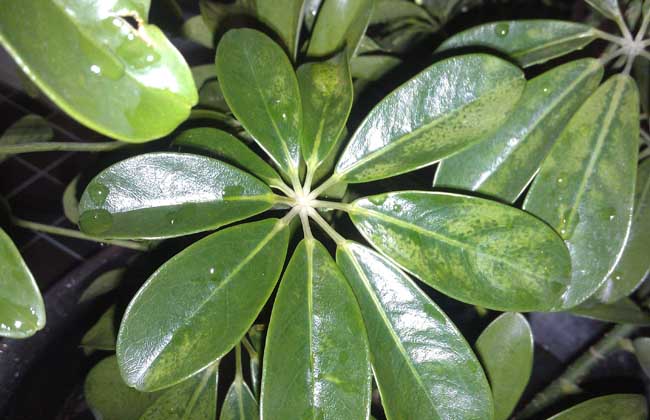
Schefflera, also known as the dwarf umbrella tree, is an evergreen shrub in the genus Schefflera of the family Araliaceae. It has very high ornamental value. Large potted plants are suitable for placement in hotel lobbies, library reading rooms and museum exhibition halls, presenting a naturally harmonious green environment. In spring, summer and autumn they can also be placed in shaded courtyard areas and on building balconies for viewing. Let us take a look together at the cultivation methods and precautions for Schefflera.
Growth habits of Schefflera
Schefflera is a common plant of evergreen broad-leaved forests in tropical and subtropical regions. It prefers warm, humid, semi-sunny environments and is best grown in deep, fertile, acidic soil, though it tolerates poor soil somewhat. The optimum growth temperature is 16-27°C. It likes moisture and fears dryness; when air humidity is high and soil moisture is sufficient, stems and leaves grow luxuriantly, but too much water causing waterlogging will lead to root rot. It adapts to a wide range of light conditions and can grow in full sun, half sun or semi-shade, but light intensity has a certain relationship with leaf color. The soil is best as fertile, loose, well-drained sandy loam; for potting soil, use a mixture of peat soil, leaf mold and coarse sand.
Propagation methods of Schefflera
1. Sowing: Schefflera can be sown immediately after harvest, or the seeds can first be stratified in sand to promote germination, and once the seeds crack open and show white, they can be sown in pots or in the ground. Sow in pots with leaf mold or sandy soil, covering with soil about 1-2 times the seed diameter. The optimum germination temperature is 20-25°C; keep the potting soil or seedbed moist. For seeds sown immediately after harvest under suitable temperature conditions, seedlings emerge in about 15-20 days; for those sown after sand stratification to promote germination, they emerge about one week after sowing at the optimum temperature.
2. Layering: In April to June, select 2-year-old branches of Schefflera, girdle the bark in a ring 1 cm wide, wrap the wound with a mixture of 1 part wet sphagnum moss or conifer needle soil and 1 part garden soil, and tie both ends tightly with plastic film. On sunny days, water daily with a syringe to maintain the moisture of the medium. After rooting, cut from the point connected to the mother plant and it can be transplanted.
3. Soil cuttings: In conjunction with repotting, heavy spring pruning, or before germination in early spring, take 1-year-old branches 10-15 cm long as cutting material. Remove the lower leaves, keep 3-4 leaves at the top, and cut the lower end into a slanted surface. First use a small wooden stick to make small holes in the medium, insert 2/3 of the cutting into a pot with perlite as the medium, keep room temperature at 15-25°C, and roots will form 1.5 months after cutting.
4. Water cuttings: Use a mineral water bottle or glass cup, tall glass bottle, or canning jar, rinse clean and use as a container. Cut the lower end of an 8 cm long cutting into a flat opening, keeping only 3-4 leaves at the top. Fill the container with clean water, then insert the cutting into the container and suspend it in the water so that it cannot touch the container wall or bottom. When white roots 1-2 cm long grow from the bottom of the cutting, remove it and pot it up.
5. Mist cuttings: Use plastic film or a small glass greenhouse to create a small high-humidity environment, so that Schefflera propagates quickly under high temperature and high humidity conditions. First lay a layer of bricks on the bottom of the cutting bed, then spread a 30 cm thick layer of sterilized plain sandy soil on top, and select 8 cm current-year softwood shoots as cuttings. Insert 2/3 of the cutting into the plain sandy soil, mist after insertion, keep room temperature at 15-25°C, spray water on the leaves once a day, and transplant after rooting.
Cultivation methods of Schefflera
1. Soil: The cultivation soil for Schefflera is best as fertile, loose, well-drained sandy loam. For potting soil, use a mixture of peat soil, leaf mold and coarse sand. For pot cultivation, generally use leaf mold or peat soil, garden soil plus about 1/4 river sand or perlite mixed evenly; to make it fertile, add a small amount of cake fertilizer powder as base fertilizer.
2. Planting: Select strong seedlings with well-developed, intact root systems and plant them in pots in late autumn or before germination in spring. Before planting, first place a tile over the drainage hole at the bottom of the container, and fill part of the nutrient soil into the container. After planting, add more soil so that the roots are in close contact with the soil, with the soil surface level with the pot rim. After watering thoroughly and letting it settle, keep the soil surface about 5 cm below the pot rim as a watering space. Newly potted plants should first be placed in semi-shade for one week, then gradually transitioned to a place with ample sunlight for normal care.
3. Watering: Schefflera grows well in environments with high air humidity and sufficient soil moisture. Be careful that the potting soil does not lack water, otherwise a large number of leaves will drop. Under low-temperature conditions in winter, water should be controlled appropriately. If using a plastic container, pay attention to drainage. Keep the soil moist and water promptly before it dries out completely. When the weather is dry, also spray the plant to increase humidity. During the plum rain season, prevent water accumulation in the pot.
4. Sunlight: Schefflera prefers semi-shade and is best kept under bright, scattered light. When the light is suitable, the leaves are glossy green and vivid, and can be enjoyed for a relatively long time. In winter, it can be moved near a south-facing window for cultivation, so that it receives more sunlight and the leaves become glossy. It is best to move the pot outdoors twice a year in spring and autumn for a period of cultivation under good ventilation and appropriate light conditions, but during outdoor care, direct sun exposure must be avoided, otherwise the leaves easily turn yellow and dry, reducing ornamental value.
5. Temperature: The optimum growth temperature for Schefflera is 16-27°C. From March to September it is 21-27°C, and from September to the following March it is 16-21°C. It can still grow normally under high-temperature conditions above 30°C. In winter the temperature should not be lower than 5°C. If the temperature is below 0°C, the plant will suffer cold damage and show leaf drop, but if the stem is intact, it will sprout new leaves again the following spring.
6. Fertilizing: March to September is the peak growth season for Schefflera; apply some compound fertilizer or cake fertilizer water every 2-3 weeks. Variegated varieties should not be fertilized too much (especially nitrogen fertilizer), otherwise the leaves turn green and lose the original variety characteristics. For spotted-leaf varieties, apply less nitrogen fertilizer to prevent the spots from fading or disappearing.