What is the flower language of the cornflower? Let us learn about its legends
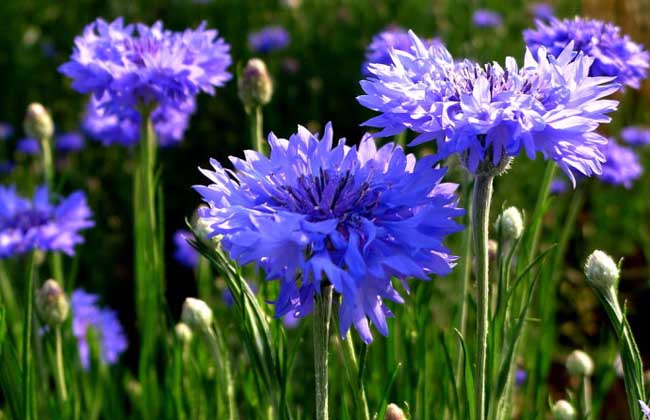
The cornflower is native to Europe and was originally a wildflower. After years of cultivation by people, its "wild" nature diminished, its flowers grew larger, and its colors increased, with varieties in purple, blue, light red, white and more, among which purple and blue are the most prized. It can be found everywhere in Germany on hillsides, in fields, by the water, along roadsides, and around houses, and is regarded as Germany's national flower. Now let us take a look at the flower language and legends of the cornflower!
The flower language of the cornflower
Happiness, meticulousness, elegance. The flower language of the blue cornflower is "encounter," and the flower language of the purple cornflower is "gentle and lovely." The cornflower's slender figure and medium-sized flowers are as fresh and graceful as a young girl, symbolizing girlish virtue and elegance. The cornflower loves sunlight, and its medium-sized flower heads grow at the tips of slender stems, like graceful maidens praying for happiness and joy, so the cornflower's flower language carries the meanings of happiness, meticulousness and elegance. In some places, young girls press a cornflower flat and place it inside their undergarments; if after an hour the cornflower petals are still flat and broad, it means they will meet their other half, which is why the cornflower's flower language is also "encounter."
The legends of the cornflower
1. Legend one: Queen Louise, mother of Prussian Emperor William I, was forced to leave Berlin during a civil war. While fleeing, their carriage broke down, and as she and her two children waited by the roadside, she noticed blue cornflowers blooming there. She wove these flowers into a wreath and placed it on the chest of the nine-year-old William. Later, when William I was crowned German Emperor, he still loved the cornflower dearly and considered it a flower of good fortune. The cornflower also inspires people to be cautious and to learn with humility.
2. Legend two: A legend widely circulated among the German people tells of the great ancient hero Arminius, who unfortunately contracted an eye disease during a military campaign. One night, the god of war Ares came to Arminius in a dream and told him that the small blue flower blooming by the roadside at dawn could cure his eyes. The next day, Arminius indeed found the small blue flower by the roadside and mashed it to apply to his eyes. Soon, Arminius's eyes recovered, and he returned in triumph. So he called the cornflower the "guardian of the eyes" and spread it widely.
The uses of the cornflower
1. Ornamental: Tall cornflower plants are upright with long flower stalks, and can be planted alongside other herbaceous flowers to arrange flower beds and flower borders. They can also be planted in patches along roadsides or in lawns. With their graceful plant form and beautiful blooms, they are very natural and suitable as cut flowers or as border planting material. Dwarf varieties grow only 20 cm tall and can be used for flower beds, lawn edging or potted display.
2. Beauty: The cornflower can nourish the complexion, relax the mood, aid digestion, and promote smooth urination. Cornflower hydrosol is a very gentle natural skin cleanser, and the flower water can be used to care for hair and moisturize the skin. It can aid digestion, soothe rheumatic pain, and help treat stomach pain, and prevent and treat gastritis, gastrointestinal discomfort, bronchitis and more.
3. Brewing tea: Cornflower tea is usually brewed on its own and goes well with green tea. Take four teaspoons of cornflower and steep in boiling water. The light purple tea can be enhanced with a little honey for extra flavor.