How to grow Dianthus? Detailed guide to cultivation methods and precautions
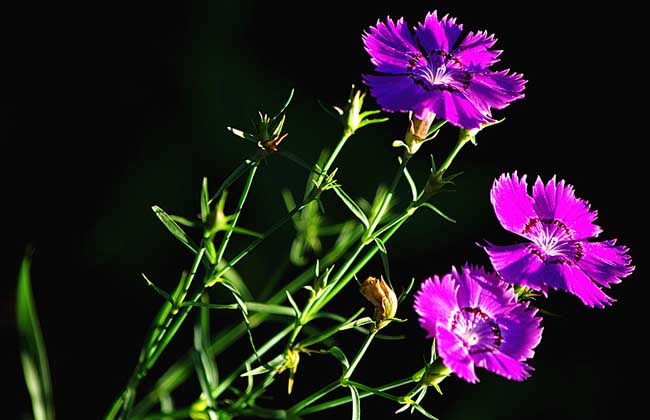
Dianthus is one of China's traditional famous flowers, also known as Shiju, Xiuzhu, Xiangshizhu, etc. It is a perennial herbaceous plant of the genus Dianthus in the family Caryophyllaceae, with many varieties, bright flower colors, and a long flowering period that can last from spring to autumn; potted in a greenhouse it can bloom in all four seasons. The main varieties include Jintuan Dianthus, dwarf Dianthus, and fringed-petal Dianthus. Let's take a look at the cultivation methods for Dianthus!
Growth habits of Dianthus
Dianthus is native to northern China and now grows widely in both the north and south; it is also found in Siberia, Russia, and Korea. It is cold-tolerant and drought-tolerant but not tolerant of severe heat; in summer it often grows poorly or withers, so shading and cooling should be provided during cultivation. It prefers full sunlight, dry conditions, and a ventilated, cool, and humid climate. It requires fertile, loose, well-drained loam or sandy loam containing lime; it dislikes waterlogging and responds well to fertilizer. It grows in grasslands and on mountain slopes.
Propagation methods for Dianthus
1. Sowing: Dianthus propagation by sowing is generally carried out in September. Sow in an open-field seedbed; after sowing, keep the soil moist. Sprouting occurs 5 days after sowing, and seedlings emerge in about 10 days. The optimum temperature for seedling growth is 10-20°C. When the seedlings grow 4-5 leaves, they can be transplanted, and they will bloom the following spring. You can also direct-sow in the open field in September or sow in pots in a cold room in November-December, then plant out in the open field in April of the following year.
2. Cuttage: Dianthus propagation by cuttage is carried out from October to late February to March of the following year. During the period of lush branches and leaves, cut 5-6 cm long young shoots as cuttings; roots form 15-20 days after insertion.
3. Division: Dianthus propagation by division is mostly done after flowering using old plants, and can be carried out in autumn or early spring. For example, division can be done in April, attention should be paid to drainage in summer, and fertilizer and water management should be strengthened after September, so that it blooms again in early October.
Cultivation methods for Dianthus
1. Soil: Dianthus requires fertile, loose, well-drained loam or sandy loam containing lime, and is fairly tolerant of alkaline soil. A culture soil mixed with 6 parts garden soil, 2 parts compost, and 2 parts sandy soil can be used.
2. Watering: During the growth and development period, it is advisable to keep the pot soil moist; excessive watering easily causes root rot.
3. Sunlight: During the growing period, Dianthus requires sufficient light and should be placed in a sunny spot; in summer, scattered light is preferable, avoiding exposure to scorching sun. When the temperature is high, shade and cool it.
4. Temperature: The suitable temperature for Dianthus growth is 15-20°C. In winter it should be placed in a greenhouse, with the temperature kept above 12°C.
5. Pests and diseases: Dianthus is often harmed by rust disease and red spider mites. For rust disease, spray with 50% carboxin wettable powder at 1500 times dilution; for red spider mites, spray with 40% omethoate emulsifiable concentrate at 1500 times dilution.
6. Pruning: After pruning, Dianthus can bloom again. To get more flowers, pinch the tips to encourage more branching, and promptly remove axillary buds to reduce nutrient consumption.
Extension: Feng shui of Dianthus
1. Balcony: According to sunlight conditions, Dianthus can be placed on the balcony, but avoid exposure to direct sunlight; it is best to have a bit of shading. The balcony is where the home gathers qi. A southeast-facing balcony is more suitable for growing plants; the southeast is the Wenchang position, and placing a larger pot of Dianthus there can be somewhat helpful for the children's studies. If it is a southwest- or northeast-facing balcony, you can choose to plant bright red or red Dianthus, using fire to dissolve wood qi.
2. Dining room: As we know, the dining room mainly represents health in feng shui, so it should be clean and tidy. You can choose a pot of yellow Dianthus, especially yellow carnations, place it in the dining room, or arrange cut flowers on the dining table; this can increase appetite and promote the family's health. In addition, you can also pay attention to the kitchen; the kitchen taboos foul odors, so you can place red or white Dianthus in the southeast, which is not only beautiful but also removes odors.
3. Living room: Choose purple and red or purplish-red Dianthus to place in the living room, which carries the good meaning of "great red and great purple" (prosperity and honor), and the stems of Dianthus have nodes, like bamboo, which makes people feel noble and pure, while also bearing flowers of various colors; this is a very good combination that can make guests fall in love at first sight. Moreover, it has the effect of killing bacteria, keeping family members away from bacteria and always healthy.