What are the cultivation methods for potted mosquito repellent plant?
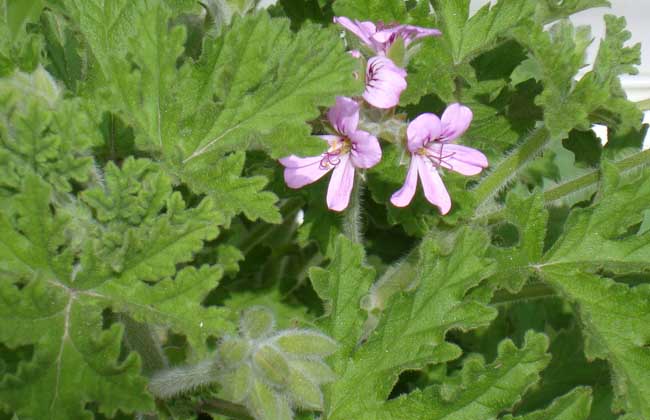
The mosquito repellent plant, also known as scented geranium, is a perennial herbaceous or shrub-like plant of the genus Pelargonium in the Geraniaceae family. It is widely popular because the plant has a volatile fragrance, with a variety of scents including rose, citrus, mint, coconut, cardamom and various fruit flavors. It can be used to make essential oil and also has very high ornamental value. Let's take a look at how to grow potted mosquito repellent plant!
The growth habits of mosquito repellent plant
The mosquito repellent plant likes warmth and tolerates drought, is not cold-tolerant, fears waterlogging, and has low water requirements. It is suitable for growing in neutral or slightly alkaline soil, and its growth requires sufficient sunshine; light has a good effect on its development and on increasing the essential oil content. Areas with 1100-1300 hours of annual sunshine can basically meet its growth needs. Cultivation requires deep soil layers, loose texture, and fertile sandy soil or loam rich in humus, while heavy clay soil and low-lying land with poor drainage are not suitable for cultivation.
Propagation methods of mosquito repellent plant
1. Sowing: sow the seeds into clean fine sandy soil in early March, at a depth of 3 cm. Water thoroughly 4 hours after sowing, then keep the potting soil moist, neither too dry nor too wet. In early spring, place it in a warm, bright place indoors at a room temperature of about 20°C, and in about 1 month it will sprout and take root, after which it can be divided and replanted.
2. Cuttings: the mosquito repellent plant is easy to propagate by cuttings in spring and autumn. In April and May or September and October, cut sturdy branches with terminal buds, 5-8 cm long, and take cuttings after the cut surface has dried. Keep 2-3 terminal buds, provide shade and moisture, and roots will form and the plant will survive in about 15-20 days. Once the cutting seedlings grow new leaves, they can be potted.
How do you grow potted mosquito repellent plant?
1. Soil: the mosquito repellent plant prefers neutral to slightly acidic soil. Seedlings grow extremely fast, so during the seedling stage repotting should be done fairly frequently. Within 6 months, use a special self-mixed nutrient soil of 6 parts peat soil, 1.5 parts vermiculite, 1.5 parts perlite, and 1 part coal ash, with a pH value that is slightly acidic to neutral. You can also buy ready-mixed commercial foliage substrate soil (pH 5.5-7) from a flower market. After six months, the plant is extremely adaptable and any soil can be used.
2. Temperature: the most suitable growing temperature for the mosquito repellent plant is 10-25°C. It can overwinter safely above 0°C, and above 15°C it can normally give off a lemon fragrance. The higher the temperature, the stronger the fragrance released. Spraying an appropriate amount of water mist on the plant leaves can cause citronellal substances to be released continuously, thereby making the mosquito repellent effect better.
3. Light: the mosquito repellent plant likes environmental conditions with ample sunlight, warmth, and good ventilation. In spring and early summer, when the light is not too intense, the flowerpot can be placed in a place with ample light so that it receives sufficient light. However, in the hot seasons of midsummer and early autumn, it should be placed in a shaded place and avoid direct strong light, otherwise the branches and leaves will be scorched.
4. Watering: the mosquito repellent plant tolerates drought and fears water accumulation, so during growth, water should be controlled appropriately. Too much watering and excessive water content in the potting soil will cause leggy growth or root rot. During the vigorous growth and flowering period in spring and autumn, it can be watered a bit more, but it should still be kept at a level that maintains moist potting soil. In winter, when the temperature is low and the plant grows slowly, watering should be minimized as much as possible.
5. Fertilizing: in addition to applying sufficient base fertilizer during cultivation, the mosquito repellent plant can be given a thin liquid fertilizer once every 7-10 days during the growing season, especially at the peak flowering period. Diluted decomposed livestock and poultry manure with water is even better, and decomposed cake fertilizer water can also be used for watering. 3-5 days before fertilizing, water less or not at all; applying fertilizer when the potting soil is on the dry side is more conducive to root absorption.
5. Pests and diseases: improper management of the mosquito repellent plant can cause root rot or stem and leaf rot, followed by leaf shrinkage, black spots, and then the whole plant withering. This is caused by excessive humidity, excessively high temperature, and at the same time poor ventilation or excessive seedling density. Fungicides such as chlorothalonil or carbendazim (800 to 1000 times dilution) can be sprayed. However, it must not be sprayed frequently.
What should you do if the leaves of the mosquito repellent plant turn yellow?
1. Improper fertilizing: if fertilizer is applied every day during the growing season of the mosquito repellent plant, and after fertilizing in spring water is not given promptly, while sometimes fertilizer is only applied once after a long time, then continuing this habit will make the leaves of the mosquito repellent plant turn yellow. Fertilizing should adopt the method of light fertilizer applied frequently, which is beneficial to the growth of the mosquito repellent plant. During the growing season, fertilizer can be applied once every 15-20 days or so. In summer, fertilize as little as possible or not at all, but be sure to water after fertilizing.
2. Improper watering: leaves turning yellow and soon falling off are mostly caused by overwatering. Watering should follow the principle of alternating dry and wet. In summer, when temperatures are high, water less and do not fertilize, which is beneficial to root development and improves disease resistance. For home cultivation, rice washing water can be used instead of ordinary water. Water thoroughly once every 3-6 days, but do not let water accumulate. Note that when the soil surface in a small pot turns white, or when the soil 1 cm below the surface in a large pot feels damp, water it. In July and August, when temperatures are high, spray water frequently to cool it down and keep the surrounding environment moist; water must not accumulate in the pot.
3. Too large a temperature difference: the mosquito repellent plant likes light. If a potted mosquito repellent plant is placed indoors or outdoors for a long time, the large day-night temperature difference will also cause the leaves of the mosquito repellent plant to slowly turn yellow. The mosquito repellent plant likes shade and is not tolerant of strong light during growth. Especially in summer, shading should be strengthened, and it can be planted under trees or in shaded places. Household potted plants are generally placed indoors for cultivation.
4. Pest and disease prevention: if the humidity is too high, the temperature is too high, and at the same time ventilation is poor or seedling density is too high, pests and diseases will develop, and this will also cause the leaves of the mosquito repellent plant to turn yellow or even root rot. The potted mosquito repellent plant should often be placed outdoors in the sun. If it is kept indoors, indoor air circulation should be maintained. At the same time, pesticides should be used regularly; fungicides such as chlorothalonil or carbendazim (800 to 1000 times dilution) can be sprayed on the mosquito repellent plant, but they must not be sprayed frequently.