How to grow potted wax plants well? Teach you the correct care methods
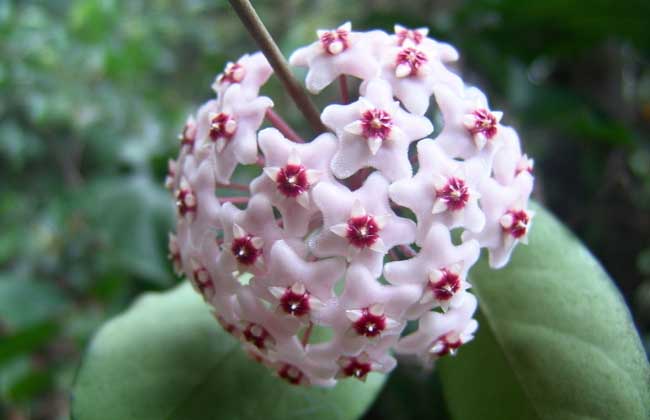
The wax plant, also known as horse monkey solution, dog tongue vine, iron foot board, etc., is a climbing shrub plant of the genus Hoya in the family Apocynaceae. It grows attached to trees or rocks, with aerial roots growing from the stem nodes. Its flower shape is quite unique and highly ornamental, and using it to decorate the home easily creates a fresh and natural sense of comfort. Let's take a look below at how to grow potted wax plants well!
Growth habits of the wax plant
The wax plant is distributed in China's Yunnan, Guangxi, Guangdong, Fujian and Taiwan, China, and other places. It likes warmth, tolerates dryness, and prefers high temperature, high humidity and a semi-shaded environment. In summer and autumn, relatively high air humidity must be maintained. It dislikes scorching sun exposure; if the sunlight is too strong, the leaf color will turn yellowish, and the color will become rough and dull without luster. Its suitable growth temperature is 20-25°C. Except in the warm regions of South China, potted plants need a greenhouse to overwinter, and the winter temperature should not be lower than 1°C. It can bloom only with 3-4 hours of sufficient sunlight each day. In areas with insufficient light, it is often grown in pots for its foliage. It grows vigorously in soil rich in humus and with good drainage, and is more suitable for more light and slightly dry soil.
Propagation methods of the wax plant
1. Cuttings: The cutting propagation of the wax plant is usually carried out in late summer. When taking cuttings, select semi-mature branches or take the top branches after flowering, 8-10 cm long. The cuttings must have stem nodes. Wash the latex from the cut, let them dry, and then insert them into a sand bed. Keep the room temperature at 20-25°C. They will root 20-30 days after insertion.
2. Layering: In late spring and early summer, slightly notch the full stems between the stem nodes, wrap the notched area with sphagnum moss, then cover it with plastic film on the outside and tie it tightly. After rooting, cut it off and pot it. You can also place the potted wax plant on the bed surface, notch the internodes, bury them under the soil, and after rooting, cut them off and pot them up.
How to grow potted wax plants?
1. Soil: The potting medium for wax plants is best as loose, fertile, slightly acidic humus soil. You can use peat soil, sand and vermiculite to make a potting soil, and add an appropriate amount of superphosphate as base fertilizer. You can also use 7 parts leaf mold mixed with 3 parts coarse sand as the medium. The wax plant needs relatively little fertilizer during growth. When potting, an appropriate amount of compound fertilizer can be added as base fertilizer. Rich soil can make its root system well developed, which is more favorable for the growth of the wax plant.
2. Watering: The potting soil of the wax plant should often be kept moist, but water must not accumulate in the pot, and the amount of water must not be excessive, so as to avoid root rot. However, when the environment is too dry, the leaves will lose their luster, affecting the beauty of the leaves, and further affecting the formation of flower buds. Even if flower buds grow, they often cannot open or their opening time is shortened.
3. Sunlight: When grown at home, in spring and autumn the wax plant should be placed on a south-facing windowsill or in a bright spot near a south-facing indoor window, which can keep the leaves green and shiny and allow good flowering. But in summer it must be moved to a shaded place to prevent direct strong light, otherwise the leaf color easily turns yellow. If it is kept in a place with insufficient light for a long time, the leaf color becomes lighter, and the flowers are few and not vivid.
4. Temperature: The wax plant is not cold-tolerant. Its suitable growth temperature is 15-28°C, and it grows well under high temperature conditions. In winter it should rest in a cool and slightly dry environment, and the overwintering temperature should be kept above 10°C. If it is lower than 5°C, it is prone to cold damage, causing leaf drop, and even the death of the whole plant.
5. Fertilizing: The wax plant is suitable for humus soil with long-lasting fertilizer effect and good drainage. Since an appropriate amount of compound fertilizer is added as base fertilizer when potting, it usually needs relatively little fertilizer. During the peak growth season, apply dilute fertilizer water combining nitrogen and phosphorus 1-2 times a month. It is better to be dilute than concentrated. During the vigorous growth period, apply decomposed organic fertilizer liquid once every 15-20 days. When the weather gradually becomes colder in autumn, gradually reduce the amount of watering and fertilizing.
6. Light: The wax plant likes diffused light and a semi-shaded environment, tolerates shade, and dislikes direct scorching sunlight. In summer it needs to be moved to a shaded place to prevent direct strong light from scorching the leaves, causing the leaves to lose green and turn yellow, and in severe cases causing leaf drop and affecting the ornamental effect. If it is kept in a place with insufficient light for a long time, the leaf color becomes lighter, and the flowers are few and not vivid.
7. Pruning: Young wax plants should be pinched early to promote the sprouting of new branches, and supports should be set up in time so that they can climb upward. After the flowers fade, let them wither and fall naturally. Do not cut off the flower stems, because most of the flower buds in the second year will still sprout in the same place. If you do not understand this habit and cut them off, it will affect the number of flowers the following year.
8. Pests and diseases: The wax plant is commonly harmed by anthracnose, bad spot disease and leaf spot disease. They can be controlled by spraying 50% carbendazim wettable powder at 600 times dilution or 70% mancozeb wettable powder at 400-600 times dilution. It is also harmed by scale insects and mealybugs, which can be killed by spraying 40% omethoate emulsifiable concentrate at 800-1000 times dilution or 80% dichlorvos emulsifiable concentrate at IOC. times dilution.