Chinese Fan Palm Cultivation Methods and Daily Care Tips
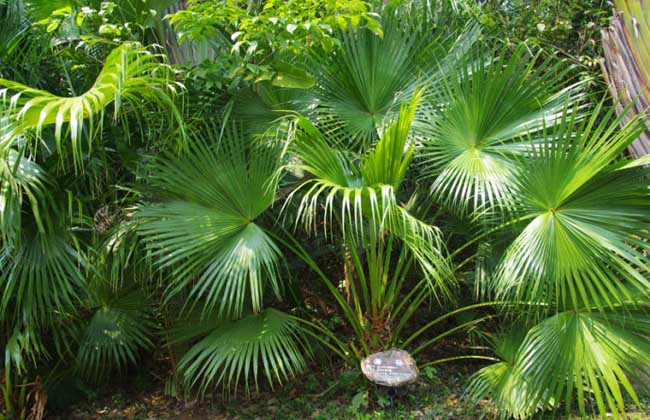
The Chinese fan palm, also known as fan-leaf palm, palm tree, South China fan palm, etc., is a perennial evergreen tree of the genus Livistona in the palm family Arecaceae. It is not only a garden ornamental plant and a good tree species for greening around the four sides, but also an economic forest tree species. Its tender leaves can be used to weave palm-leaf fans, its old leaves can be made into straw rain capes, its leaf segment midribs can be made into toothpicks, and its fruits and roots can be used as medicine. Let us take a look at the cultivation methods of the Chinese fan palm below!
Growth Habits of the Chinese Fan Palm
The Chinese fan palm originates from southern China, mostly distributed in southern Guangdong Province, especially widely planted in Xinhui District, Jiangmen City, and is also found in Indochina. It prefers warm and humid climatic conditions, is not drought-tolerant, can withstand short-term waterlogging, and fears exposure to the scorching sun of the north. It grows well in fertile, moist soil rich in organic matter.
Propagation Methods of the Chinese Fan Palm
1. Seed collection: The Chinese fan palm generally begins to bear fruit after 15 months of growth. Although the seeds are mature by the end of the year they are produced, they need 4 to 5 months to germinate after sowing. If seeds are collected in winter, they should be buried in sandy soil, and then soaked to promote germination before sowing in late spring.
2. Sowing: The Chinese fan palm should be sown shallowly, with a hole depth of 2 to 3 cm and a hole spacing of about 1 sq ft, sowing 4 seeds per hole. After watering, cover with sifted domestic waste powder to help the seeds emerge. When the seedlings emerge, the soil needs to be dug away to make the seedlings emerge uniformly.
Cultivation Methods of the Chinese Fan Palm
1. Soil: For the Chinese fan palm, humus cultivation soil can be used as potting soil, and the pot should be repotted and the soil changed once every 2 to 3 years. Plants over 10 years old should be put into wooden barrels.
2. Light: The Chinese fan palm prefers sufficient light, but should not be placed in the scorching sun. In summer, it should be kept under a shade shed, and attention should be paid to ventilation.
3. Fertilization: The Chinese fan palm is fertilized seasonally before the Spring Festival, at the Dragon Boat Festival, and at the Mid-Autumn Festival each year. During the growing season, the fertilizer applied should be mainly nitrogen fertilizer.
4. Temperature: The Chinese fan palm should be moved into a greenhouse before mid-October to overwinter, and the room temperature should not be lower than 5 degrees so that it can overwinter safely.
5. Watering: In the height of summer, if the Chinese fan palm is not watered for a day, its leaves will wilt and turn yellow, or even die. It has a certain ability to tolerate waterlogging, and during the rainy season attention should be paid to drainage to prevent waterlogging.
6. Pests and diseases: The Chinese fan palm has strong resistance to pests and diseases. Common diseases include leaf blight, anthracnose, brown spot, leaf spot, and wilt disease, etc.