A Detailed Guide to Palm Tree Planting Techniques and Management Methods
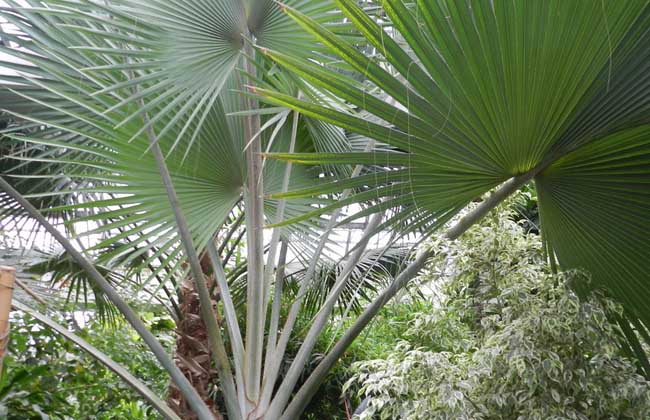
The palm tree is one of the most cold-tolerant plants in the Arecaceae family. It is an evergreen tree of the genus Trachycarpus in the Arecaceae family, with very high cultivation value. Planted in courtyards, along roadsides and in flower beds, it is suitable for viewing in all four seasons. Its wood can be used to make utensils, its fan-shaped leaf sheaths contain palm fiber, its leaves can be made into fans, hats and other handicrafts, and its roots can be used as medicine. Let us now take a look at the planting techniques for palm trees!
The Cultivation Value of Palm Trees
Palm trees are widely cultivated throughout the south. Mainly the palm bark fiber (leaf sheath fiber) is stripped off and used for ropes, weaving coir rain capes, palm beds, carpets, making brushes and as stuffing for sofas, etc. The young leaves can be bleached to make fans and straw hats, and the unopened flower buds are edible. The palm bark and leaf stalks (palm boards), when calcined into charcoal, are used as medicine for their hemostatic effect, and the fruit, leaves, flowers and roots are also used as medicine. In addition, the palm tree has a graceful shape and is also an excellent tree species for garden landscaping.
The Growth Habits of Palm Trees
The palm tree originated in China, and is also found in Japan, India and Myanmar. It is widely distributed in China, from southern Shaanxi in the north, to Guangxi, Guangdong and Yunnan in the south, reaching the border of Tibet in the west and Shanghai and Zhejiang in the east. It is most widely distributed along the 500-kilometer-wide belt from the Yangtze River estuary up both banks of the upper Yangtze River. It is usually seen cultivated only around the four sides of settlements and is rarely found growing wild in open forests, with an upper altitude limit of about 2000 m. Although it can be cultivated north of the Yangtze River, the stems must be wrapped in grass for cold protection in winter. It prefers a warm and humid climate and sunlight. It is extremely cold-tolerant and slightly shade-tolerant. It is suitable for growing in well-drained, moist and fertile neutral, calcareous or slightly acidic soil, tolerates mild salinity and alkalinity, and also tolerates a certain degree of drought and waterlogging. It has strong resistance to air pollution. It is prone to being blown over by wind and grows slowly.
Palm Tree Planting Techniques
1. Seed collection and storage: Collect seeds from vigorous trees aged 15 to 40 years; seeds from young trees and old trees are not suitable for use. Harvest in November to December, when the palm seeds are fully mature and grayish-brown in color. After removing the small branch stalks, place the seeds indoors in a layer 12 to 15 cm thick and spread them out to air for about 15 days, after which they can be sown. If spring sowing is intended, mix the seeds with moist sand, spread them out indoors, cover with a layer of rice straw, and store them while keeping them moist.
2. Nursery site preparation: The land for the nursery should be selected as sandy loam or clay loam that is close to a water source, not prone to drought or waterlogging, and relatively fertile. Generally, for every 7 sq m, apply 8 to 10 loads of decomposed human manure and urine and 20 kg of superphosphate. After plowing, make beds 1.4 m wide and break up the clods on the bed surface, and then sowing can begin.
3. Timely sowing: Before sowing, soak the seeds in wood ash water for 48 to 64 hours, wipe off the fruit skin and the waxy layer on the outside of the seeds, wash them clean and sow. Sow in drills with a row spacing of 20 to 25 cm. After sowing, cover the seeds with a mixture of ash manure and finely crushed fertile soil mixed with miscellaneous manure; do not cover too thickly, with 2 to 2.5 cm as the limit. Then cover with a layer of rice (wheat) straw to prevent the soil from drying out and crusting.
4. Seedling stage management: When more than 80% of the seedlings have emerged, remove the covering straw in the evening and moisten the bed surface with a watering can. During the seedling stage, keep the soil moist and promptly pull out weeds. One month after emergence, apply 2 kg of urea dissolved in water per 7 sq m. After 3 to 4 months, when the seedlings have grown 3 leaves, carry out temporary planting.
5. Timely temporary planting: The soil for temporary planting should be loose and fertile, applying 80 to 10 loads of decomposed miscellaneous manure per 667 sq m. The row spacing for temporary planting is 15 cm × 13 cm. After planting, water every evening until the plants are established. One month later, begin loosening the soil and applying topdressing. In the high-temperature season, insert silvergrass stalks between the seedlings for shading. When the seedlings are about 60 cm tall, they can be transplanted.
6. Site selection and transplanting: Choose moist, fertile foothill slope land with good drainage, especially idle land such as field edges, land borders, beside houses, stream banks and roadsides. Low-lying land, heavy clay, dead yellow soil, overly acidic or alkaline soil, and land with shallow soil are all unsuitable for planting. For planting in large tracts, in July and August of the year before transplanting, cut down all the weeds and shrubs on the ground, dig the soil about 30 cm deep, and bury the weeds and shrubs in the soil. When it is time to transplant, break up the clods, pick out stones, tree roots, etc., and dig holes for afforestation.
7. Mixed Planting Techniques
① Palm-grain intercropping type: The palm-grain intercropping type is the main management method for developing palm trees in large tracts, using short-term crops to support long-term crops, and using cultivation in place of tending to promote the growth of palm trees and early production. Generally, palm trees are sown in holes or broadcast, with 3000 to 6000 plants retained per hectare, and can begin production in about 12 years. After production begins, 750 to 3000 kg of palm fiber can be harvested per hectare. The intercropped crops include corn, potatoes, tuber crops, beans, etc. With both the major and minor cropping seasons together, 3000 to 3750 kg of grain can be harvested per hectare. There are also cases where only the major cropping season is planted and the minor cropping season is left fallow.
② Mixed forest type: The mixed forest cultivation method mainly appears in the 800 to 1300 m altitude zone. The mixed tree species in the basin margins are mostly alder, cypress, tung oil tree, Chinese toon, Chinese fir, paulownia, etc. The mixed planting effect of palm trees with fast-growing broadleaf trees is relatively good, while the mixed planting effect with coniferous trees is relatively poor. Generally, other tree species are planted first, and palm trees are planted after these have closed their canopy or nearly closed it. In this way, the previously planted trees can be used to suppress weeds, improve light, water and nutrient conditions, and create a suitable environment for the growth of palm trees in their juvenile stage.
③ Palm-tea intercropping: Palm-tea intercropping is a common cultivation method in tea-producing mountainous areas, and is also one of the methods of using short-term crops to support long-term crops, combining long and short terms, and making full use of land resources. The usual practice is a row spacing of 2 m and a plant spacing of 1 m for palm trees, with 2 rows of tea planted between two palm trees. Often tea is planted first and palm trees are planted 2 to 3 years later, or palm and tea are planted at the same time. Tea is harvested after 4 to 6 years, and palm fiber begins to be harvested after about 10 years.
④ Pure palm forest: In areas with relatively little labor, large areas of barren hills, and surface soil with many stones or stone oak, unsuitable for farming, pure palm forests are often cultivated. Generally, they are planted once and then allowed to continually regenerate naturally, so as to achieve the goal of both cultivating successor resources and utilizing them at the same time. The characteristic of this community is that "several generations live under the same roof", with high density, and it can generally begin production in about 12 years.