How to Grow and Care for Potted Palm Trees: Methods and Precautions
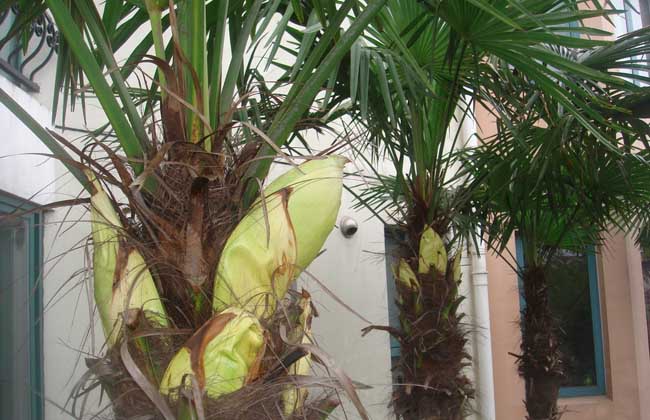
Palm, also known as Tang palm, palm tree, and so on, is an evergreen tree of the genus Trachycarpus in the family Arecaceae. Tall, straight and elegant, it has a distinctly southern look. It is highly adaptable and resistant to a variety of toxic gases. It can be planted in rows, in clumps, or in broad stands, and is also commonly grown in pots or tubs for indoor decoration, for placement in front of buildings, and for decorating meeting venues. Let us take a look below at how to grow a potted palm tree!
Growth Habits of Palm Trees
Palm trees like a warm, humid climate. They are extremely cold-hardy, relatively shade-tolerant, and mature plants are extremely drought-tolerant, but they cannot withstand too great a temperature difference between day and night. The palm is the most widely distributed and highest-latitude species of the Arecaceae in the country. It likes a warm, humid climate and prefers light. Its cold tolerance is extremely strong, and it is slightly shade-tolerant. It grows well in well-drained, moist, fertile neutral, calcareous or slightly acidic soil, tolerates mild salinity and alkalinity, and also tolerates a certain degree of drought and waterlogging. It has strong resistance to air pollution. It is prone to windthrow and grows slowly.
Propagation Methods for Palm Trees
Palm trees are commonly propagated by sowing seed. When the seeds mature in November, cut off the fruiting branches, take out the seeds, soak them in wood ash solution for 3 days, and rub off the waxy coating on the seed surface. They can be sown in winter or in spring. If sowing in spring, spread the seeds out to cool for 1-2 days, dry them in the shade, then store them mixed with moist sand until sowing the following spring. After the bed surface is leveled, open furrows and sow in rows, with a furrow spacing of 20 cm, cover with 2 cm of soil, cover with rice straw, and set up a shade net for shade. The sowing rate is 15 kg per mu. Afterward, water promptly according to how dry or moist the nursery soil is, always keeping the nursery land in a semi-moist state. Seedlings emerge after two months. After two years, the seedlings are moved to another bed for transplanting. When transplanting, cut off 1/2 to 2/3 of the leaves and plant shallowly.
How do you grow a potted palm tree?
1. Soil: When growing palm trees in pots, it is best to choose a sandy loam with good drainage. Although it has low requirements for soil, it can grow very well in both slightly acidic and slightly alkaline soil.
2. Watering: Palm trees like a humid environment, so watering is very important, but do not overwater, and especially avoid waterlogging, otherwise it easily causes root rot in palms.
3. Temperature: Palm trees are cold-hardy and can grow well even at temperatures around -10°C.
4. Light: Palm trees are also not strict about light. They can grow well both in full sun and in relatively shady indoor conditions.
5. Pests and diseases: Common pests and diseases of palm trees include Paecilomyces, longhorn beetles, scale insects, and so on. They should be detected promptly, and bark-peeling treatment should be carried out.