How to grow potted winter jasmine? Cultivation methods and precautions
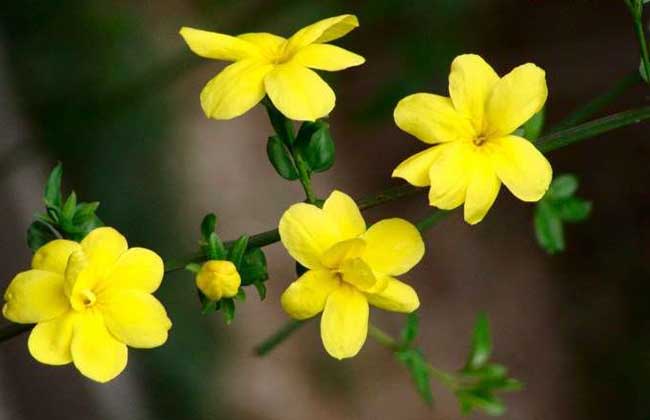
Winter jasmine, also known as little yellow flower, golden belt, Qingming flower, etc., is a deciduous clustering shrub of the genus Jasminum in the family Oleaceae. Together with plum blossom, narcissus and camellia, it is collectively called the "Four Friends in the Snow". It not only has dignified and beautiful flowers with extraordinary charm, but also has the characteristics of fearing no cold, being undemanding about soil and climate, and having strong adaptability. It has always been loved by people. Let's take a look below at how to grow potted winter jasmine!
Growth habits of winter jasmine
Winter jasmine is produced in Gansu, Shaanxi, Sichuan, northwestern Yunnan and southeastern Tibet in China, growing in mountain thickets, and is widely cultivated around the world. It likes light, tolerates slight shade, is slightly cold-tolerant, and fears waterlogging. It can overwinter outdoors in North China and Yanling. It requires a warm and humid climate, loose, fertile and well-drained sandy soil. It grows vigorously in acidic soil and poorly in alkaline soil. Its roots have strong sprouting ability, and the parts of branches touching the ground easily take root.
Propagation methods of winter jasmine
1. Cuttage: It can be carried out in spring, summer and autumn. In spring, one-year-old branches can be cut from February to March after flowering as cuttings. For cuttage in summer and early autumn, either one-year-old branches or current-year branches can be used as cuttings. Insert them into sandy soil, water thoroughly, then avoid intense sunlight and keep the soil moist. Roots will form in about 1 month. In addition, in winter and spring, old roots with good shape can be cut for cuttage, and after surviving they can be potted.
2. Layering: Propagation of winter jasmine by layering is carried out during the growing season. The method is to press robust branches close to the ground into the soil, and in about one month new roots can grow at the nodes. When the new roots have grown to a certain length, cut them from the mother plant and plant them separately.
3. Division: Propagation of winter jasmine by division can be carried out in spring when the buds begin to sprout. When transplanting in spring, part of the aboveground branches and trunk should be cut off, and native soil should be retained. During growth, note that the soil must not accumulate water or become excessively dry, and apply fertilizer appropriately 2 to 3 times before and after flowering.
4. Grafting: For propagation of winter jasmine by grafting, 2 cm or more diameter water wax seedlings can be selected. In early spring when they begin to sprout, perform side grafting at 1 m or at a selected certain height. Take current-year winter jasmine branches 8 to 10 cm long as scions and graft them. After grafting, tie tightly with plastic film and cover with a plastic bag. After survival and sprouting, gradually tear the bag to allow ventilation and harden the seedlings.
How to grow potted winter jasmine?
1. Soil: The cultivation of winter jasmine has certain requirements for soil. It requires loose, fertile and well-drained sandy soil. It grows vigorously in acidic soil and poorly in alkaline soil.
2. Temperature: In summer when the sun is scorching and high temperatures occur, winter jasmine should be moved to a semi-shaded place, which is more favorable for its growth. Around the Spring Festival, move it together with the pot into a greenhouse or plastic tunnel, keep the room temperature at about 15°C, and flowers can be seen in about 15 days.
3. Watering: Winter jasmine likes moisture. From before flowering to the flowering period, water 1 to 3 times depending on the degree of soil dryness and moisture. Before the rainy season arrives, water frequently. Do not apply additional fertilizer during the growing season. After the Beginning of Autumn, do not water, to prevent branches from growing too long and too tender to overwinter safely.
4. Fertilizing: When planting winter jasmine, place a few pieces of animal hoof at the bottom of the pot as base fertilizer. During the growing period of winter jasmine, apply 1 to 2 times per month of decomposed dilute liquid fertilizer. July to August is the flower bud differentiation period of winter jasmine, and liquid fertilizer containing more phosphorus should be applied to facilitate flower bud formation. If before the flowering period, apply one time of decomposed dilute organic liquid fertilizer, it can make the flower color brilliant and prolong the flowering period.
5. Pruning: Winter jasmine has strong sprouting ability. During the growing period, it is necessary to frequently pinch off growing tips, and cut off or shorten certain branches to maintain the tree shape. After the flowers fade, the branches should be cut short, generally leaving only 2 to 3 buds, while the main branches can appropriately retain a few more buds. After new branches grow, if cared for properly, flower buds will cluster.
Pest and disease control of winter jasmine
1. Mosaic disease
[Symptoms] A whole-plant disease caused by cucumber mosaic virus CMV. The symptoms are smaller and deformed leaves, distributed with dark green markings or yellowing. Infected plants do not flower, or if they do flower, the flowers are also short, small, deformed and marked (see figure). The transmission route is mainly virus transmission by green peach aphids and cotton aphids. The main source of infection is infected diseased plants among surrounding weeds.
[Control] First, remove weeds promptly to reduce the source of infection. Second, aphids should be controlled early to eliminate the virus-transmitting vector.
2. Brown spot disease
[Symptoms] Mostly occurs on fairy primrose. It is caused by Alternaria fungi in the Deuteromycotina. Infected plant leaves have brown spots. The transmission route is that conidia spread through wind and rain.
[Control] In the early stage of the disease, spray fungicides such as 70% chlorothalonil wettable powder 1000 times solution.
3. Gray mold
[Symptoms] It is one of the common diseases of winter jasmine and occurs all over the country. After the plant is infected, the whole plant turns yellow and dies. It mainly infects leaves, young stems, floral organs and other parts. It mostly occurs at leaf tips and leaf margins. In the early stage of the disease, water-soaked spots appear on the leaves, which gradually expand, turn brown and rot. In the later stage, a gray-yellow mold layer forms on the surface of the lesions. Under humid conditions, a gray mold layer appears on the diseased parts.
[Control] Planting density should be reasonable. Pay attention to ventilation and reduce air humidity. Remove diseased leaves and diseased plants promptly to reduce the source of infection. In the early stage of the disease, spray 50% procymidone or 50% iprodione wettable powder 1500 times solution. It is best to alternate with 65% dimethirimol wettable powder 500 times solution to prevent the development of drug resistance.