How to grow potted hydrangeas? Master these care methods and that's all you need
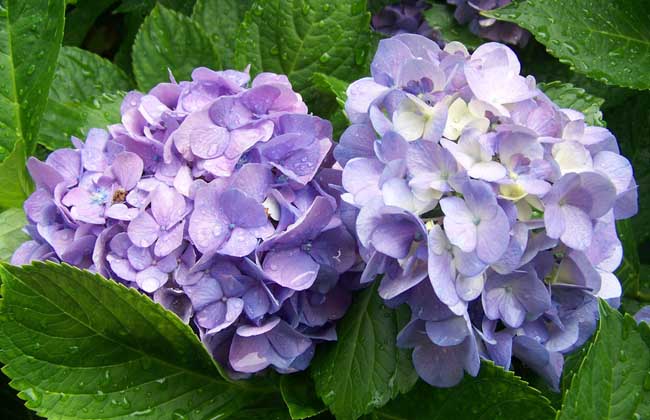
Hydrangea is a common potted ornamental flowering shrub, also known as eight Immortals flower, pink ball flower, grass hydrangea, etc. It is a shrub plant of the genus Hydrangea in the family Saxifragaceae, with very high ornamental value. Its flower shape is full, large and beautiful, and its flower color can be red or blue, making it pleasing to the eye and refreshing to the mind. Modern parks and scenic areas all plant them in masses to form landscapes. Now let us take a look at how to grow potted hydrangeas!
Growth habits of hydrangea
Hydrangea prefers a warm, humid and semi-shaded environment. The suitable growth temperature is 18-28°C, and the winter temperature should not be lower than 5°C. Flower bud differentiation requires 6-8 weeks at 5-7°C. A temperature of 20°C can promote flowering, and after flowering begins, maintaining 16°C can extend the viewing period. However, high temperatures make the flowers fade quickly. The potting soil should be kept moist, but watering should not be excessive. Especially in the rainy season, pay attention to drainage to prevent waterlogging from causing root rot. In winter, indoor potted hydrangeas are better kept slightly dry; if too humid, the leaves are prone to rotting. It is a short-day plant. With more than 10 hours of darkness treatment per day, flower buds form in about 45-50 days. In usual cultivation, avoid direct sunlight, and 60-70% shading is ideal. The soil should preferably be loose, fertile and well-drained sandy loam, but changes in soil pH greatly change the flower color of hydrangea.
Propagation methods of hydrangea
1. Division: Division should be carried out in early spring before sprouting. Separate rooted branches from the mother plant and pot them directly. Do not water too much. Keep them in a semi-shaded place for care. After new buds sprout, switch to normal care.
2. Layering: Layering is carried out when the buds begin to sprout. Growth can occur after 30 days. In the spring of the following year, cut it off from the mother plant, transplant it with soil, and it can bloom that year.
3. Cuttage: Cuttage is carried out during the plum rain season. Cut off the tender top branches, about 20 cm long, remove the lower leaves. The suitable temperature for cuttage is 13-18°C, and roots form 15 days after insertion.
How to grow potted hydrangeas?
1. Soil: The soil for planting hydrangea should preferably be loose, fertile and well-drained sandy loam. For potting, it is advisable to use a culture soil mixed from 4 parts leaf mold, 3 parts garden soil, 2 parts river sand and 1 part cake fertilizer, or a uniform mixture of 4 parts compost soil, 5 parts sandy soil and 1 part cake fertilizer, or a mixed soil of 6 parts leaf mold, 3 parts sandy soil (or cinder) and 1 part cake fertilizer. After potting, water thoroughly, keep it indoors for care, and move it outdoors in early May.
2. Watering: Hydrangea leaves are relatively large and require more water. In spring and summer, water frequently to keep the potting soil moist. During high temperatures in midsummer, water once each in the morning and evening, and pay attention to appropriate shading. In winter, water less, as long as the potting soil moisture is maintained. During the growing period, watering should be sufficient so that the potting soil often remains moist, especially in summer, when even more sufficient water must be given.
3. Light: Hydrangea is a short-day plant. After moving outdoors in spring, it should first be placed in a semi-shaded environment for care. In midsummer, move it to a well-ventilated and cool place to prevent leaf sunscald. After September, as light intensity gradually weakens, in order to promote flower bud differentiation, the flowerpot should be moved to a place with more light.
4. Temperature: Hydrangea prefers a warm environment. The suitable growth temperature is 18-28°C, and the winter temperature should not be lower than 5°C. Flower bud differentiation requires 6-8 weeks at 5-7°C. A temperature of 20°C can promote flowering. After flowering begins, maintaining 16°C can extend the viewing period. Note that high temperatures make the flowers fade quickly.
5. Fertilization: Hydrangea prefers fertilizer. During the growth period, generally apply a dilute cake fertilizer water once about every 15 days. In order to keep the potting soil often acidic, 0.2% ferrous sulfate can be added when applying liquid fertilizer, making it into alum fertilizer water for irrigation. During the bud stage, apply 1-2 additional doses of 0.5% superphosphate soaking liquid, which can promote larger flowers and brighter colors.
6. Pruning: For hydrangea, every year in early spring in March, cut off diseased and dead branches and weak branches from the base, retain 3-5 strong main branches and shorten them, leaving 2-3 buds on each branch to promote new branches and make flowering abundant. Through pruning and shaping, the tree shape can be made compact, full, symmetrical, with more flowers, larger blooms and brighter colors. If not pruned, the base of old branches over 3 years old has already become woody and is not easy to sprout new branches, easily causing emptiness at the lower part of the plant and affecting ornamental value.
7. Pests and diseases: The main diseases of hydrangea include wilt disease, powdery mildew and leaf spot disease, which can be prevented and controlled by spraying 600 times diluted 65% zineb wettable powder. The main pests of hydrangea include aphids and mirid bugs, which can be killed by spraying 1500 times diluted 40% omethoate emulsifiable concentrate.
Precautions for hydrangea
1. Hydrangea prefers acidic soil and is not tolerant of barren soil or saline-alkaline soil. It grows poorly in alkaline soil, with yellowing branches and leaves. It is suitable for loose, fertile acidic soil rich in humus. Its flower color can change from white to red and from red to blue due to the influence of pH.
2. Move hydrangea indoors in early to mid-October. Control watering and keep the room temperature at about 5°C to promote dormancy. Before moving indoors, remove the leaves to avoid leaf rot. Starting from mid-December, move it to a sunny place and maintain a temperature of 15-20°C to promote the growth of branches and leaves. Move it outdoors in late April of the following year.
3. For hydrangea seedlings cut in March, after rooting they can be moved into 10 cm pots, and in mid-June they can be finally planted in 16 cm pots. Carry out the first pinching in June. If pinched in early June, flower buds can form in mid-August. Seedlings cut in May-June can be finally planted in 16 cm pots in July-August. In order to promote flower bud formation that year, the last pinching must be done before September, otherwise flower buds cannot form that year.