How to grow potted water lilies? Teach you the correct cultivation methods
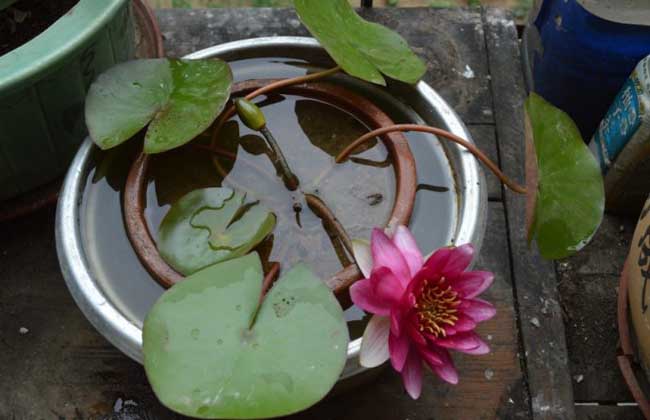
Water lily, also known as Ziwulian, dwarf water lily, pygmy water lily, etc., is a perennial aquatic herbaceous plant of the genus Nymphaea in the family Nymphaeaceae. Its oval leaves float on the water surface, and its flowers are large and beautiful, floating on or rising above the water surface. It usually blooms during the day and closes at night. Nowadays, it is cultivated as an ornamental plant in many park water bodies. Let's take a look at how to grow potted water lilies!
Growth habits of water lilies
Water lilies prefer sunlight and good ventilation, and have low requirements for soil quality. They can grow normally at a pH value of 6 to 8. The optimum water depth is 25 to 30 cm, and the maximum depth must not exceed 80 cm. They prefer loam rich in organic matter. They sprout and grow leaves from March to April, bloom successively from May to August, with each flower lasting 2 to 5 days, and bear fruit after flowering. The stems and leaves wither from October to November, and they sprout again the following spring. In the Yangtze River Basin, they sprout from late March to early April, form buds in late April or early May, reach full bloom from June to August, enter the yellow-leaf stage from October to November, and enter dormancy after November.
Propagation methods of water lilies
1. Division: Water lilies are mainly propagated by division. Hardy species are usually divided in March to April before sprouting in early spring. Non-hardy species have high requirements for air and water temperature, so division can only be carried out around mid-May. When dividing, first dig out the rhizomes, select rhizomes with plump new buds, cut them into root segments 8 to 10 cm long, each segment with at least 1 bud, and then plant them. When growing only a small number in pots, you can take water lilies that have been planted for 2 to 5 years out of the pot, cut them into 2 to 4 pieces, and replant them in the pot.
2. Sowing: Water lilies are generally sown in March to April. Use fertile clay loam as the potting soil. Do not fill the pot too full; it should be 5 to 6 cm below the pot rim. After sowing the seeds, cover with 1 cm of soil, press firmly, and immerse in water with the water surface 3 to 4 cm above the potting soil. Cover the potting soil with glass and place in a sunny, warm spot to raise the temperature inside the pot. The sowing temperature should preferably be 25 to 30°C. They germinate after about half a month and can bloom the following year.
How to grow potted water lilies?
1. Soil: Water lilies require fertile clay loam rich in humus. Soil that is too heavy affects the elongation of the lotus runners and the expansion of the lotus, while loose soil is prone to wind damage and hinders root development; neither is conducive to the growth of water lilies. The soil used is usually lake or pond mud, or you can mix 4 parts garden soil, 3 parts loess, and 3 parts sandy soil for use. The best soil pH is 6.5 to 7.5.
2. Light: Water lilies prefer strong light. Receiving 7 to 8 hours of light per day can produce more flower buds and continuous blooming. Avoid growing them in shady places, and even for indoor viewing when in flower, they must not be kept indoors for more than a day. Household potted water lilies must be placed on a balcony or in a courtyard, and moved to a shady spot at noon to avoid the scorching sun.
3. Temperature: Water lilies have strict temperature requirements. Generally, they begin to sprout at 8 to 10°C, the lotus runners begin to elongate at 14°C, and 25 to 30°C is the most suitable temperature for the growth and development of water lilies. Especially in weather with alternating rain and sunshine, it is even more conducive to plant growth.
4. Fertilizing: When potting water lilies, apply sufficient base fertilizer according to the size of the pot. One month after planting, apply a liquid fertilizer mainly of decomposed soybean cake water or human waste once, at a concentration of 10%. After the standing leaves emerge, apply 1 to 2 more topdressings. During the flowering period, apply superphosphate once every 7 days.
5. Water: In summer, when temperatures are high, water lilies easily lose water, so at this time add water to potted water lilies 1 to 2 times a day. The water should be roughly the same temperature as the water in the pot, and the water quality should be kept clean. If the water is found to be turbid, change it. In late autumn and early winter, water lilies enter dormancy and do not need frequent watering; just keep shallow water in the tub or pot.
Precautions for water lilies
1. Clay soil rich in humus is especially suitable for water lily growth, so when choosing soil, you can use river or pond silt.
2. Water lilies are mostly cultivated by division. The quality of the seed stems is a key factor in the final success of cultivation. It is best to select a section of underground rhizome in good growing condition.
3. If the seed stems of water lilies are planted too deep into the mud, it is not conducive to growth. The planting depth should be based on the new buds on the stem being level with the soil surface.
4. The growing environment for water lilies must have sufficient sunlight, warmth and humidity, and good ventilation. Especially for potted water lilies, the light must be sufficient.