How to grow potted yew podocarpus? A detailed guide to care methods
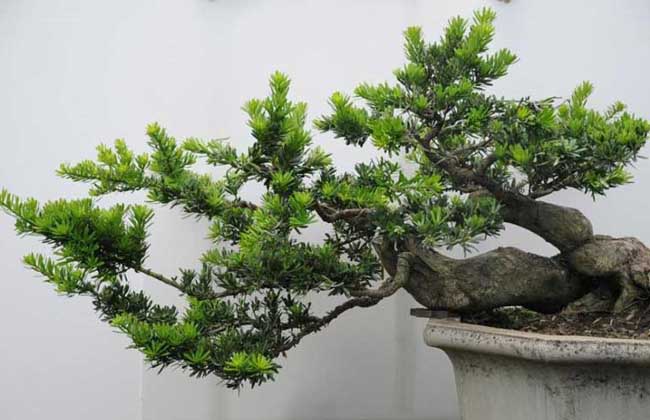
Yew podocarpus, also known as Luohanshan, money pine, Luohan cypress, etc., is an evergreen coniferous tree of the genus Podocarpus in the family Podocarpaceae. Its ornamental value as a potted plant is extremely high. Its tree form is lush, elegant and graceful, vigorous and sturdy, with leaves staying fresh green in all four seasons, giving a sense of strength and nobility. If it is combined with rocks to create an eagle-claw-embracing-rock posture, it becomes even more antique and unique. Now let us take a look at how to grow potted yew podocarpus!
Growth habits of yew podocarpus
Yew podocarpus is produced in China's Jiangsu, Zhejiang, Fujian, Anhui, Jiangxi, Hunan, Sichuan, Yunnan, Guizhou, Guangxi, Guangdong and other provinces and regions. It is cultivated in courtyards as an ornamental tree, and wild trees are very few. It likes a warm and humid climate, has weak cold tolerance and strong shade tolerance, and likes well-drained moist sandy loam. It has strong adaptability to soil and can also survive on saline-alkali soil. It has relatively strong resistance to various polluting gases such as sulfur dioxide, hydrogen sulfide and nitrogen oxides, and strong resistance to pests and diseases.
Propagation methods of yew podocarpus
1. Sowing: Yew podocarpus seeds are best sown immediately after collection and cannot be stored over summer. Before sowing, soak the seeds for several days first. Wait until the seeds have fully absorbed water and swollen, then sow in rows or in spots. The sowing depth should be just enough to cover the seeds. After sowing, cover with grass to retain moisture and spray water once a day. If sown in open ground, in the southwest region it also needs grass cover for protection through winter. In other regions, pot sowing is required, and after sowing they should be moved into a low-temperature greenhouse to overwinter. Seedlings can emerge in 8 to 10 days. After emergence, remove the covering grass and shade them immediately. Never expose them to strong sunlight.
2. Layering: Layering propagation of yew podocarpus is best carried out around the Jingzhe solar term in spring. Select a branch close to the ground and slightly smaller than a chopstick. On the side of the base near the ground, use a small knife to cut diagonally halfway through the branch. Insert a prepared 1-cun-long bamboo strip crosswise into the cut, and insert a small wooden stick beside it to support the branch. Tie it gently with a plastic strip, then cover the cut with loose soil, press it lightly to firm it, and cover with dry grass to keep it moist. After 3 months, roots can grow at the cut on the branch.
3. Cuttage
① Softwood cuttage: For softwood cuttage of yew podocarpus, in the first half of the year it is carried out from mid to late May to early July, and in the second half of the year from mid to late August to mid to late September. For cuttings made in the first half of the year, attention should be paid to preventing high-temperature scorching and disease occurrence. For cuttings made in the second half of the year, attention should be paid to heat preservation and freeze prevention in the middle and late stages. The time to remove the shade net is late November. In drought years, the time to remove the shade net can be postponed to late December.
② Hardwood cuttage: Hardwood cuttage refers to cutting fully lignified thick branches from the previous year during the dormant stage in early spring from February to March, before sap flow begins, for cuttage. For early spring hardwood cuttage, attention should be paid to raising soil temperature and controlling the air temperature inside the shed.
How to grow potted yew podocarpus?
1. Soil: Yew podocarpus likes well-drained moist sandy loam. It has strong adaptability to soil and can also survive on saline-alkali soil. For cultivation, it requires a slightly acidic culture soil rich in humus, loose and fertile, and well-drained. In alkaline soil, the leaves turn yellow and growth is slow. It has a long lifespan, reaching several hundred years, even over a thousand years.
2. Transplanting: Transplanting yew podocarpus is best done in spring from March to April. Small seedlings need to be moved with soil, and large seedlings with a soil ball. They can also be potted. After planting, water thoroughly. During the growing period, keep the soil moist. In the hot midsummer season, place it in a semi-shaded place for care, and fertilize once every 2 months. In winter, pay attention to cold protection for potted plants. The pot can be buried in the soil, and watering should be reduced.
3. Watering: Yew podocarpus is not a plant of the pine family and is not drought-tolerant. On the contrary, yew podocarpus tolerates shade and moisture. During the growing period, attention should be paid to frequent watering, but it should not be waterlogged. In the Shunde area, on sunny summer days, attention should be paid to frequent watering. Generally, water once in the morning and once in the evening. In addition, frequently spray water on the leaves so that the leaf color stays fresh green and growth is good. Summer rainfall is usually relatively high, and yew podocarpus is not tolerant of waterlogging, so attention should be paid to preventing prolonged water accumulation.
4. Sunlight: Yew podocarpus belongs to a neutral to shade-leaning tree species. It can accept relatively strong light and can also grow in a more shaded environment. Although summer temperatures are relatively high and sunlight is strong, since large yew podocarpus trees benefit from high temperature and strong light for maintaining tree form and leaf shape, it is not necessary to shade large yew podocarpus trees in summer. However, because yew podocarpus seedlings have tender tissues, they are not suitable for long periods of strong light exposure. It is recommended to place them under tree shade for care.
5. Temperature: For potted cultivation in northern regions, when the outdoor temperature is stable at around 10°C, move them outdoors and place them in a wind-sheltered, sunny place for care. After summer begins, move them to a semi-shaded place. In winter, when the temperature does not drop to 5°C, they should be moved indoors. After moving indoors, control watering, and they can safely overwinter under non-freezing conditions.
6. Fertilizing: Yew podocarpus likes fertilizer and should be given thin fertilizer frequently. The fertilizer should be mainly nitrogen fertilizer, supplemented by phosphorus and potassium fertilizers. An appropriate amount of black alum can be added and fermented into alum fertilizer water. In spring, when repotting, apply sufficient base fertilizer. During the growing season, apply some dilute alum fertilizer water, and often apply 01% urea and 3% leftover beer, which can make the leaves thick and emerald green. During the growing period, fertilize once every 1 to 2 months. Fertilizing can be done together with watering (water-to-fertilizer ratio of 9:1).
7. Shaping: Yew podocarpus has whorled branches. According to the established momentum of the main trunk, cut off messy branches, retain 2 to 3 branches at suitable positions, and bind the branches with metal wire so that the main branches droop slightly. Its ability to send out shoots is not strong. Prune once each year in June and July. At ordinary times, mainly pinch the tips (generally after the small branches have lignified).
8. Pests and diseases: The main diseases of yew podocarpus are leaf spot disease and anthracnose, which can be sprayed with 50% thiophanate-methyl wettable powder at 500 times dilution. The main insect pests of yew podocarpus include scale insects, red spiders and bagworms, etc., which can be killed by spraying with 40% omethoate emulsifiable concentrate at 1500 times dilution.