How to grow potted plumeria (frangipani)? A complete guide to its cultivation methods
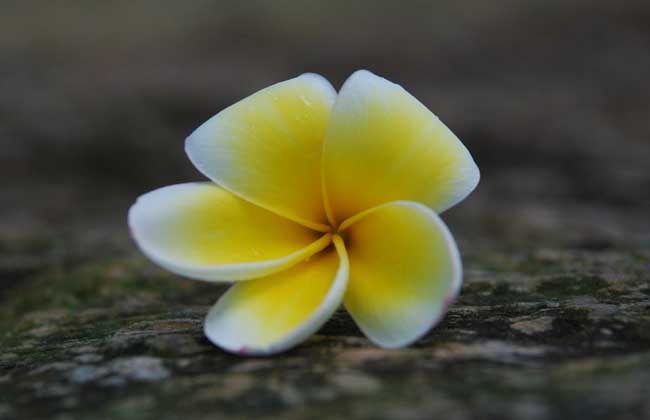
Plumeria, also known as Burmese gardenia, egg-yolk flower, dajihua and so on, is a deciduous shrub or small tree of the genus Plumeria in the dogbane family (Apocynaceae). In Xishuangbanna, China, and some Southeast Asian countries, it is designated by Buddhist temples as one of the "Five Trees and Six Flowers" and is widely planted. It also has high ornamental value; the whole tree looks graceful, well-balanced and naturally beautiful. Let us take a look below at how to grow potted plumeria!
The growth habits of plumeria
Plumeria is a sun-loving species that prefers high temperatures, humidity and a sunny environment, but it can also grow in semi-shaded conditions; however, in a shaded environment the branches grow leggy, with few flowers, or it grows leaves without flowering. The best soil for planting plumeria is a deep, fertile, well-aerated, organic-rich acidic sandy loam. It is drought-tolerant, dislikes waterlogging, and has good stress resistance, but drought is unfavorable to plant development and in severe cases leads to poor growth, while waterlogging easily causes root rot. Its cold tolerance is poor; the most suitable growing temperature is 20-26°C, and during overwintering, prolonged periods below 8°C make it prone to cold damage. In the vast number of towns south of the Tropic of Cancer in China, open-ground cultivation can generally overwinter safely, while in Central China and North China it is only suitable for pot cultivation, moving into a greenhouse to overwinter in winter.
Propagation methods of plumeria
1. Cuttings: Plumeria branches root easily from cuttings, and it is mainly propagated by cuttings. In tropical and subtropical places suitable for open-ground cultivation, cuttings can be taken all year round. Select robust 1-2 year old branches, cut 20-30 cm long sections from the base of the branches, let the white latex flowing from the cut dry in a cool, ventilated place for 2-3 days, then insert them into the growing medium; they can root in 30-35 days.
2. Sowing: Plumeria does not produce many fruits, but in open-ground plantings most varieties can still yield a small amount of seed. The suitable germination temperature for seeds is 18-24°C, and generally they are sown as soon as collected. Sow evenly at a spacing of 5-6 cm, then cover thinly with a layer of sandy soil or coconut coir. Water moderately to keep the medium moist. In spring they generally germinate and emerge in 8-12 days, and in summer in about 5 days; afterward carry out general routine management, keeping it moist, but the seedbed must not become waterlogged.
3. Grafting: Because of the strong compatibility between rootstock and scion, plumeria grafting is relatively easy to perform and has a very high survival rate. In tropical and subtropical regions such as South China it can be done all year round, but spring and autumn are best; in winter and spring it is better when the temperature is stable above a daily average of 18% [sic], but long periods of rainy weather in winter and summer should also be avoided when grafting.
How to grow potted plumeria?
1. Soil: Plumeria has no strict requirements for soil, and grows best in loose soil with more humus. When planting, the roots can be slightly exposed when potting. After planting plumeria, place it indoors in a shaded spot, expose it to weak light after one week, and after half a month it can be placed in a sunny spot.
2. Watering: Plumeria likes moisture and is also drought-tolerant, but it fears waterlogging. Therefore watering should be moderate, following the principle of not watering until dry, watering as soon as it dries, watering thoroughly when you do water, and never waterlogging. In spring and autumn, water once every 1 to 2 days when the soil is dry; on sunny days in summer, water once every morning, and in the evening water again if the soil is dry; in the rainy season be sure to pour off accumulated water in the pot to prevent root rot; in winter water once every ten days to half a month, keeping the potting soil slightly moist but not dry.
3. Fertilizing: Plumeria likes fertilizer. When potting or repotting and changing soil, it is advisable to add 20 g to 30 g of bone meal and 50 g to 80 g of superphosphate to the growing medium (because it likes to grow in calcareous soil, be sure to supplement calcium). From May to October, apply a light, thin, fully decomposed organic fertilizer or a nitrogen-phosphorus-potassium compound fertilizer once every 10 to 15 days; avoid applying nitrogen fertilizer alone to prevent leggy growth; do not fertilize in winter.
4. Light: Plumeria is a strongly sun-loving flowering plant; the more abundant the sunlight, the more luxuriant its growth and the more numerous and fragrant its flowers. Except for the 7 to 10 days of shading needed after potting or repotting and changing soil, at all other times it should be placed in a sunny spot. Although it can also grow in a semi-shaded environment, in a shaded environment the branches grow leggy, with few flowers, or it grows leaves without flowering.
5. Repotting: Plumeria grows rapidly and needs repotting once every spring, generally into a pot with a diameter of 30 cm. The potting soil can be mixed from 4 parts garden soil, 4 parts horse manure soil and 2 parts river sand, and each pot should also have 100 g of cake fertilizer or sauce residue and 50 g of superphosphate or bone meal added. After repotting, water thoroughly, and move it outdoors to a sunny spot around Grain Rain.