When does the four-season osmanthus bloom? A detailed guide to its flowering period
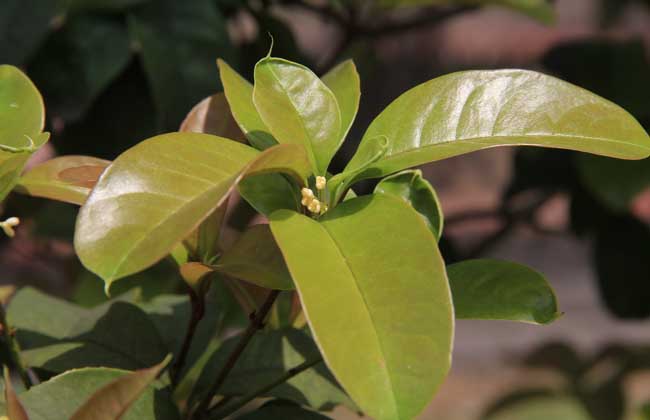
The four-season osmanthus is a variety of Osmanthus fragrans in the genus Osmanthus, also known as yueyuegui, yuegui, and so on. It is an evergreen small tree or shrub of the genus Osmanthus in the family Oleaceae, with opposite leaves that are mostly elliptical or oblong-elliptical, smooth on the surface, leathery, and serrated along the edges. It has been introduced and cultivated in Zhejiang, Jiangsu, Fujian, Taiwan, China, Sichuan, Yunnan, and other provinces in China. Let us take a look below at when the four-season osmanthus blooms!
When does the four-season osmanthus bloom?
The four-season osmanthus blooms all year round, but mainly in autumn. The flowers are pale yellow when they first open and later turn white, but their fragrance is also the faintest among all osmanthus flowers, with the floral scent almost imperceptible. Each inflorescence consists of 12 to 20 small flowers, and the flowering period lasts 5 to 7 days. Its varieties can be further divided into yuegui, four-season osmanthus, Fodingzhu, Rixianggui, and Tianxiang Taige, among others.
The cultivation value of the four-season osmanthus
1. Industrial value: The leaves and fruit of the four-season osmanthus contain aromatic oil. The leaves contain 0.3-0.5% oil, and the fruit contains about 1% oil. The main components are linalool, eugenol, geraniol, and cineole, which are used in food and soap fragrances. The leaves can be used as a seasoning spice or as a flavoring agent for canned goods. The seeds contain about 30% vegetable oil, and the oil is used for industrial purposes. In addition, osmanthus wood is hard, glossy, and beautifully grained, making it an excellent material for carving.
2. Ornamental value: The four-season osmanthus blooms in all four seasons and is fragrant all year round. It can be cultivated on balconies and in courtyards alike, and is often planted in gardens, along both sides of roads, on lawns, and in courtyards. It is the best landscaping tree species for government offices, schools, the military, enterprises and institutions, streets, and homes. Paired with mountains, rocks, pavilions, terraces, buildings, and towers, it appears even more dignified and elegant, pleasing to the eye and delightful to the mood. At the same time, it is also an excellent material for potted plants. Once made into a bonsai, it offers the shape, the stone, and the fragrance all at once, truly “three benefits in one”.
3. Purifying the environment: The four-season osmanthus has a certain resistance to harmful gases such as hydrogen fluoride and sulfur dioxide, and can reduce the degree of environmental pollution. Planted in public places or home courtyards, it can play a good role in greening, beautifying, perfuming, and purifying, so flower and garden experts all advocate promoting its cultivation.
How to grow the four-season osmanthus
1. Soil: The four-season osmanthus likes to grow in slightly acidic soil. It can be cultivated with a mixture of peat, garden soil, sandy soil, and river sand, with a pH value of 5.5-6.5. Before potting, disinfect the prepared soil with a potassium permanganate solution. It is best to use tile pieces, which have very good water permeability and air permeability. The potting soil substrate is effective, and generally the pot should be changed once every 1-2 years. The pot change should be carried out in early spring, as this is more conducive to the plant's growth.
2. Watering: The four-season osmanthus likes a high-temperature, dry environment, so watering must be well controlled. In summer, water more to keep soil moisture at around 50%, which is most suitable. During rainy periods and when buds are sprouting, water less, and prevent water accumulation in the pot soil to avoid root rot. Provide shade in summer, the temperature must not be higher than 35°C, and spraying water around the flowerpot can achieve a cooling effect.
3. Fertilizing: When the four-season osmanthus is growing, it likes organic fertilizer. When the four-season osmanthus sprouts, apply fertilizer once a week, using decomposed dilute liquid fertilizer or pig manure liquid. In July, use organic compound fertilizer, and in September, apply phosphate fertilizer, so that the four-season osmanthus grows more luxuriantly, thereby improving its ornamental value.
4. Temperature: The four-season osmanthus can be cultivated outdoors through winter in areas south of the Yellow River basin. Potted plants should be moved indoors in winter and placed in a sunny spot so they can fully receive direct sunlight. The room temperature should be kept above 5°C but must not exceed 10°C. After sprouting in April of the following year, move them outdoors, first placing them in a wind-sheltered, sunny spot for care. After stable growth, gradually move them to a ventilated, sunny, or semi-shaded environment, and then carry out normal management.
5. Pruning: The four-season osmanthus can be pruned in spring and autumn. The first pruning is after flowering in autumn, cutting off the relatively long and overly dense branch tips and leaving thick, strong short branches. The second pruning is in early spring before sprouting, cutting off dead branches, weak branches, and diseased branches so that it can sprout better. Generally, it is enough to achieve the requirements of a short, sturdy plant, a thick trunk, and well-proportioned branches and leaves.