How to grow potted chrysanthemums well? A detailed guide to care methods
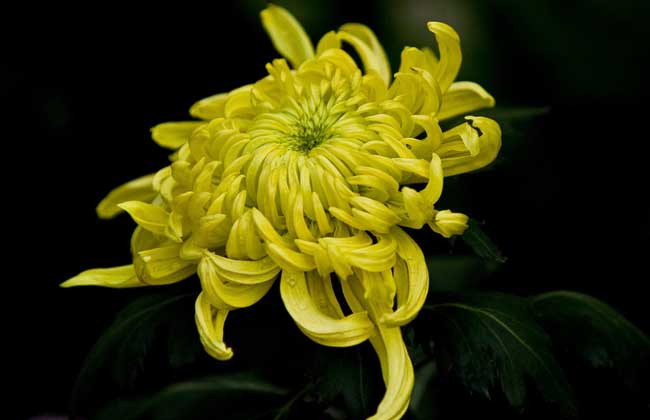
The chrysanthemum ranks third among China's top ten famous flowers and is one of the Four Gentlemen of flowers (plum blossom, orchid, bamboo, chrysanthemum); it is also known by other names such as shouke, jinying and huanghua. It is a perennial herbaceous plant with persistent roots of the genus Chrysanthemum in the family Asteraceae. According to cultivation form, it is divided into types such as spray chrysanthemum, single-stem chrysanthemum, large standard chrysanthemum, cliff chrysanthemum, artistic chrysanthemum and desk chrysanthemum. Now let us take a look at how to grow potted chrysanthemums well!
Growth habits of chrysanthemums
The chrysanthemum is a short-day plant and can bloom earlier under short-day conditions. It likes sunlight and dislikes shade, is relatively tolerant of drought and afraid of waterlogging, and prefers a warm, humid climate, but it can also withstand cold; in severe winter, its rhizomes can overwinter underground. The flowers can withstand light frost, but the seedling growth and branching bud-setting stages require relatively high temperatures. The optimum growth temperature is 18-21°C, with a maximum of 32°C and a minimum of 10°C. The underground rhizomes generally tolerate low temperatures down to -10°C. During the flowering period, the minimum night temperature is 17°C, and during the middle and late flowering stages it can drop to 15-13°C.
Propagation methods of chrysanthemums
1. Bud cuttings: In autumn and winter, cut off the outer offshoot buds of the plant and insert them for cuttings in flower pots in a greenhouse or in coarse sand in a cutting bed, maintaining a room temperature of 7-8°C, and plant them outdoors after the weather warms in spring.
2. Softwood cuttings: Softwood cuttings are the most widely used method for chrysanthemums. From April to May, cut 8-10 cm soft shoots as cuttings; at a temperature of 18-21°C, most varieties root in about 3 weeks, and after about 4 weeks the seedlings can be transplanted into pots.
3. Field cuttings: For field cuttings of chrysanthemums, the medium can be garden soil mixed with 1/3 rice-husk ash. Build a reed-screen shed over a raised bed for shade. For a fully exposed cutting bed, if automatic misting equipment is available, no shading is needed.
4. Leaf-bud cuttings: Leaf-bud cuttings for chrysanthemums involve cutting from the branch a single leaf with an axillary bud and inserting it for propagation; this method is only used to propagate rare varieties.
5. Division: Division of chrysanthemums is generally carried out around Qingming, when the plant is dug out and separated with roots according to the natural form of the root system, then planted separately in pots.
6. Grafting: Collect mugwort seeds in late autumn, sow them in a greenhouse in winter, or raise seedlings in a hotbed in March. In late April, when the seedlings are 3-4 cm tall, move them into pots or the field, and carry out cleft grafting on a sunny day.
7. Layering: Layering propagation of chrysanthemums is used only when propagating bud-sport parts.
8. Seeds: Chrysanthemum seeds germinate slowly above 10°C, with an optimum temperature of 25°C. Sow sparsely from February to April; under normal conditions, most can bloom in the same year.
How to grow potted chrysanthemums?
1. Pot soil: Chrysanthemums have wide adaptability to soil acidity and alkalinity and can grow in soil from slightly acidic to slightly alkaline, requiring a pH value between 5.5 and 7.0. Fertile sandy soil should be chosen. Use a small pot first and then a larger pot, repotting 2-3 times, and the final pot can be set in July. For the final potting, a mixed soil can be prepared from 6 parts leaf mold, 3 parts sandy soil and 1 part cake fertilizer residue. After watering thoroughly, place it in a cool place, and move it to a sunny place once the plant grows normally.
2. Temperature: The key to growing autumn chrysanthemums well is first to get them through the winter successfully. Because climatic conditions differ between northern and southern China, the overwintering management methods for autumn chrysanthemums also differ. In some southern regions, for chrysanthemums cultivated in the open field, after the flowers fade and the stems and leaves gradually wither, cut the chrysanthemum plant 15 cm above the ground, water once for overwintering, then cover with fallen leaves and dry soil, leaving the stems and leaves exposed 3-5 cm to allow ventilation, and they can overwinter safely.
3. Light: The chrysanthemum is a typical short-day flower; only when the daily sunshine is relatively short does it form flower buds and bloom. Under longer sunshine, it only grows stems and leaves and cannot form flower buds. Generally, during the vegetative growth stage it needs 14.5 hours of sunshine per day, and during the flower bud differentiation stage it needs 12 hours of sunshine per day.
4. Water: Water management during the chrysanthemum growth period must follow the principle of "water promptly in drought and drain promptly in waterlogging." Also, sufficient water must be ensured before and after the bud-setting stage. Watering can also be combined with fertilizing, and attention should be paid to "wet then dry," that is, it should not be half-dry and half-wet, nor too dry or too wet. In addition, spray the leaves with leaf-surface water once each morning and evening.
5. Fertilizing: Besides applying sufficient base fertilizer, chrysanthemums should not be given too much or too early topdressing, otherwise it will cause root damage and leaf drop. However, after the Start of Autumn, from the beginning of bud setting until the buds appear, fertilizer and water should be sufficient; generally apply once a week a dilute water solution of bone scraps and sauce residue. When the buds are about to open, apply once more superphosphate or a 0.1% potassium dihydrogen phosphate solution, and the flowers will be even more brilliant. After each fertilizing, water and loosen the soil promptly to improve aeration.
6. Pruning: During the vigorous seedling stage of chrysanthemums, many axillary buds sprout and need to be pinched off promptly with the fingers; otherwise they will consume a large amount of nutrients and grow many small branches that bear small flowers, making the plant look messy. During the bud-setting period, side buds sometimes appear on the small branches below the terminal bud. Apart from those that need to be retained, the side buds should also be removed early with tweezers to promote the terminal bud to become plump.
7. Pests and diseases: The main diseases of chrysanthemums include rust, black spot and gray mold. Rust harms leaves and stems, with leaves suffering more seriously, and can be sprayed with a 500-fold dilution of 65% zineb wettable powder. Black spot mainly harms leaves and can be prevented and controlled by spraying an equal-strength Bordeaux mixture. Gray mold harms flowers, leaves, stems and so on; at the early stage of onset, spray with a 500-fold dilution of 65% zineb wettable powder.