How to care for a potted ZZ plant? A share of daily care methods
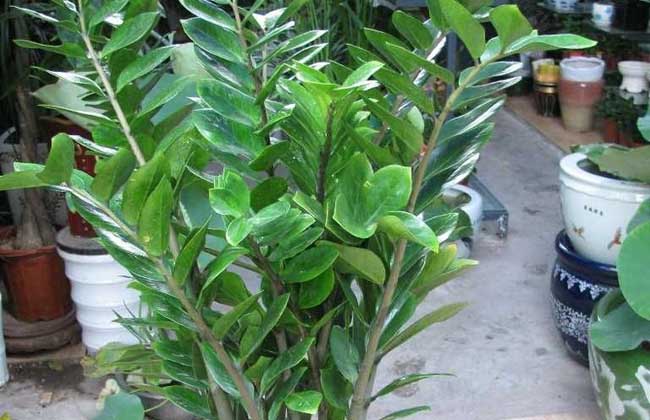
The ZZ plant is also known as Zamioculcas, dragon-phoenix wood, and Zanzibar gem, among other names. It is a perennial evergreen herbaceous plant of the genus Zamioculcas in the family Araceae. As an indoor foliage plant, it helps purify indoor air. Its newly emerging pinnate compound leaves almost always come in pairs of 2, one long and one short, one thick and one thin, symbolizing the bringing in of wealth and treasures and glory and prosperity. Let us take a look together below at how to care for a potted ZZ plant!
The growth habits of the ZZ plant
The ZZ plant likes warm, hot and slightly dry, semi-shaded environments with little change in average annual temperature, and is suitable for growing at 20°C to 32°C. It is relatively drought-tolerant, but fears cold, and avoids strong direct sunlight and exposure to scorching sun. It fears heavy, sticky soil and water accumulation in the pot soil. If the pot soil has poor aeration, it can easily cause its tubers to rot. It requires loose, fertile soil that drains well, is rich in organic matter, and is acidic to slightly acidic. It has strong sprouting ability; after cutting off the thick, large pinnate compound leaves, new leaves will quickly sprout from the top of its tubers.
Propagation methods for the ZZ plant
1. Cuttings: The cutting material can be a single small leaflet, a section of leaf rachis with 2 leaves attached, or a separate section of leaf rachis. Leaf rachis with leaves roots quickly, has a high sprouting rate, and more easily forms larger tubers.
2. Division: Remove a large ZZ plant from its pot, shake off most of the old soil, pull it apart at the weak points where the tubers join, apply sulfur powder or plant ash to the wounds, and pot and plant them separately.
3. Leaf cuttings: ZZ plant leaves root easily in a substrate and can be used for propagation. Each mature compound leaf has 15 to 25 small leaflets. If used for propagation, this can greatly increase the propagation rate.
How to care for a potted ZZ plant?
1. Temperature: The suitable growing temperature for the ZZ plant is 20 to 32°C. In summer, when the temperature reaches above 35°C, the plant grows poorly, and measures such as adding a black shade net and spraying water around the surrounding environment should be used to lower the temperature. In winter, it is best to maintain a greenhouse temperature above 10°C. If the room temperature is below 5°C, the plant is prone to cold damage and its survival may be seriously endangered. In late autumn and early winter, when the temperature drops below 8°C, it should be moved promptly to a brightly lit indoor location.
2. Light: The ZZ plant likes light and also has fairly strong shade tolerance, so it should be given an environment with good sunlight but also a certain degree of shade. It avoids strong direct light, and especially should avoid the scorching sun after long rain and the first clear sky in late spring and early summer, as well as the unobstructed strong light baking for 5 to 6 hours around noon in summer; otherwise, the newly emerging tender leaves are very easily burned.
3. Water: For a potted ZZ plant, efforts should be made to create an environment that is both moist and on the dry side. When the room temperature reaches above 33°C, the plant should be sprayed with water once a day. Because this plant has strong drought tolerance, it is best to keep the pot soil slightly moist and on the dry side, but occasionally applying excessive water and fertilizer will not necessarily cause root rot. In winter, pay attention to spraying water on the leaf surfaces and the surrounding environment so that the relative air humidity reaches above 50%.
4. Soil: The basic requirement of the ZZ plant for the growing substrate is good aeration. It is often made by mixing peat, coarse sand or washed coal cinders with a small amount of garden soil, and adjusting its pH to between 6 and 6.5, in a slightly acidic state. Because its tubers are large, its root system is well developed, and its pinnate compound leaves are relatively long, during the growing season its growth should be observed in time to decide whether to repot and change the soil. During the plum rain season, check frequently; if water accumulation is found in the pot, repot and change the soil promptly.
5. Fertilizing: The ZZ plant relatively likes fertilizer. In addition to adding an appropriate amount of rotted cake fertilizer or a multi-element slow-release compound fertilizer to the growing substrate, during the growing season a mixed solution of 0.2% urea plus 0.1% potassium dihydrogen phosphate can be applied 2 to 3 times per month. After mid-autumn, nitrogen fertilizer should be stopped, and 0.3% potassium dihydrogen phosphate solution should be applied 2 to 3 times in succession. After the temperature drops below 15°C, all forms of topdressing should be stopped to avoid fertilizer damage to the roots under low-temperature conditions.
Precautions for the ZZ plant
1. At noon or after long rain and the first clear sky in late spring and early summer, pay attention to sun protection and give the plant appropriate shading.
2. In winter, the pot soil must not be too wet; otherwise, under low-temperature conditions, it will cause the plant's root system to rot, so it is better to keep it on the dry side.
3. When the temperature is below 15 degrees, all forms of fertilizing must be stopped; otherwise, under low-temperature conditions, fertilizer will harm the roots and stems.
4. In winter, when it is especially cold, pay attention to protecting the plant from the cold. At night, you can put double-layer plastic bags over the plant, and when the temperature rises again, remove the plastic bags.
5. In summer, listen to the weather forecast in time and prepare early to shade the plant.