How to grow potted Lysimachia christinae? These care tips you need to master
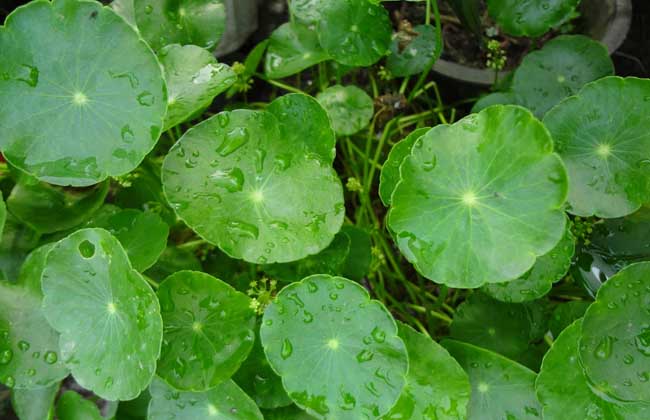
Lysimachia christinae, also known as Luodi Jinqian, Qianqianjin, Lianqiancao, etc., is a perennial small herbaceous plant of the genus Lysimachia in the family Primulaceae. Its leaves are kidney-shaped to round, 4-25 mm in diameter. Flowers are solitary in leaf axils, with pedicels shorter than petioles. It has green leaves and bears small yellow flowers. Grown in pots, it has a certain ornamental value. Let's take a look below at how to grow potted Lysimachia christinae!
Growth habits of Lysimachia christinae
Lysimachia christinae is distributed in all provinces south of the Yangtze River in China as well as Taiwan, China, and is widely found in tropical and subtropical regions of both hemispheres. It has strong adaptability to the pH of water bodies, but it is best to keep it between 6.5 and 7.5. It prefers warmth, avoids high temperatures, and tolerates low temperatures. It grows well within a temperature range of 16-24°C. The overwintering temperature should not be lower than 5°C. When the room temperature exceeds 30°C, plant growth will be inhibited. It prefers moisture and is more commonly seen where there is flowing water.
Propagation methods of Lysimachia christinae
Lysimachia christinae can be propagated by seeds or cuttings, but because its seeds are very small and difficult to collect, and the seedlings grow slowly, cutting propagation is mostly used. From March to April each year, cut off the creeping stems and cut every 3-4 nodes into a section as a cutting. On a prepared seedbed, open 1 shallow furrow on each side of the bed surface at a distance of cm for row planting, with a furrow depth of 6-8 cm, planting 2 rows per bed. In the opened shallow furrows, insert cuttings at a plant spacing of 10 cm, burying 2-3 nodes in the soil. After planting, cover with a thin layer of soil and press gently, then water to settle the roots.
How to grow potted Lysimachia christinae?
1. Soil: Lysimachia christinae does not have strict soil requirements. It can grow in yellow soil, red soil, or black soil, and even in poor soil. However, its drought resistance is not strong, so it is suitable for fertile, loose soil with high water absorption and good water retention. It can also be cultivated in moist riverbanks, swamps, grasslands, or low-hardness freshwater. The cultivation soil can be made by mixing leaf mold, river mud, and garden soil in a ratio of 5:2:2.
2. Fertilization: Lysimachia christinae has a relatively high demand for fertilizer. During the vigorous growth stage, apply fertilizer once every 2-3 weeks. When planted in pots or containers, only a small amount of fertilizer is needed, such as the quick-acting fertilizer Huabao No. 2, which can maintain fertilizer efficacy in water for a relatively long time and ensure that the water quality is slightly acidic or neutral.
3. Watering: Lysimachia christinae prefers a relatively moist growing environment. Because it has many leaves and high transpiration, in summer it should be sprayed with water frequently to maintain relatively high air humidity. The leaves should be kept clean to facilitate photosynthesis. In winter, the potting soil should preferably be on the drier side. Watering should follow the principle of preferring wet over dry, and waterlogging should be avoided, otherwise root rot easily occurs.
4. Temperature: Lysimachia christinae prefers a warm and humid environment, but it is not cold-tolerant. It grows well in a temperature environment of 10-25°C. When the summer temperature rises above 32°C, growth stops. In winter, the temperature must not be lower than 5°C. When the room temperature exceeds 30°C, plant growth will be inhibited.
5. Light: Lysimachia christinae is shade-tolerant and is best placed in partial sun or shade. It should avoid direct strong sunlight. The more shaded the environment, the more likely the leaves are to rot. Lysimachia christinae does not compete for light, but if it receives 4-6 hours of scattered light every day, or is given 8-10 hours of artificial light, it will grow better.
6. Pests and diseases: Lysimachia christinae has very few pests and diseases. The main pests are clams and snails biting the stems and leaves. You can use a 1000-fold dilution of 90% trichlorfon crystal for drenching, or spread 8% metaldehyde granules or 10% metaldehyde granules, 1.5 grams per square meter, or 1.5 kg per mu, spread on a sunny evening to kill adults or young snails.