How to grow potted boxwood? Cultivation methods and precautions
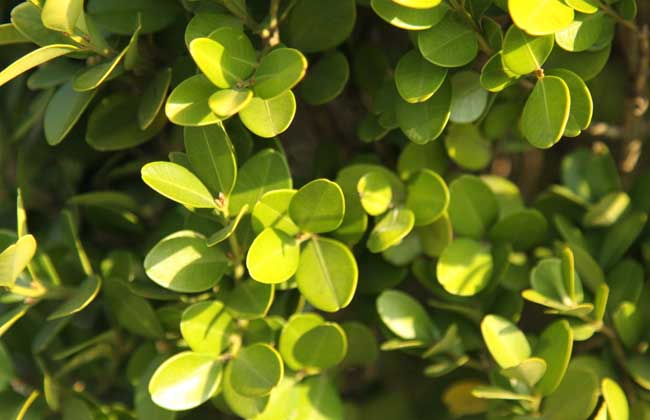
Boxwood is also known as boxwood wood, Chinese boxwood, common boxwood, etc. It is a shrub or small tree of the genus Buxus in the family Buxaceae. Its tree form is graceful, its leaves are as small as broad bean petals, thick and glossy, and it stays green all year round. In gardens it is often used as hedges, edging for large flower beds, trimmed into spheres or other shaped plantings, dotted among rockery, or made into bonsai. Now let us take a look at the cultivation methods for potted boxwood!
Growth habits of boxwood
Boxwood prefers fertile, loose loam soil. It can adapt to slightly acidic soil or slightly alkaline soil, and can also grow in calcareous soil. For potting, fully decomposed garden soil or leaf mold mixed with an appropriate amount of rice husk ash can be used. It is shade-tolerant and light-loving, likes moisture, and can withstand continuous rainy weather for about one month, but it dislikes long-term waterlogging. It is drought-tolerant; as long as the surface soil or potting soil does not dry out completely, it shows no abnormal performance. It is heat-tolerant and cold-tolerant, can withstand summer sun exposure and severe cold of about minus 20°C, but in summer when high temperatures and humidity occur, it should be given more ventilation and light. Its tillering ability is extremely strong, it is tolerant of pruning, and it is easy to shape.
Seed propagation of boxwood
1. Sowing method: In early September, choose loose, fertile, well-drained sandy loam as the sowing site, apply base fertilizer (organic fertilizer) and mix in carbendazim and other insecticides and fungicides, then deeply plow and level it to make a sowing bed. The sowing rate is 50-60 grams per sq m. Mix the seeds with an appropriate amount of sand, then evenly scatter them on the seedbed, cover with fine soil 1-1.5 mm, and cover with a layer of straw curtain to retain moisture.
2. Post-sowing management: After sowing, the seeds only grow radicles in the same year and do not germinate. To prevent freezing injury, in mid-to-late November before the soil freezes, cover the straw curtain with 5-8 cm of soil. In mid-to-late March of a normal year, remove the straw curtain and covering soil, and build a plastic arch shed on the seedbed, with the temperature controlled at 25-30°C. After about 20 days, the embryos grow out of the soil surface. After that, keep the temperature inside the shed between 20-25°C, and water appropriately. In late April, when the temperature is stable, remove the plastic arch shed.
Cutting propagation of boxwood
1. Seedbed preparation: For the cutting seedbed, choose a plot with high terrain, deep soil layer, loose soil, and good drainage and irrigation. After clearing grass roots and stones, make a high bed about 1-1.2 m wide, and drench with 10% imidacloprid at 1000 times plus 5% mancozeb at 1500 times to eliminate underground pests and harmful pathogens. After leveling the seedbed, pat it flat with an iron shovel, pour on 10% decomposed dilute human urine, then spread a layer of sieved burnt mud ash or yellow soil on the bed surface, about 5 cm thick.
2. Selection of cuttings: For boxwood cuttings, select excellent current-year lignified or semi-lignified branches, and the knives and scissors used for cuttings must be sharp. When cutting, for branches that have already grown small branches at the nodes, cut them off 0.5 cm above and below the node, then split the stem node into two halves according to the growth position of the small branches and insert them as two cuttings. For branches that have not grown small branches, keep 2 nodes, cut the upper end 1 cm above the bud into a flat cut surface, and cut the lower end 0.5 cm from the bud into a horse-ear shape or flat cut.
3. Cutting method: Cuttings should be inserted shallowly rather than deeply. For division cuttings of small branches, the flat cut surface faces downward, and the depth should be 1 cm of the mother plant inserted into the soil. For cuttings of large branches, the depth is 1 cm of the next stem node inserted into the soil. Insert the cuttings at an angle of about 45 degrees to the ground. Shallow insertion and slanted insertion help the cuttings take root and survive earlier.
4. Post-cutting management: After boxwood cuttings are inserted, a shade shed is required to reduce transpiration and direct sunlight on the seedbed. When cutting in early spring or late autumn, a film should also be added to prevent winter damage. After cutting, water frequently as well to keep the seedbed soil moist, so that the surface soil of the seedbed preferably does not turn white. Topdressing for cuttings can be done together with watering, or potassium dihydrogen phosphate plus urea can be used for foliar spraying. Weeding must be done very carefully, and the cuttings should not be knocked against.
Cultivation methods for boxwood
1. Potting soil: Boxwood is glossy green all year round, so it is suitable to use a purple clay ceramic pot, and the pot color is best purple or light yellow. The pot shape depends on the styling form: for cascade style, a deep cylindrical pot is suitable; for slanting style or curved-trunk style, an oval or rectangular pot is used. For bonsai soil, use decomposed garden soil or leaf mold mixed with an appropriate amount of rice husk ash as the growing medium. It should be fertile and loose, and loam with good aeration and water permeability is best. When potting old stumps, it is best to keep the original soil.
2. Watering: Boxwood trees relatively like water, so in watering, the principle of "better wet than dry" should be followed. At the seedling stage, the root system is relatively shallow and sensitive to moisture, so generally keep the surface soil moist. During the rapid growth period of the seedlings, growth is fast and water demand is high, so irrigate heavily, alternating wet and dry, and water thoroughly.
3. Fertilizing: Boxwood needs relatively more phosphorus at the seedling stage, relatively more nitrogen during the peak growth season, and relatively more potassium in autumn when growth stops. After planting the seedlings, spray the leaves with 0.4% potassium dihydrogen phosphate solution. Generally, foliar spraying with potassium dihydrogen phosphate three to four times per month is sufficient. For newly transplanted boxwood seedlings, fertilize as early as possible in the early stage, but note that the fertilizer concentration must not be too high, so as not to burn the new roots.
4. Shaping: Boxwood has strong sprouting ability. Before styling, the main trunk can be headed back to let new shoots sprout around or below the cut surface, and then according to the requirements of artistic styling, train and bind the branches. Binding with palm fiber in spring is best. It can also be roughly bound and finely pruned to make a cloud-layer shape or steamed-bun shape, or processed into a natural tree form. The main trunk can follow its natural tendency to be made into a slanting style or prostrate style. Boxwood is very tolerant of pruning and has strong sprouting ability. To maintain a graceful tree shape, it must be processed and shaped frequently.