Potted Sedum spectabile: cultivation methods and precautions
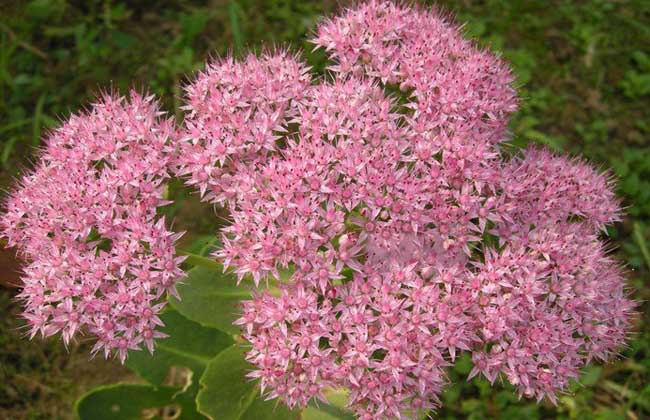
Sedum spectabile is also known as Hualii sedum, Changyao babao, large-leaf sedum, and so on. It is a perennial succulent herbaceous plant of the genus Sedum in the family Crassulaceae. Commonly cultivated varieties also include white, purplish-red, and rose-red ones, and it is almost the species with the most gorgeous flower colors in the Crassulaceae, with extremely high ornamental value. Now let us take a look at how to grow potted Sedum spectabile!
Growth habits of Sedum spectabile
Sedum spectabile grows on mountain slopes, grasslands, or ditch edges at an altitude of 450-1800 m. It likes strong light and a dry, well-ventilated environment, and also tolerates slight shade. It can withstand low temperatures of -20°C. It is not choosy about soil, requires good drainage, tolerates poor soil and drought, and dislikes waterlogging. The plant is robust and easy to manage. It is cold-resistant, and can overwinter in open ground in both East China and North China, while its aboveground parts wither in winter.
Propagation methods of Sedum spectabile
1. Cuttings: Cuttings can be taken from April to September. Cut 2-5 cm long cuttings, let the cut ends dry for 2-5 days, then insert them into a propagation sand bed. Once rooted, they can be transplanted. When the leaves are relatively large, leaf cuttings can also be used.
2. Division: Division can be done except in winter. Directly separate the tiller shoots sent out from the root area of the mother plant, let the cuts dry slightly, then plant them in suitable pots. After keeping them in a shaded place for a period, they can be moved to normal cultivation management.
3. Sowing: Sowing is used relatively rarely and is best done in spring. Cover the seeds with a thin layer of soil and keep them at 15-18°C. They will germinate in 3-5 weeks. After 1-2 true leaves appear, transplant them into pots.
How do you grow potted Sedum spectabile?
1. Soil: Sedum spectabile has strong vitality, can tolerate poor soil, and is also highly resistant to salinity and alkalinity, so choosing soil with good drainage and no pests or diseases is enough. Sedum spectabile does not have very high soil requirements.
2. Temperature: Sedum spectabile can tolerate low temperatures and can safely overwinter in an environment of -22 degrees, so there is no need to worry about it freezing to death. However, Sedum spectabile does not tolerate high temperatures. In daily care, keep the daytime temperature at 24 to 26 degrees and the nighttime temperature at about 15 to 18 degrees.
3. Light: Sedum spectabile likes light very much, and its daily growth requires sufficient sunlight. However, the plant can also tolerate slight shade. Still, too low a light level will prevent normal plant growth, so in daily care it should be given more sun.
4. Watering: Sedum spectabile does not have a very high demand for water, so appropriate daily watering is enough. When the plant is a young seedling, water once every two weeks. Later, when the plant grows faster, watering can be increased appropriately, but there should not be too much water.
5. Fertilizing: Fertilizing Sedum spectabile needs to be combined with watering. Especially in July and August, a quick-acting fertilizer can be applied as a top dressing two to three times. So-called quick-acting fertilizer is actually nitrogen fertilizer or human manure and urine, and so on.
6. Pruning: Before winter, Sedum spectabile gradually stops growing, and then rapidly sprouts again the following year. Therefore, to maintain a beautiful plant shape, the plant needs to be pruned in the spring of the following year, cutting off the dead branches above the ground.
7. Pests and diseases: Sedum spectabile does not have many pests and diseases, but prevention and control work should still be done well. If aphids or scale insects cause damage, treat them promptly, and in daily care they should also be checked and prevented frequently.