When does the Rhododendron pulchrum normally bloom each year?
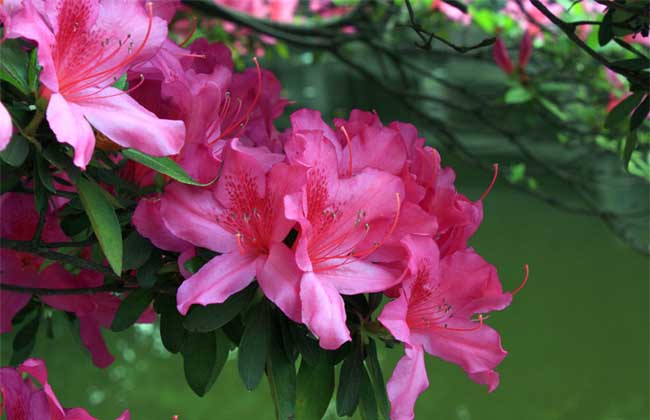
Rhododendron pulchrum is a type of rhododendron, suited to growing in a sunny, cool and humid environment. When planted in masses, Rhododendron pulchrum blooms in a riot of colour, and it is often used to create natural garden landscapes. Some people also like to place Rhododendron pulchrum indoors to add atmosphere, and it is often used at festivals to decorate public places for a festive effect. Let us take a look below at when Rhododendron pulchrum blooms!
When does Rhododendron pulchrum bloom?
The blooming time of Rhododendron pulchrum varies because the climatic conditions differ from place to place. Generally, Rhododendron pulchrum blooms in summer and autumn, and some plants grown by hobbyists at home sometimes bloom in November. In short, the blooming time of Rhododendron pulchrum differs according to climate, living environment and care during cultivation. The flowers of Rhododendron pulchrum are much noticed for their distinctive shape and beautiful colour. 2 to 3 flowers and new shoots emerge from the terminal buds, the corolla is rose-red to bright red, the upper petal has a deep red blotch, wheel-shaped, about 4.5 to 7 cm in diameter, with 5 stamens, yellow anthers, and small ovate pale green sepals with fine hairs.
Growth habits of Rhododendron pulchrum
Rhododendron pulchrum is widely cultivated throughout China, and wild Rhododendron pulchrum grows in the Jiuling Mountain area of northwestern Jiangxi Province. It likes a cool, humid and sunny environment. It is cold-tolerant, afraid of heat, tolerates semi-shade, and does not tolerate long periods of strong direct sunlight. The optimum growing temperature is 15 to 28°C, and in winter it can withstand low temperatures of -8°C. The soil should preferably be fertile, loose, well-drained acidic sandy loam.
How to grow Rhododendron pulchrum
1. Potting soil: Rhododendron pulchrum likes acidic soil and requires loose, well-drained soil rich in humus. Take 4 parts leaf mould, 2 parts old potting soil, and 1 part each of sandy soil, burnt soil and sawdust, add an appropriate amount of cake fertiliser, mix well, and pile it to compost for half a month before use.
2. Potting up: When potting up Rhododendron pulchrum, the seedlings usually carry their original soil, and the roots should be damaged as little as possible; overly long roots should be shortened appropriately, and larger plants should have their upper branches pruned. First cover the drainage hole at the bottom of the pot with overlapping pieces of broken tile, spread a layer of coarse-grained soil as a drainage layer, then fill part of the growing medium in the centre, place the plant in the pot and straighten it, and add soil and firm it down. The planting depth should match the depth at which the seedling was originally lifted from the soil, then water thoroughly.
3. Watering: Rhododendron pulchrum fears both drought and waterlogging. From the end of November to the first ten days or so of February of the following year, most open-air potted Rhododendron pulchrum are in a dormant or semi-dormant state, so water appropriately according to whether the potting soil is dry or moist. In late February, when the temperature rises and the flower buds and leaf buds begin to swell, increase the frequency of watering appropriately. From March to June is the vigorous growth period of new shoots, when water demand increases, so the frequency of watering should be increased as needed. From July to September, when the temperature is high, water every day. After October, the amount of watering can be reduced.
4. Fertilising: Rhododendron pulchrum does not like heavy fertiliser; apply dilute fertiliser frequently. For base fertiliser, use long-acting fertilisers such as cake fertiliser, bone meal and dried aged manure and other organic fertilisers, buried in the potting soil when potting up or repotting or in winter. For top dressing, use quick-acting fertilisers such as organic human manure or nitrogen, phosphorus and potassium chemical fertilisers. From the beginning of spring to before flowering, apply phosphorus and potassium fertiliser 1 to 2 times a month, and stop fertilising when flowering. After the weather turns cool in autumn, apply 1 to 2 times a liquid fertiliser mainly of phosphorus fertiliser, and stop top dressing after winter begins.
5. Pruning: During the growing period, Rhododendron pulchrum must be pinched back and pruned, removing dead branches and sprouting shoots, which helps the tree shape develop in a balanced way. For ground planting, choose acidic soil on high, dry ground with plenty of sunlight and a deep soil layer. Apply fertiliser once each before and after flowering every year, cut out overly dense inner branches, shorten leggy branches, and cut off dead and diseased branches to ensure that Rhododendron pulchrum can grow vigorously.